

 BBC
BBC 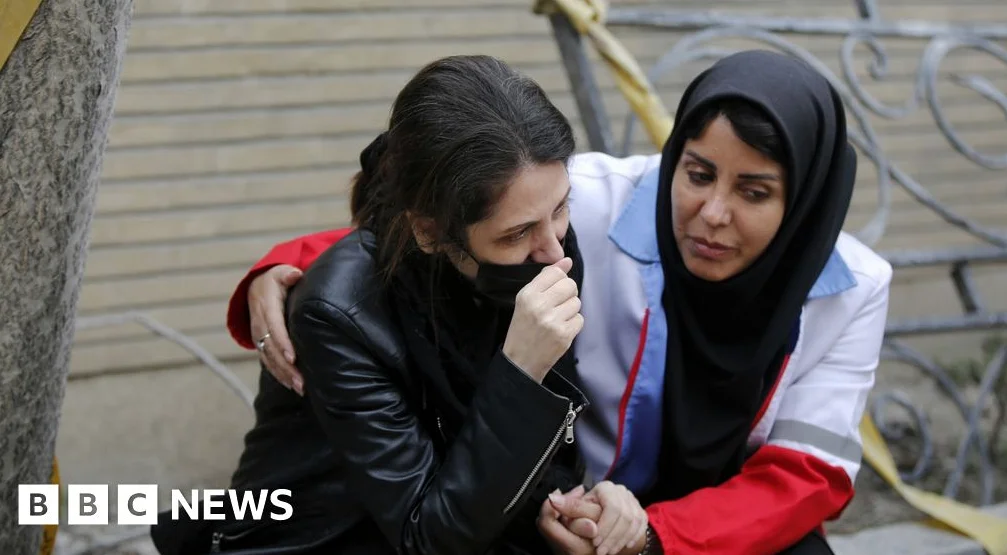
The escalating tensions in the Middle East have highlighted a dramatic shift in how international conflicts are being conducted. According to BBC. The US-Israeli attacks against Iran and the threats against its energy infrastructure, along with Tehran’s retaliation against its Gulf neighbors, demonstrate how the norms of starting and escalating international wars are being fundamentally altered.
Threats and Retaliation
US President Donald Trump has made multiple threats to use overwhelming force against Iranian energy facilities. Last week. He warned that he would ‘massively blow up’ Iran’s South Pars gas field if Iran further retaliated against Qatari energy sites. On Saturday. He said the US would ‘obliterate’ Iran’s ‘various power plants, starting with the biggest one first’ if its leaders did not reopen the Strait of Hormuz.
These threats have raised concerns about the nature of this war and its potential to further strain the global rules-based order. Luis Moreno Ocampo. The founding chief prosecutor of the International Criminal Court (ICC), stated that the war on Iran amounts to a crime of aggression under international law. He likened the attacks on energy infrastructure by both Iran and Israel to Russia’s actions in Ukraine, which led to Russian officials being indicted by the ICC for alleged war crimes.
Legal and Ethical Concerns
Moreno Ocampo said that Trump’s threats to bomb Iranian power plants, as well as attacks by both Iran and Israel on energy infrastructure, do not amount to legitimate targets. He warned that such actions could be classified as a crime of aggression under international law, which involves the use of armed forces by a state against the sovereignty, territorial integrity, or political independence of another state.
The White House dismissed Moreno Ocampo’s comments as ‘ridiculous,’ claiming that Trump is taking ‘bold action to eliminate the threat posed by a rogue, terrorist regime.’ A White House official added that Iran’s killing of civilians in the region ‘shows the importance of the president taking this action.’
US Ambassador to the United Nations Mike Waltz defended the attacks on Iranian power plants, stating that they are legitimate targets because Iran is using critical infrastructure to repress its people, attack its neighbors, and pursue a nuclear weapon in violation of UN sanctions.
Moreno Ocampo, however, argued that Iran’s attacks on its Gulf neighbors—countries that have not attacked Iran—would also be seen as a crime of aggression under international law. Neither the US, Israel, nor Iran are members of the ICC, but the Trump administration has sanctioned several of the court’s judges in retaliation for previous investigations into the US and Israel.
Humanitarian and Economic Impact
According to the International Energy Agency (IEA), at least 40 energy assets across nine countries have been ‘severely or very severely’ damaged since the start of the war. This includes attacks on energy infrastructure in Qatar, the UAE, Saudi Arabia, Bahrain, Kuwait, Oman, Iraq, and Israel.
Rights groups have warned that attacking Iranian power plants could have a devastating impact on civilian life. Iranians are already suffering from power outages, and electricity is often needed to pump water to homes. The World Health Organisation has called the conflict a ‘perilous stage’ and urged for restraint.
Iran has warned that if the US carries out such a strike, it will retaliate by attacking the energy and water systems of its Gulf neighbors. On Monday, Trump said he was postponing his threat for five days and claimed Iran was negotiating, which Iranian officials denied.
Israeli airstrikes have targeted multiple fuel depots in and around Tehran, creating immense fireballs and sending thick columns of smoke into the air. Brian Finucane, a former state department lawyer, said that if Trump carries out his threats against Iran’s energy facilities, ‘it’s hard to see how any such attack would be lawful. He’s ready to attack things which are not obviously lawful military objectives.’
Brian Katulis, a former national security official under both Democrat and Republican administrations, said Trump’s threats come at a ‘very dicey moment for the international order.’ He argued that the US’s actions in Iran and Venezuela send a signal that ‘you can do as you please. The jungle has grown back.’
Katulis added that the Trump administration’s inability to effectively raise a coalition to secure the Strait of Hormuz was a direct result of allies losing trust in the US. He described the administration’s approach as creating an era of ‘thugboat diplomacy.’
The White House rejected these claims, stating that President Trump has restored America’s place as the most powerful country in the world, protecting the US and its allies against the threat of a nuclear-armed Iran. An official said that Trump’s predecessors talked about curtailing Iran’s threat for 47 years but did nothing about it, instead allowing the ‘terrorist regime’ to build up its destructive capabilities.
The conflict has shown how the norms of international warfare are being undermined. With each escalation, the line between legitimate military action and war crimes becomes increasingly blurred. The international community now faces a critical juncture in determining whether these actions will be tolerated or if new legal and diplomatic frameworks must be established to prevent further erosion of the global rules-based order.
Comments
No comments yet
Be the first to share your thoughts