

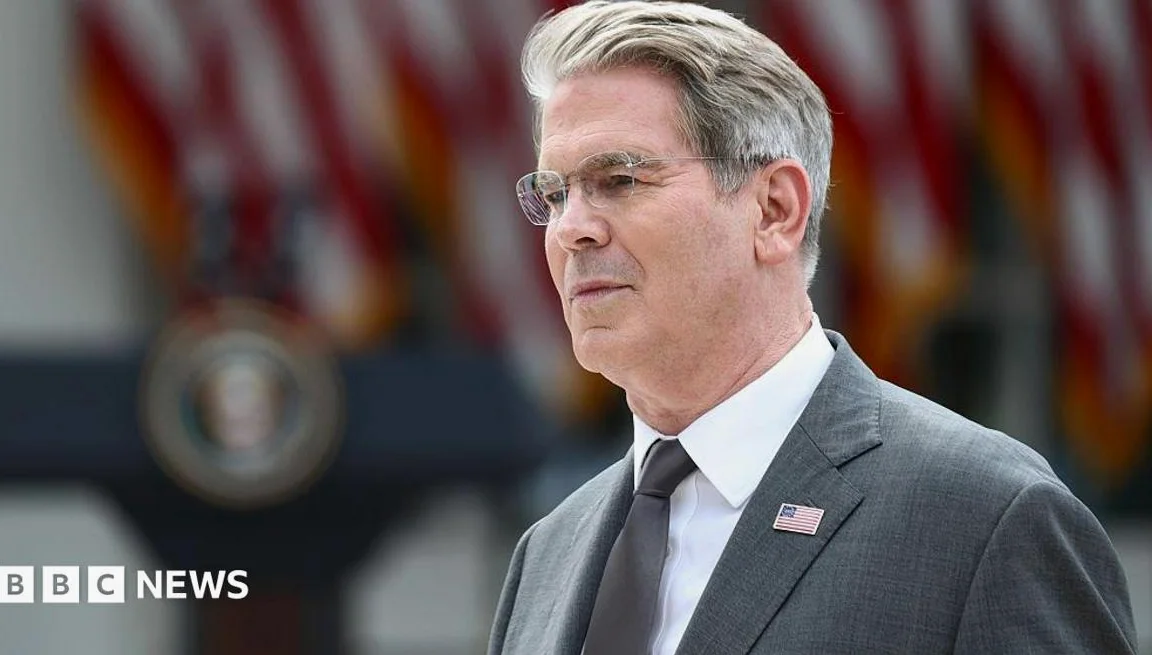
U.S. Treasury Secretary Scott Bessent has warned that Iran is facing ‘the greatest financial offensive ever’ in a Financial Times op-ed, according to BBC. Bessent did not detail the specific measures in the piece, but he is expected to provide more information during a press conference in the U.S. at 13:00 local time (18:00 BST) on Monday.
Economic D-Day Strategy
Bessent described the planned measures as an ‘economic D-Day’ aimed at severing Iran’s economic lifelines, according to Public Radio of Armenia. He emphasized that any nation choosing to partner with Iran financially would also face isolation. ‘The world should understand that our objective is to sever every economic lifeline that sustains the government until Tehran stands alone,’ he wrote.
According to the Public Radio of Armenia, the U.S, but Treasury Secretary’s comments come after a series of U-turns and extended deadlines from the Trump administration on previous threats. Iran has dismissed the comments and warned it would shut down all oil exports from the region ‘if the war continues,’ according to Reuters, while Iran has also issued a new warning to shipping not to pass through the Strait of Hormuz without its permission.
Global Economic Impact
The war with Iran has already had a significant economic impact, with higher oil prices fueling concerns over the cost of living. In the U.S., gasoline prices have surpassed $4 a gallon, and affordability is among the top concerns of American voters ahead of the mid-term elections in November, according to BBC. On Monday, a barrel of Brent crude, the global benchmark for oil prices, was $93.
Earlier this month, the U.S. government announced it would intervene in the bond markets and buy back more government debt in an effort to boost demand for bonds and lower borrowing rates. However, the impact of the announcement was short-lived, as long-term borrowing costs bounced back up a day later.
Historical Context and Sanctions
The Iranian administration already faces tough economic sanctions from the U.S. Former U.S. President Barack Obama and several U.S. allies had agreed to a deal with the country in 2015, which lifted many sanctions in return for Iran agreeing to limit its nuclear programme, according to BBC. However, the Trump administration has taken a different approach, shifting its focus from military pressure to economic measures aimed at isolating Iran from global trade markets.
Trump had previously made dramatic threats, including in April when he said ‘a whole civilisation will die tonight’ unless Iran agreed to a deal to end the war and unblock the Strait of Hormuz. The U.S. eventually backed down after mediator Pakistan intervened and called for more diplomacy.
Trump’s administration has now launched what it calls its final offensive to sever Iran’s economic lifeline; According to the Financial Times, Bessent described the strategy as ‘the largest financial offensive ever assembled against an adversary nation.’




Comments
No comments yet
Be the first to share your thoughts