

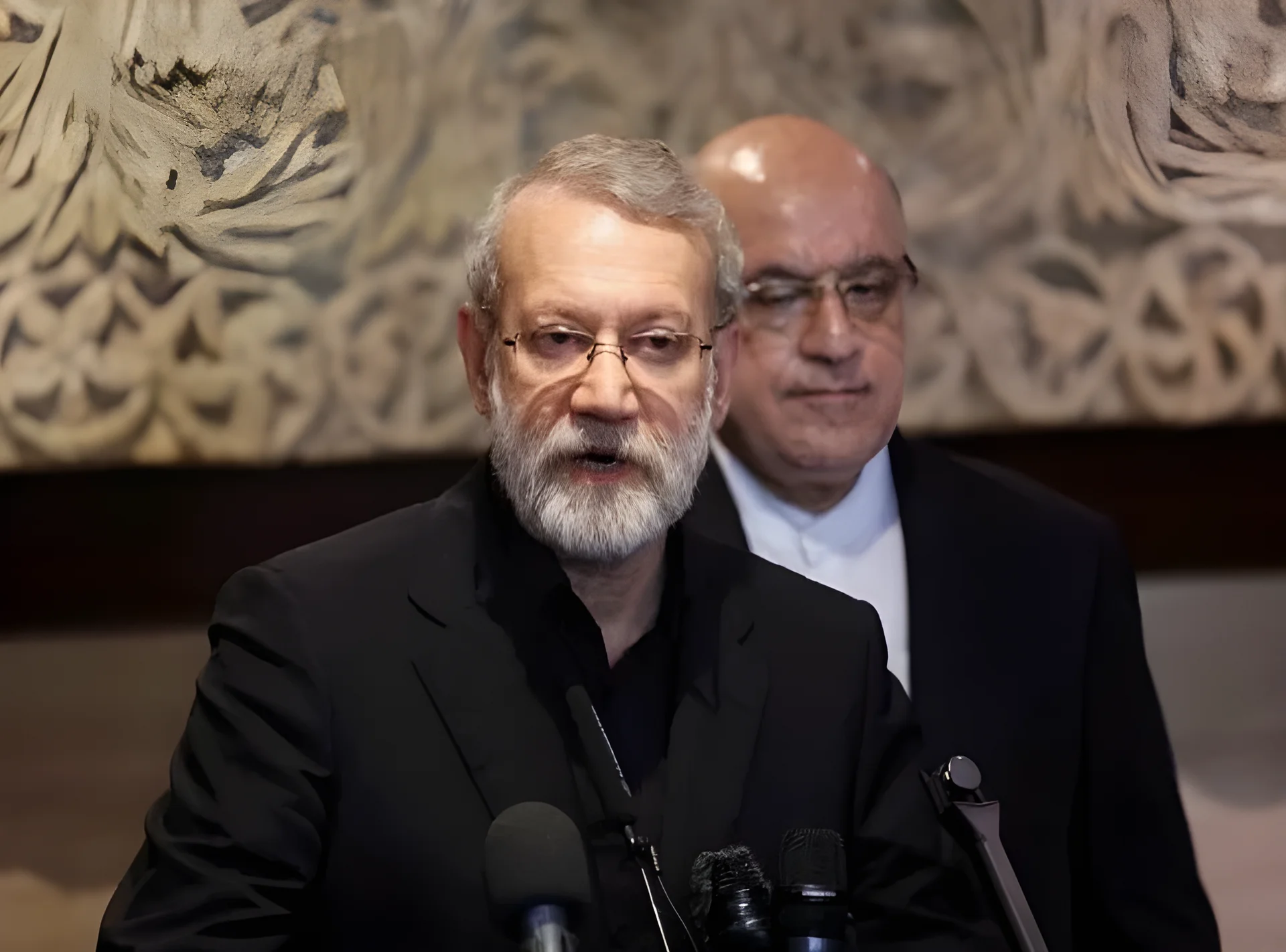
Iran held solemn state funerals in Tehran on March 18 for two of its most prominent security figures, Ali Larijani, the former secretary of the Supreme National Security Council, and Major General Gholamreza Soleimani, the head of the Basij paramilitary force. The ceremony took place at Enghelab Square, the central square in Tehran, and was attended by thousands of people, including senior government officials, military leaders, and members of the public.
Funerals for Top Officials and Naval Personnel
The funerals honored Larijani, who was killed in an Israeli airstrike in Tehran on March 12, along with his son. Gholamreza Soleimani, also targeted in the same attack, was the commander of the Basij, a powerful paramilitary force under the Islamic Major Guard Corps (IRGC). In addition to these two officials, the ceremony also paid tribute to the sailors of the Iranian naval vessel IRIS Dena, who were killed in a U.S. torpedo attack off the coast of Sri Lanka on March 4.
Thousands of attendees chanted slogans of “Allahu Akbar” and called for revenge, reflecting widespread anger and grief over the targeted attacks. The mourning ceremonies were part of a broader nationwide effort to honor the fallen, with additional funerals held for the sailors in various cities across the country.
Official Reassurance of Political Stability
Iranian Foreign Minister Abbas Araghchi addressed the nation earlier in the week, emphasizing that the political structure of the Islamic Republic remains “very solid” despite the loss of high-profile figures. He stated that the presence or absence of a single individual does not affect the nation’s political system, which he described as having “established political, economic, and social institutions.”
“I do not know why the Americans and the Israelis still have not understood this point,” Araghchi said in a press statement. “The Islamic Republic of Iran has a strong political structure.” He added that while individuals may be influential, the system as a whole remains resilient.
Araghchi also highlighted the earlier loss of Ayatollah Ali Khamenei, the former supreme leader of Iran, who was killed in a U.S.-Israeli strike on February 28. He noted that despite the immense national loss, “the system continued” to function, highlighting Iran’s resolve to maintain its leadership and political infrastructure.
Regional Tensions and Calls for Accountability
The funerals took place against a backdrop of rising regional tensions, with Iran accusing the United States and Israel of initiating the current conflict. Araghchi reiterated that “this war is not our war” and that the U.S. is responsible for the consequences of the conflict, both in terms of human and financial costs.
“The United States started it and is responsible for all the consequences of this war—whether for Iran, for the region, or for the entire world,” Araghchi said, adding that the U.S. must be held accountable for its actions. His statements reflect a broader narrative from Iranian officials that the country is not the aggressor but the victim of foreign aggression.
The funerals served as a powerful symbol of national unity and resilience. The participation of thousands of citizens alongside top military officials highlights the public sentiment of defiance and the determination to hold those responsible for the attacks accountable. The government has reiterated its commitment to responding strongly to these incidents, which have been described as part of a coordinated campaign of aggression.
The loss of Larijani and Soleimani has sent shockwaves through Iran’s political and military circles. Both men were key figures in the country’s security apparatus, with Larijani playing a crucial role in shaping national defense and foreign policy strategies. Soleimani, as head of the Basij, was instrumental in mobilizing popular support for Iran’s military and political objectives.
The funerals also highlighted the emotional and psychological impact of the attacks on the Iranian public. The deaths of high-ranking officials and sailors have raised concerns about the country’s vulnerability to external threats. However, officials have sought to reassure the public that Iran’s leadership and military capabilities remain intact.
With the situation in the region continuing to evolve, the funerals are likely to have lasting implications for Iran’s foreign policy and military strategy. The government is expected to take further steps to counter perceived threats, which could include increased military activity in the Gulf and greater cooperation with regional allies.
The events have also drawn international attention, with many countries closely monitoring the situation. The U.S. and Israel have yet to officially comment on the funerals, though analysts suggest that the attacks may have been intended to destabilize Iran’s leadership and weaken its military capabilities.






Comments
No comments yet
Be the first to share your thoughts