

 CNN
CNN 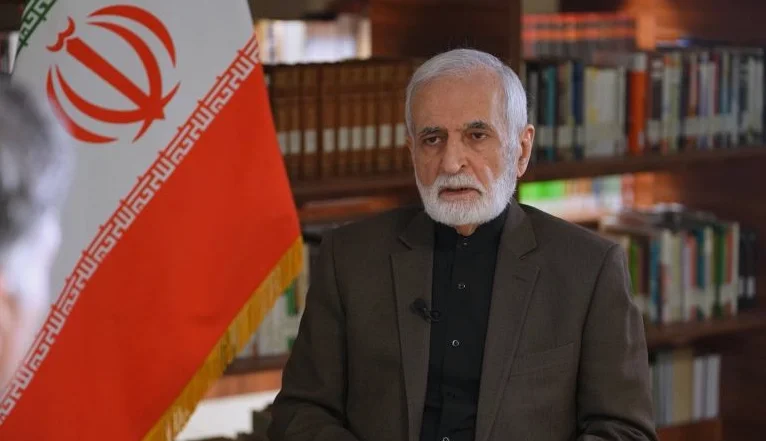
Tehran – A senior Iranian official has declared that the government is prepared for a protracted war with the United States and suggested that economic hardship will be the only path to ending the conflict. In an exclusive interview with CNN, Kamal Kharazi, foreign policy adviser to Iran’s Supreme Leader, ruled out diplomatic engagement and warned that only intensified economic pressure will compel the U.S. to step back from the conflict.
War Without Diplomacy
Kharazi stated that there is no room for diplomacy as long as President Donald Trump continues to act unpredictably. ‘Donald Trump had been deceiving others and not keeping with his promises,’ Kharazi said, referencing past negotiations where Iran felt betrayed by U.S. actions. He emphasized that economic pressure on the U.S. and its allies would be the only way to halt the aggression of American and Israeli forces against Iran.
‘This war has been producing a lot of pressure — economic pressure — on others, in terms of inflation, in terms of lack of energy,’ Kharazi said. He added that if the conflict continues, the pressure will increase to a point where other countries will have no choice but to intervene.
Economic and Energy Impact
Since the U.S. and Israel launched the war, Iran has carried out a series of attacks across the Middle East, targeting U.S. interests in Gulf nations. However, the strikes have also hit residential buildings and airports, causing significant civilian casualties and further destabilizing the region.
The conflict has disrupted global energy markets, with maritime traffic through the Strait of Hormuz nearly collapsing. Crude oil prices have surged past $100 a barrel, with an estimated 20% of the world’s oil supply disrupted — a disruption twice as large as the Suez Crisis of 1956-1957, according to Rapidan Energy Group data.
The war has not only halted the flow of oil from the region but has also wiped out the ‘spare capacity’ that typically cushions energy markets against shocks. Spare capacity refers to the amount of oil production that can be quickly brought back online if needed.
Military and Leadership Consolidation
An IRGC spokesperson stated that Iran is using 60% of its firepower to attack U.S. bases and ‘strategic interests’ in the region. Meanwhile, Mojtaba Khamenei, the second son of former Supreme Leader Ali Khamenei, was elevated to the country’s highest post, signaling potential further escalation.
Kharazi confirmed that the military and the Supreme Leadership are aligned. ‘The responsibility of the leader of the Islamic Republic of Iran is to lead the defense capability of Iran,’ he said, adding that the new leader will follow the same path as Ayatollah Khamenei.
President Donald Trump has criticized Khamenei’s appointment as ‘unacceptable,’ but Kharazi dismissed the comments as irrelevant. ‘That is not his business,’ he said.
The ongoing conflict has had real-world consequences for ordinary people, with inflation rising and energy shortages affecting daily life across the Middle East and beyond. The economic pain Kharazi predicted is already being felt in the form of higher prices for goods and services, as well as reduced access to energy.
Analysts suggest that the situation is likely to remain volatile, with no immediate end in sight. The U.S. and its allies are expected to continue their military presence in the region, while Iran is likely to persist with its strategy of economic and military pressure to force a resolution.





Comments
No comments yet
Be the first to share your thoughts