

 BBC
BBC 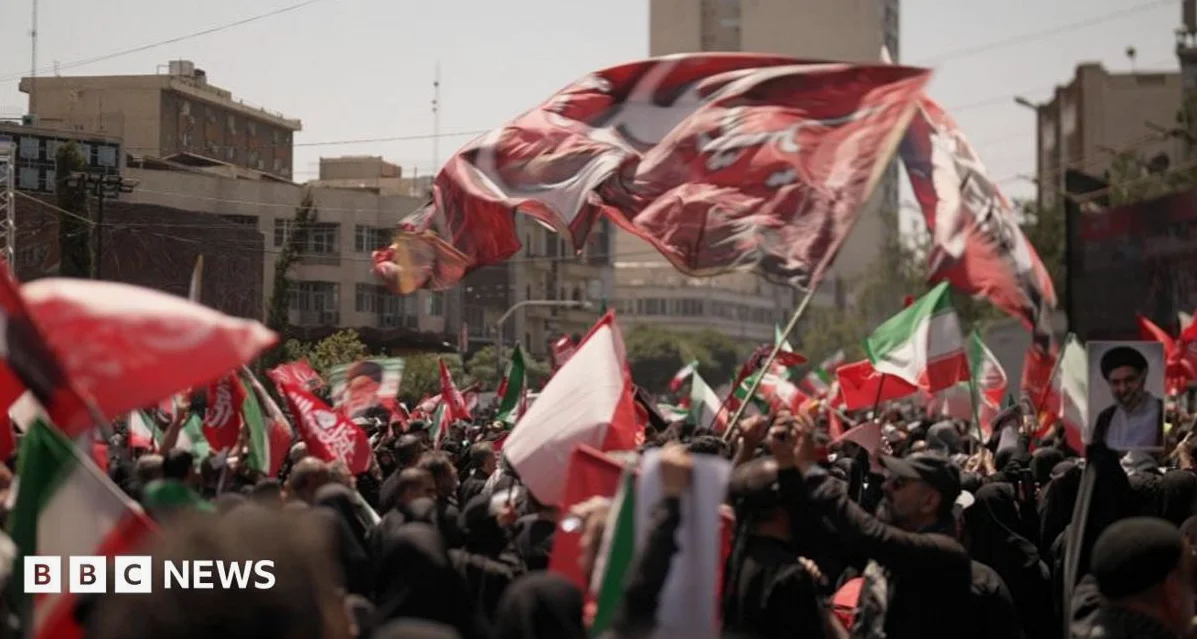
The hulking funeral cortège, carrying the coffins of Ayatollah Ali Khamenei and four family members, inched along a 10km route – slowed, and often stopped, by millions of mourners in one of the largest public gatherings in many years.
Political Messaging in the Funerals
In a week of funeral events, Monday’s march was the most significant in carefully choreographed ceremonies steeped in political messaging of resistance and revenge.
But many also stayed away, hurting from two wars in less than a year, inflation spiralling at around 80%, and the pain of January’s anti-government protests.
Some blame Khamenei, who was also the commander-in-chief, for the security security operation which killed many thousands.
Mourning and Discontent
“Of course I’m not going to the funeral,” one man told us outside one of the many “mookebs”, the rest stations set up in the city and on its outskirts to provide free food and water, most of it from private donations.
“Many people don’t have work and are so unhappy,” he explained.
Aerial footage from Monday’s procession showed one of Tehran’s main arteries chock-full of loyalists consumed by grief and chanting the Islamic Republic’s signature slogans of “death to America” and “death to Israel”.
“Tears arise from the pain and sorrow that surges within a person, and the world sees this truth,” declared Iran’s President Masoud Pezeshkian, rebutting US President Donald Trump’s claim that these were “fake tears”.
Legacy and Future
The commemorations now move to some of the most sacred sites for Shia Muslims, including in Qom, south of Tehran, on Tuesday, and then to Najaf and Karbala in neighbouring Iraq.
The final burial is on Thursday at the sprawling Imam Reza Shrine in Mashhad, the ayatollah’s birthplace and Iran’s holiest city.
“The funeral proceedings are designed to frame him as more than a national leader but a transcendent religious and political figure whose authority extended across the Muslim world, and particularly Shia Islam,” observed Mohammad Eslami, research fellow at Tehran University.
There’s a harsher view of his legacy. “The revolution he preserved was for a world which no longer exists,” assesses Karim Sadjadpour, author of Reading Khamenei: the World View of Iran’s Most Powerful Leader.


Comments
No comments yet
Be the first to share your thoughts