

 BBC
BBC 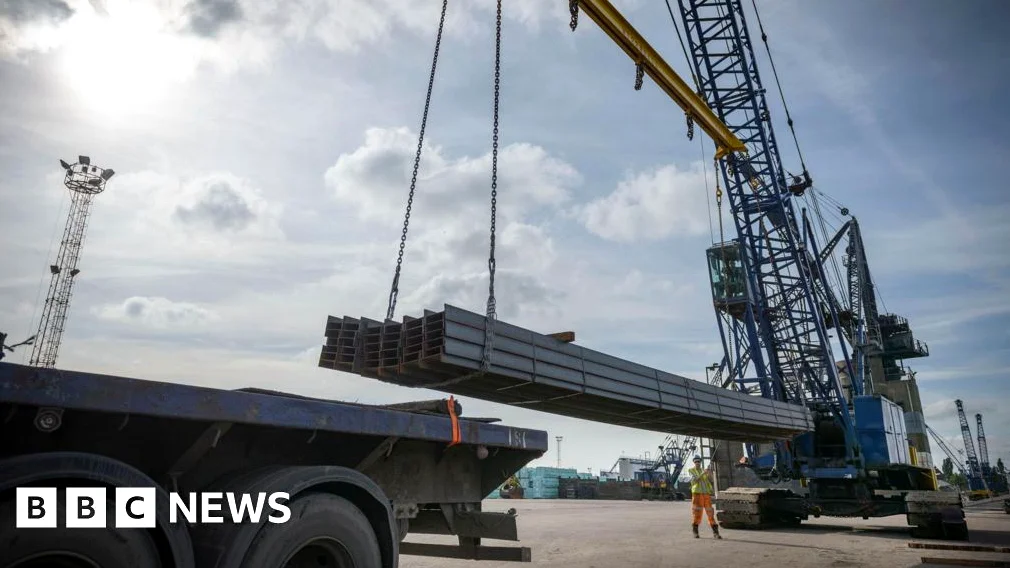
Iran’s two largest steel plants have been shut down due to multiple rounds of US-Israeli air strikes, the companies operating them say, according to BBC, while the attacks reportedly targeted the Khuzestan Steel Company and Mobarakeh Steel Company, which are critical to Iran’s steel production.
Production Halt and Restart Estimates
Mehran Pakbin. Deputy head of operations at the Khuzestan Steel Company in south-western Iran, said in a statement reported by Iranian media that restarting these units will take at least six months and up to one year. The company is located in the oil-rich Khuzestan province, which is a major industrial hub in Iran.
Mobarakeh Steel Company. Based in the center of the country, stated that its production lines had completely shut down following the high volume of attacks. The company is one of the largest steel producers in the Middle East and has been a key supplier of steel to both domestic and international markets.
Economic and Global Implications
The strikes, which Israeli media and Iran’s foreign minister said were first launched by Israel in co-ordination with the US last Friday, could cause major damage to Iran’s economy. Iran is the 10th biggest producer of steel globally, according to data from the World Steel Association.
In addition to using steel domestically for construction and manufacturing, Iran exports the material across the world. Any halt to production could have major implications for supply chains and businesses across the country, which for years have been affected by thorough Western sanctions.
The BBC has reached out to the Israel Defense Forces (IDF) and the US military’s Central Command (Centcom) for comment. So far, neither has responded to the inquiries.
International Reactions and Escalation
Iranian Foreign Minister Abbas Araghchi said in a social media post on Friday: ‘Israel has hit two of Iran’s largest steel factories, a power plant and civilian nuclear sites among other infrastructure. Israel claims it acted in co-ordination with the US.’
Israeli media reported that an Israeli security source had said the strikes were expected to cause billions of dollars in damage to the Iranian economy, and that the steel plants were linked to Iran’s Islamic Revolution Guard Corps (IRGC). The IRGC said it had targeted US-linked steel and aluminium facilities in Gulf states in response.
On Thursday, the Israeli military reported several new incoming missile attacks from Iran, while the United Arab Emirates (UAE) said its military had ‘engaged with’ 19 missiles and 26 drones launched from Iran. The IRGC also targeted an Amazon cloud computing centre in Bahrain, according to Iranian state media.
US and Israeli forces look to have been hitting a wider range of targets in Iran in recent weeks, with US President Donald Trump and Defence Secretary Pete Hegseth saying on Wednesday that the US would bring Iran ‘back to the stone ages.’
The comments sparked concern among Iranians – even those who support US-Israeli intervention against the Islamic Republic – that the scope of the offensive is broadening beyond the Iranian government and military.
There have also been attacks on health-linked facilities, with a spokesperson for Iran’s health ministry confirming on Thursday that a medical research centre in Tehran – the Pasteur Institute of Iran – was attacked on 23 March. The spokesman described it as ‘a direct assault on international health security’ and said it breached the Geneva Conventions.
On Tuesday, the Iranian government said there was an attack on one of the largest pharmaceutical companies in Iran – Tofigh Daru Research & Engineering Company – which produces anaesthetic and cancer drugs. The IDF said in a statement that it had carried out the strike and alleged that the company had transferred ‘chemical substances, including fentanyl, that were used for research and development of chemical weapons.’
Separately, on Thursday, a highway bridge linking the capital Tehran to the nearby city of Karaj was hit by air strikes, Iran’s semi-official Fars news agency reported. Two people were killed, according to the deputy for security at the Alborz governor’s office. There was no immediate comment from the US military, but Trump wrote on Truth Social: ‘The biggest bridge in Iran comes tumbling down, never to be used again.’
‘Much more to follow! IT IS TIME FOR IRAN TO MAKE A DEAL BEFORE IT IS TOO LATE, AND THERE IS NOTHING LEFT OF WHAT STILL COULD BECOME A GREAT COUNTRY!’ he added. The IDF told the BBC it was ‘not aware’ of any strikes on Karaj.
Iran has been under internet blackout for 34 days, with connectivity to the outside world at 1% of normal levels on Thursday, according to NetBlocks – making it difficult to verify information from the country. Additional reporting by Ghoncheh Habibiazad.






Comments
No comments yet
Be the first to share your thoughts