

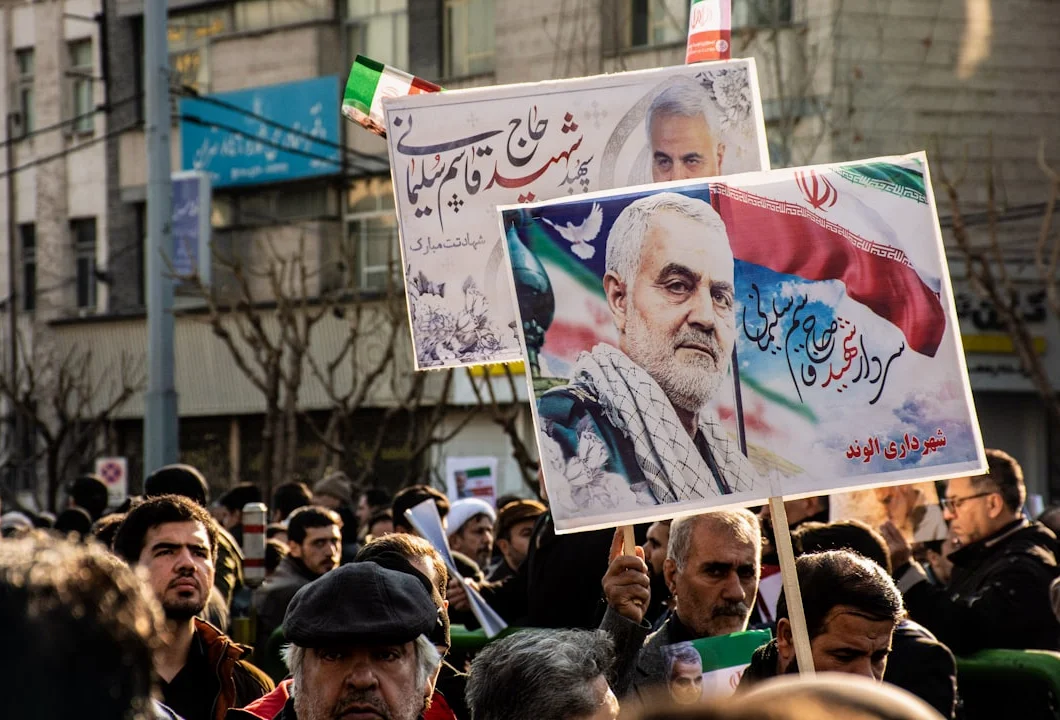
At least 23 protesters were killed in clashes in Pakistan, including 10 in the port of Karachi where security guards at the US consulate fired on demonstrators who breached the outer wall, 11 in the northern city of Skardu where the crowd torched a UN office, and two in Islamabad. The violence underscored the global impact of Iran’s recent military actions, which have triggered both outrage and celebration in different parts of the world.
Violence in Pakistan and Iraq
In Iraq, police fired tear gas and stun grenades to scatter hundreds of pro-Iranian protesters who had gathered outside the Green Zone diplomatic compound in the capital Baghdad, where the US embassy is located. The protests in both countries were fueled by anger over the US-Israeli attacks, which have drawn significant backlash from Iran’s allies in the region.
Protesters in Karachi chanted ‘Death to America! Death to Israel!’ at the consulate, where reporters heard gunfire and saw tear gas fired in surrounding streets. Consulate security staff opened fire at a crowd who were pushed back after breaching the outer security layer, said Sukhdev Assardas Hemnani, a local government spokesman. The demonstrators also set a vehicle ablaze outside the main gate and clashed with police, he said.
‘We are in constant touch with consulate officials. They are all safe,’ Hemnani added. The US Embassy in Islamabad said in a post on X it was monitoring reports of demonstrations and advised US citizens to observe good personal security practices. The consulate in Karachi and embassy in Islamabad did not respond to Reuters requests for further comment.
Thirty-four people were injured, police said. Karachi’s Civil Hospital said all those killed and injured were hit with gunshots. The provincial government of Sindh ordered an inquiry. Skardu, where the UN building was set ablaze, is in Gilgit Baltistan in the north, Pakistan’s only province where Shi’ites are the plurality.
‘A large number of protesters have gathered outside the UN office and burned down the building,’ local government spokesperson Shabbir Mir said. The figure of 11 killed was provided by a government official and an intelligence official, both on condition of anonymity.
Protests Across the Region
Protesters also took to the streets in other parts of Pakistan, carrying black flags and chanting ‘Down with America!’ and anti-Israel slogans. In the central city of Lahore, police said hundreds gathered outside the US consulate. There were some small-scale clashes with police, who fired tear gas.
Interior Minister Mohsin Naqvi urged protesters to remain peaceful. ‘We stand with you,’ he said, adding that every Pakistani was as grief-stricken as the people of Iran. In the capital Islamabad, all roads leading to the Red Zone, which houses diplomatic missions, were blocked to traffic, police said. Police fired tear gas and live bullets when thousands of protesters tried to march toward the diplomatic enclave, killing two and injuring nearly 10, two officials said on condition of anonymity.
Celebrations in Western Cities
Elsewhere, protests took place in countries where Iran has influence. In Kano, a part of Nigeria with a sizable Shi’ite Muslim minority, thousands marched peacefully, waving Iranian flags and pictures of Khamenei. But in Western countries and other areas with large populations of Iranian exiles, many came out to celebrate.
In the crowd in Paris, some people held aloft portraits of loved ones killed under decades of Iran’s clerical rule. Others waved flags of Israel, the United States, and France. In Lisbon, exiled Iranians gathered outside the Iranian embassy.
‘We had a party last night, up to 3am. We danced, we chanted, we sang and sang, and that was really amazing,’ said Maximilien Jazani, 57. Iranians ‘want to go to vote and to choose the kind of government they want.’
The contrast between the violent protests in Pakistan and Iraq and the celebratory events in Paris and Lisbon highlights the deep divisions over Iran’s actions. As the situation continues to unfold, the international community is closely watching the developments and their potential impact on regional stability and global politics.





Comments
No comments yet
Be the first to share your thoughts