

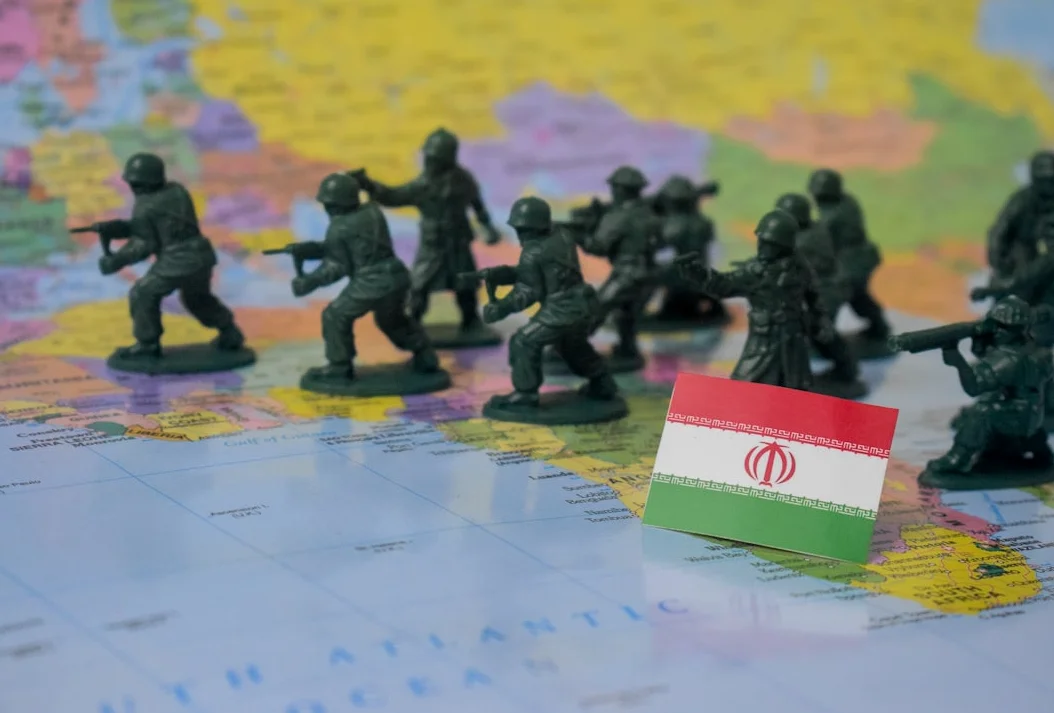
Iran’s paramilitary Major Guard Corps (IRGC) issued a strong warning on Wednesday, threatening to extend the conflict in the Middle East “beyond the region” if the United States and Israel resume attacks against Tehran. “In the event the aggression against Iran is repeated, the regional war that was promised will this time be extended beyond the region, and our crushing blows will bring you to ruin in places you cannot imagine,” the IRGC said, according to a statement reported by Iran’s semiofficial Mehr news agency.
Trump’s Mixed Messages on Resolving the Iran Conflict
U.S. President Donald Trump, speaking after the IRGC’s warning, told reporters he was “in no hurry” on Iran and added: “I’d like to see few people killed, as opposed to a lot.” He also claimed that “we have them decimated. Iran is decimated.”
Earlier in the day, Trump had told lawmakers that Washington would end the conflict with Tehran “very quickly,” claiming that Iran was eager to reach an agreement. His statements contrast with earlier threats, including a warning that the U.S. was “an hour away” from launching a strike, but he was persuaded to delay it by U.S. allies in the region.
Vice President JD Vance, meanwhile, described the negotiations between the U.S. and Iran as being in a “pretty good” place and said neither side wanted the military campaign to restart. “This is not a forever war. We’re going to take care of business and come home,” he said.
Trump’s Ultimatum and Threats of Destruction
On Sunday, Trump renewed his threat to unleash “hell” on Iran if the Strait of Hormuz is not reopened. In a post on Truth Social, he wrote: “Open the Fuckin’ Strait, you crazy bastards, or you’ll be living in Hell – JUST WATCH!”
Trump warned that any military action would specifically target Iran’s electrical infrastructure and bridges. “If they don’t do something by Tuesday evening, they won’t have any power plants and they won’t have any bridges standing,” he told the Wall Street Journal, hinting at a new deadline for Iran.
International mediators, including Egypt and Oman, have stepped up efforts to resolve the crisis. Egypt urged Iran to act with “common sense” and prioritize dialogue, while Oman held discussions to analyze options for reopening the maritime route. The crisis has already caused a spike in global oil prices and raised concerns about energy supply.
Iran’s Position and U.S. Motivations Under Scrutiny
The U.S. administration has offered multiple, sometimes conflicting, explanations for the war with Iran. At first, it was the need to eliminate Iran’s nuclear program. Then, it became about overthrowing the administration, neutralizing the missile program, preempting an Iranian attack, or preventing Israel from attacking first.
Trump recently added another twist, saying he thought Iran was about to strike and that he had, in a sense, drawn Israel into the conflict. “If anything, it was he who drew Israel into the fight,” Trump said, according to reports from EL PAÍS.
Iran’s chief negotiator, Mohammad Bagher Ghalibaf, accused the U.S. of seeking to restart the war with the hope that Iran will surrender. “The enemy’s movements, both overt and clandestine, show that despite economic and political pressure, it has not abandoned its military objectives and is seeking to start a new war,” Ghalibaf said in an audio message to Iranian media.
The IRGC also emphasized that Iran has not used all of its capabilities against the “world’s most expensive military forces,” according to the Floridian Press. This suggests that both sides still hold back, potentially to allow for diplomatic options or to avoid a wider regional conflagration.
As both sides issue strong rhetoric, the world watches for whether Trump will follow through on his threats or whether diplomatic efforts will succeed in preventing further escalation.






Comments
No comments yet
Be the first to share your thoughts