

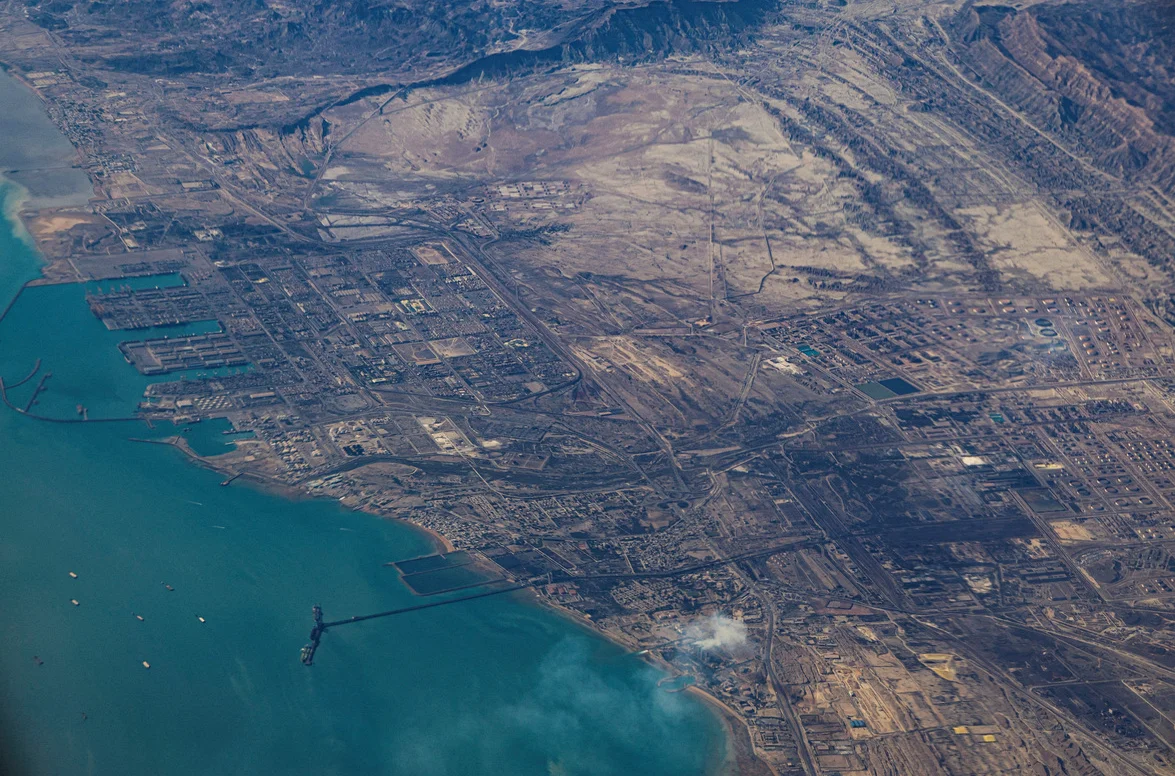
Iran has launched hundreds of missiles and over 1,000 drones at Gulf states allied with the United States since the U.S. and Israel attacked the country earlier this week, according to intelligence sources and military analysts. While most of these attacks have been intercepted, some residential and commercial buildings, infrastructure, and U.S. military bases have been damaged, signaling a significant escalation in the conflict.
Iran’s Drone Production Capacity
Tehran is a major drone manufacturer with the industrial capacity to produce approximately 10,000 drones per month, according to the Centre for Information Resilience, a nonprofit research group funded by Britain’s Foreign Office. The country has used this capacity to launch a barrage of attacks on Gulf states, with many of its drones penetrating air defense systems and striking key targets such as Dubai International Airport, Amazon data centers, and a Fairmont hotel in the UAE.
Iran’s latest generation of Shahed-136 drones, with a range of 435 to 620 miles, are capable of reaching anywhere in the southern Gulf coast when launched from the Iranian mainland or vessels. These drones, many of which are produced at dual-use plants, have been used to strike critical infrastructure in Bahrain, including a U.S. naval base and a tower containing a hotel and apartments.
Missile Stockpiles and Supply Constraints
The size of Iran’s missile stockpile remains uncertain, with estimates ranging from 2,500 by Israel’s military to around 6,000 by other analysts. However, Iran’s ability to sustain its missile attacks may be limited by the availability of launchers, which have at least halved over the past year due to strikes by Israel and the U.S., according to research by Britain’s Centre for Information Resilience.
Further constraints may arise from the fact that Iran has been supplying missiles to groups such as Hezbollah in Lebanon and the Houthis in Yemen, reducing its stockpiles. These stocks were also depleted during a 12-day war with Israel in June, though they have since been partially restored, according to Israeli military intelligence.
Despite these limitations, Iran is likely to be able to sustain a fight with its drones. A CIR analyst noted that other facilities could be retooled to ramp up production, providing a potential buffer for Iran’s military capabilities.
Strategic Implications and Energy Market Impact
Closing the Strait of Hormuz, a critical chokepoint through which a fifth of the world’s crude oil and liquefied natural gas passes, has been one of Iran’s main objectives. After Iranian attacks on six vessels, shipping through the crucial energy artery has ground to a near halt, causing energy prices to surge. Brent crude has risen 12%, and a European natural gas benchmark has climbed about 50% this week, according to market data.
“Iran is not going to fold easily or quickly, they have the means to make it unsafe for commercial traffic to flow through Hormuz,” said Bob McNally, president of Rapidan Energy Group. “The U.S. is prioritizing attacking Iran’s munitions, bases and facilities that threaten the Strait. But all Iran has to do is show they can hit a few tankers and concern will take care of the rest, folks just won’t go through,” he added.
Iran could also turn to sea mines if its missile and drone supplies run low. Tehran is believed to have an inventory of 5,000 to 6,000 such mines, which can be moored to the seabed, rocket-propelled, or drift in the water, exploding when a vessel comes into contact. While no indication has been found that mines have been laid in the Strait of Hormuz yet, analysts warn that if they are deployed, it could take months to clear the area.
“If sea mines are laid, it will take a long time to deal with them,” said Cormac McCarry, director at Control Risks with a focus on maritime intelligence and security services. “That’s where we will be looking at months of destruction.”
Energy traders are bracing for further price spikes as the length of the disruption to the Strait of Hormuz becomes clearer in the coming days. A senior executive at Vitol, a global commodity trading house, said, “I am very concerned, this risk is currently underpriced in oil markets. The prevalent theory is that Iran is using old missiles and drones first to deplete air defenses. If so, their response is yet to start properly.”
Analysts also note that Iran’s strategic missile supplies are a vulnerable point. A former director at Britain’s MI6 intelligence agency warned that Russia is not in a position to resupply Iran, and China would be cautious about providing military hardware, fearing backlash from Gulf Cooperation Council states.
As the conflict continues, the world is watching closely, with the potential for prolonged disruption in one of the most critical energy corridors in the world. The situation remains fluid, with no clear end in sight, and the coming days will determine the trajectory of the crisis.






Comments
No comments yet
Be the first to share your thoughts