

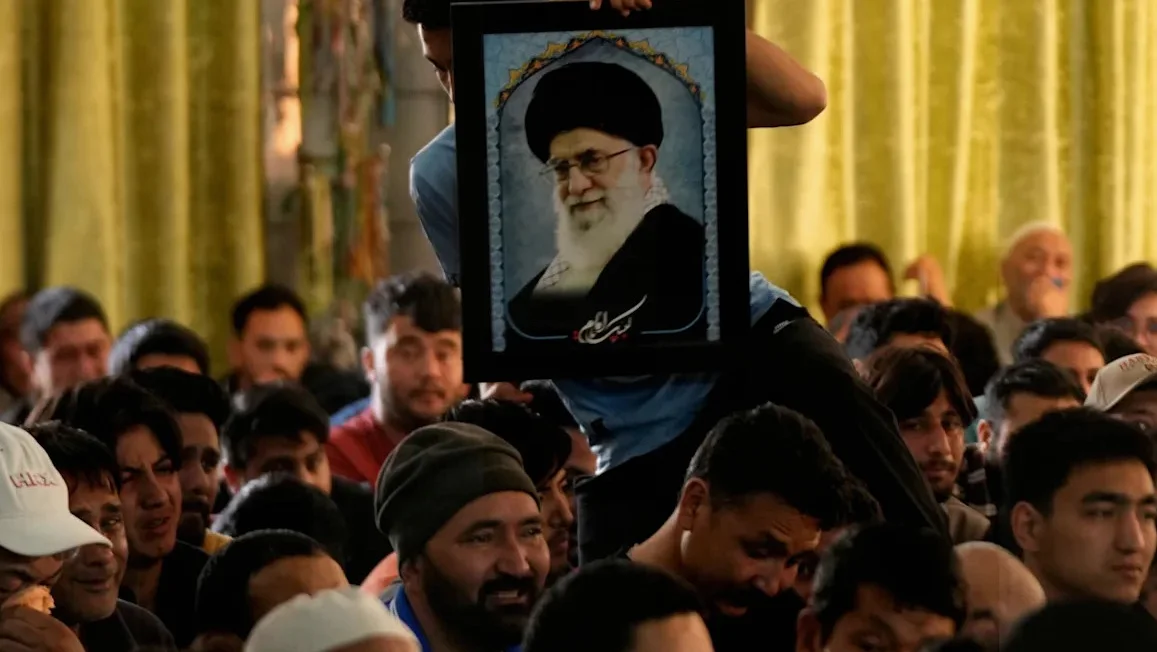
Explosions rocked Tehran on Sunday night as Israel extended its attacks into the heart of Iran’s capital, following the death of Supreme Leader Ayatollah Ali Khamenei. The U.S. has confirmed three service members have been killed and five others seriously injured since the operation began. President Donald Trump posted a six-minute video on social media, calling the fallen service members ‘true American patriots’ and warning that more casualties are likely before the conflict ends.
Escalation and Casualties
According to Iranian authorities, more than 200 people have been killed since the start of the U.S. and Israeli strikes. The attacks, which began with the death of Khamenei, have triggered retaliatory missile strikes from Iran, targeting U.S. military bases in the Gulf Arab states and Israel. Israeli police are currently searching for 11 people after a missile struck a synagogue in Beit Shemesh, killing at least nine and injuring many others.
Iranian state television confirmed Khamenei’s death after initially dismissing U.S. claims as ‘false rumors.’ The Supreme Leader’s death has thrown the future of the Islamic Republic into question, raising concerns about regional instability. U.S. and Israeli officials have described the attacks as a ‘pre-emptive’ strike aimed at halting Iran’s nuclear ambitions.
U.S.-Iran Diplomatic Tensions
A senior White House official told the Associated Press that ‘new potential leadership’ in Iran has expressed openness to talks with the United States. However, the official emphasized that the military operation ‘continues unabated’ and did not disclose who the potential leaders are or how they communicated their willingness to engage.
President Trump, in an interview with The Atlantic, said he plans to speak with Iran’s new leadership, adding, ‘They want to talk, and I have agreed to talk, so I will be talking to them.’ He declined to specify the timing of the conversation. Earlier on Sunday, Trump warned Iran that any retaliation would lead to further escalation, posting on social media: ‘THEY BETTER NOT DO THAT, HOWEVER, BECAUSE IF THEY DO, WE WILL HIT THEM WITH A FORCE THAT HAS NEVER BEEN SEEN BEFORE!’
International Response and Evacuation Preparations
British officials are working on plans for potential evacuation routes should airspace in the Gulf remain closed. The UK Foreign Office has advised British nationals in Bahrain, Israel, Palestine, Qatar, and the UAE to stay where they are and monitor travel advice, which is expected to change rapidly. Around 94,000 people have already registered their presence through the Foreign Office’s emergency registration scheme.
On Sunday evening, the UK agreed to a U.S. request to use British bases to attack Iranian missile sites. Prime Minister Sir Keir Starmer stated the move was to ‘prevent Iran firing missiles across the region, killing innocent civilians, putting British lives at risk, and hitting countries that have not been involved.’ The U.S. will use the bases for a ‘specific and limited defensive purpose’ to target missile launch sites or storage depots in Iran.
Starmer also issued a joint statement with French and German leaders, pledging cooperation with the U.S. to enable ‘necessary and proportionate defensive action’ against Iranian missiles. The prime minister accused Iran of endangering British lives across the region and said Gulf allies had ‘asked us to do more to defend them.’
Satellite images from Planet Labs show the aftermath of strikes in Dubai, while the U.S. and Israel have described their actions as targeting a Tehran government intent on developing nuclear weapons. Talks between the U.S. and Iran aimed at resolving the nuclear issue ended without agreement last week but were expected to resume at a later date.
Khamenei’s death has left the Islamic Republic facing its greatest test, with the future of the regime uncertain. The U.S. and Israel have described their actions as a ‘pre-emptive’ strike, but the full implications of the situation remain unclear as the conflict continues to unfold.






Comments
No comments yet
Be the first to share your thoughts