

 Bloomberg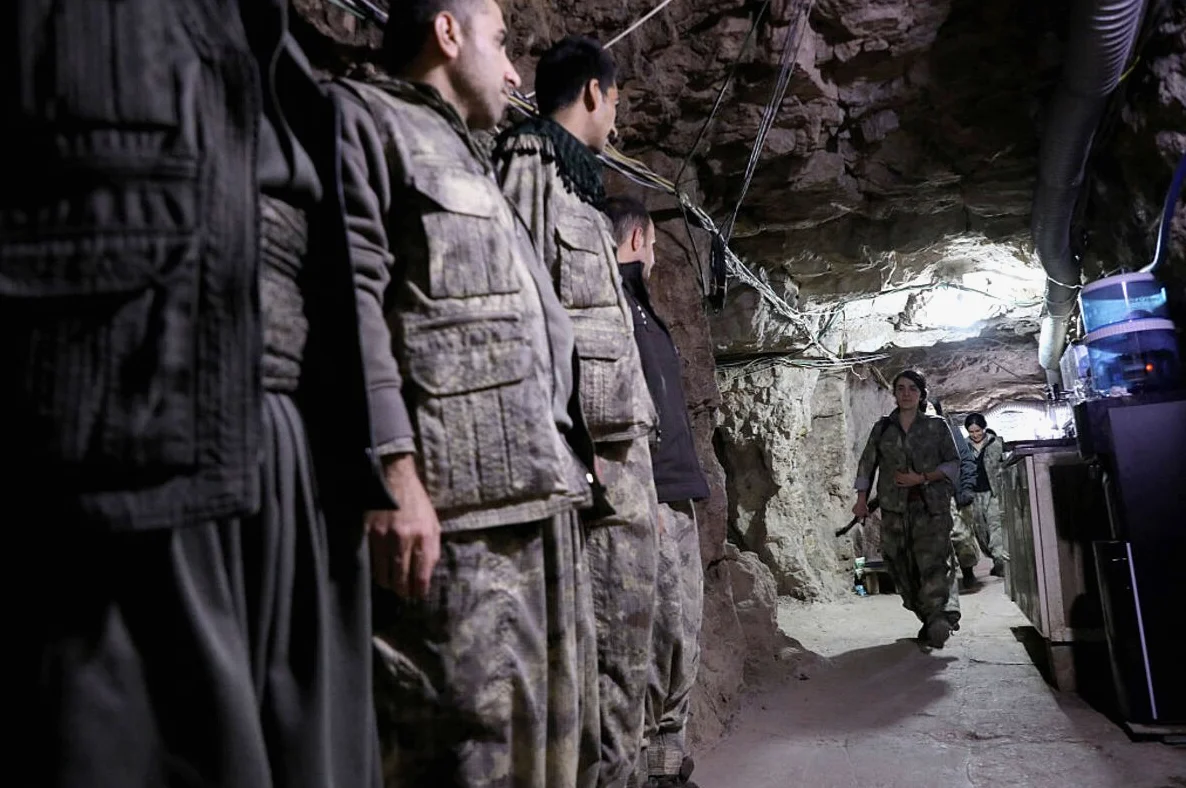
The U.S. and Israel could be heading toward a protracted and unpredictable conflict if Kurdish forces launch a ground offensive in Iran, according to a recent analysis. With President Donald Trump’s stated four-to-five-week timeframe for hostilities already in question, the involvement of Kurdish fighters could extend the war indefinitely, with unpredictable consequences for the region.
Kurdish Insurgency and the Risk of Prolonged Conflict
Analysts warn that a Kurdish ground insurgency could change the trajectory of the current conflict, particularly if it leads to regime change in Iran. Israel has been increasingly targeting Iran’s domestic security and political institutions, signaling a desire for the collapse of the Tehran regime. President Trump has reportedly expressed support for Kurdish military involvement, even speaking directly with Kurdish leaders.
Military preparations have been observed along the Iraqi-Iranian border, with reports of increased activity among Kurdish fighters. Iranian forces have already launched preemptive missile strikes against Kurdish positions, and local markets in Iraq have seen a surge in the sale of gear suited for high-altitude combat. These developments suggest that the Kurdish forces are preparing for an imminent operation, though the timing remains uncertain.
A History of Kurdish Involvement and Regional Instability
The Kurds, a geographically contiguous and culturally distinct group of more than 30 million people, have long been divided among Turkey, Iraq, Syria, and Iran. Their history is marked by repression and conflict, with leaders such as Saddam Hussein, Bashar al-Assad, and Iran’s Supreme Leader Ali Khamenei ruling over Kurdish populations with varying degrees of brutality.
Turkey has historically sought to suppress Kurdish identity, banning the language and promoting the idea of a unified Turkish state. The Kurdistan Workers’ Party (PKK), which fought against Turkey for decades, was responsible for thousands of deaths during its insurgency. The U.S. and Israel have frequently relied on Kurdish fighters in conflicts, but these alliances have often led to long-term instability in the region.
In 1972, the U.S. and Israel supported a Kurdish insurgency against Saddam Hussein’s regime, only to abandon the Kurds after the Shah of Iran struck a deal with Baghdad in 1975. This betrayal left the Kurdish Peshmerga forces vulnerable, leading to widespread casualties. Henry Kissinger later warned that covert actions should not be mistaken for humanitarian efforts, but the long-term consequences of such interventions remain unclear.
Risks of Kurdish Involvement in Iran
While a Kurdish ground offensive could potentially weaken the Iranian Major Guard Corps (IRGC) and encourage broader unrest, it also carries significant risks. The rugged Zagros Mountains pose a major challenge for Kurdish fighters, who would need to handle high-altitude passes that could make their advance slow and vulnerable.
Analysts caution that most Iranians, despite their dislike of the regime, are nationalistic and may resist any attempt to fragment the country. The region’s history shows that multi-ethnic states like Iraq, Libya, and Syria have collapsed under similar pressures. Iranians may perceive a Kurdish insurgency as an external plot to destabilize their nation rather than a legitimate movement for change.
For Israel, a weakened Iran could reduce the threat to its security, but for Iran’s neighbors and the global energy market, such a scenario could lead to long-term instability. The U.S. would also face challenges in managing the fallout, particularly if the conflict spills over into the broader Middle East.
While the idea of a Kurdish-led insurgency may seem appealing as a means of achieving regime change, the risks of prolonged and chaotic conflict are significant. The outcome of such a move remains uncertain, with potential consequences that could shape the region for decades to come.






Comments
No comments yet
Be the first to share your thoughts