

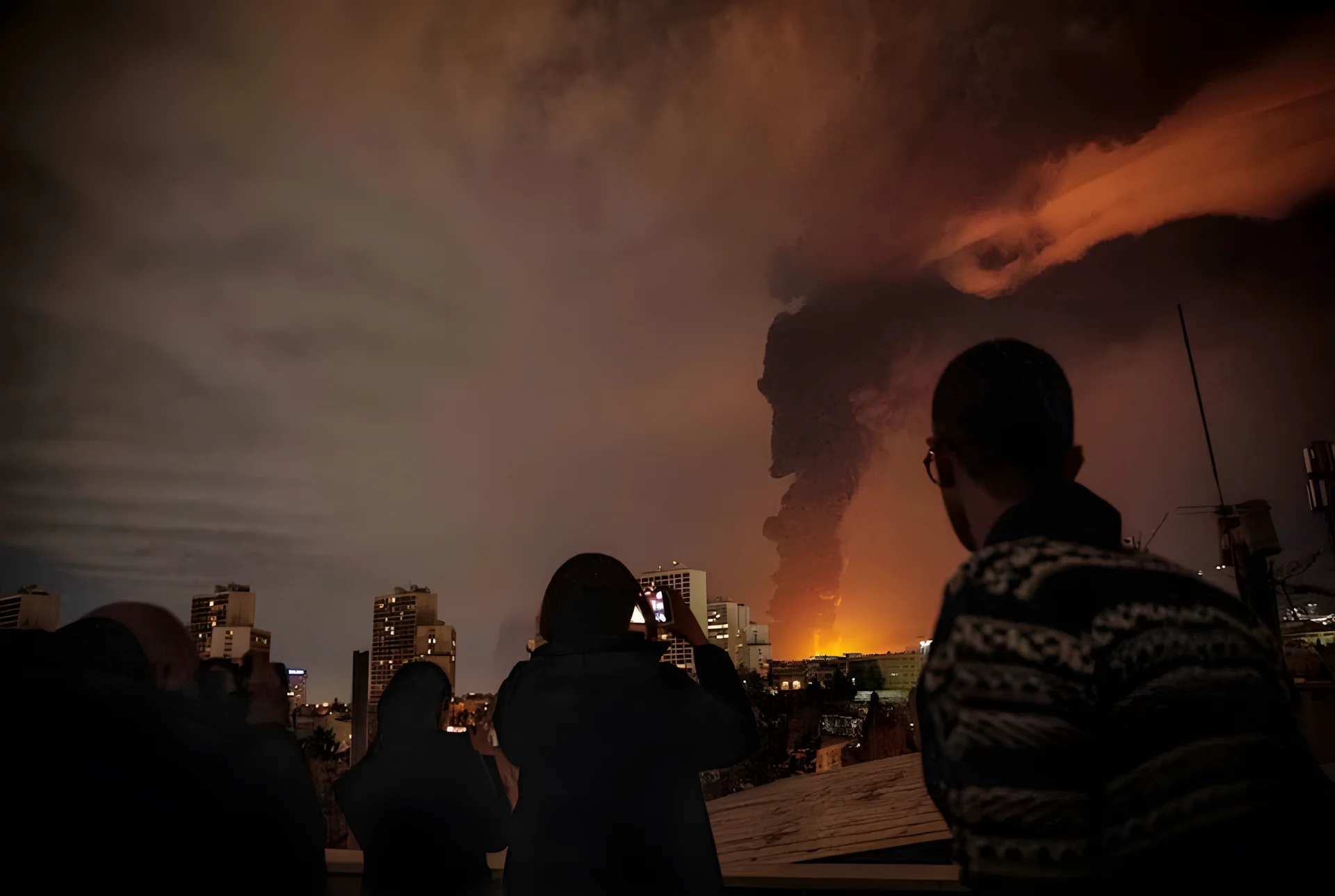
The Iran war has expanded into civilian infrastructure, with Bahrain accusing Iran of striking a desalination plant that supplies drinking water to millions in the Gulf region. The incident marks a new and alarming phase in the ongoing conflict, which has already claimed over 1,230 lives in Iran and disrupted vital systems across the Middle East.
Escalation of Civilian Targets
Bahrain’s water authority reported that the desalination plant was damaged, though it confirmed that water supplies remained online. Desalination plants are essential for water security in the region, where access to fresh water is already scarce. This strike has raised concerns about the potential for further attacks on critical infrastructure, including power grids and transportation hubs.
The strike occurred as Israeli forces intensified their attacks on oil depots in Tehran, triggering environmental warnings for citizens. Smoke from a fire at the north Tehran oil depot was so thick that witnesses said it appeared as if the sun had not risen. The U.S. military denied targeting civilians, stating, ‘U.S. forces do not target civilians — period.’
Leadership Transition Amid War
Iran’s leadership is in flux as officials confirmed the election of a new supreme leader to replace Ayatollah Ali Khamenei, who was killed in a U.S.-Israeli strike on February 28. Ayatollah Ahmad Alam al-Hoda, a senior member of the Assembly of Experts, stated that the new leader had been determined, with a public announcement expected soon.
Speculation had centered on Khamenei’s son, Mojtaba Khamenei, but resistance from other power brokers has complicated the process. The Islamic Major Guard Corps had pushed for his candidacy but faced opposition from other factions. The war has further strained Iran’s internal politics, with several thousand Israeli and U.S. airstrikes reportedly weakening the country’s leadership.
Iranian President Masoud Pezeshkian, who initially called for restraint, has since doubled down on military action, vowing a stronger response. ‘The more pressure they impose on us, the stronger our response will naturally be,’ he said. ‘Our Iran, our country, will not bow easily in the face of bullying, oppression, or aggression — and it never has.’
Regional Fallout and Humanitarian Crisis
The war has had a devastating impact on Lebanon, where Israeli strikes on Iran-backed Hezbollah have pushed the death toll higher and displaced hundreds of thousands. In Israel, the military reported its first soldier deaths since the war began, with two soldiers killed in southern Lebanon and three injured in an afternoon strike.
Lebanese officials said over 400,000 people had been displaced, with many taking shelter in schools, cars, or open areas near the Mediterranean Sea. The Lebanese government announced plans to open a sports stadium to accommodate more displaced families, as the situation continues to deteriorate.
In Bahrain, the UAE, and Kuwait, reports emerged of additional Iranian missiles and drones launched toward the region, with the UAE confirming over 100 missiles and drones were fired. Only four drones were reported to have hit unnamed locations, according to the defense ministry. Bahrain accused Iran of indiscriminate attacks, while Iran’s foreign minister warned that the U.S. had set a precedent by striking an Iranian desalination plant in the Strait of Hormuz.
The conflict has also disrupted global markets and air travel, with regional oil producers like Iraq cutting output due to dangers in the Strait of Hormuz. Iran’s parliament speaker warned that the war’s impact on the oil industry would continue to spiral, potentially making it harder to produce and sell oil.
As the war enters its tenth day, U.S. President Donald Trump and Israeli Prime Minister Benjamin Netanyahu have vowed to continue their coordinated campaign. Trump said, ‘We’re not looking to settle,’ indicating that the war aim remains the replacement of Iran’s leadership altogether.
The situation remains highly volatile, with no clear end in sight. As the Gulf nations brace for further attacks, the humanitarian and economic consequences of the war continue to mount, affecting millions of people across the region.






Comments
No comments yet
Be the first to share your thoughts