

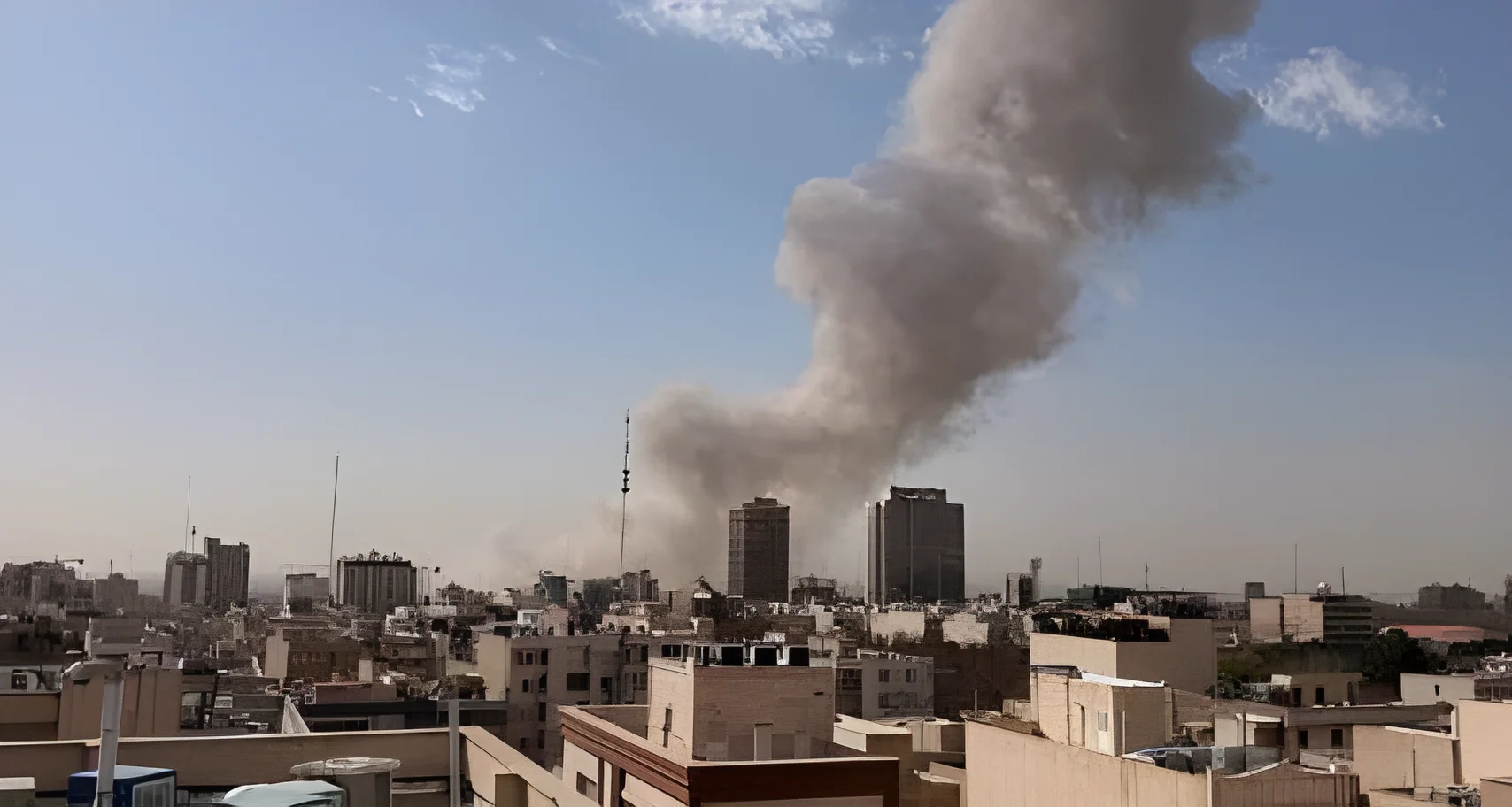
Iranian state television and the state-run IRNA news agency confirmed early Sunday that Supreme Leader Ayatollah Ali Khamenei, 86, had died in an attack orchestrated by Israel and the United States. The announcement came as tensions in the Middle East reached a new high, with the potential for retaliatory violence and a wider regional conflict.
Significance of Khamenei’s Death
Khamenei had been the undisputed leader of Iran’s Islamic Republic since 1989, wielding final authority over military, political, and religious decisions. His death creates a leadership vacuum, as no clear successor has been named, raising concerns about the stability of the regime. Analysts say this could lead to internal power struggles or even the collapse of the Islamic Republic.
According to the Associated Press, eyewitnesses in Tehran reported that some residents were rejoicing, blowing whistles and letting out ululations. However, others expressed fear over the potential for retaliation and further conflict.
President Donald Trump, who had previously announced the death, took to social media to declare that Khamenei was ‘one of the most evil people in History.’ He warned of ‘heavy and pinpoint bombing’ that would continue throughout the week and beyond, as part of an operation the U.S. justified as necessary to disable Iran’s nuclear capabilities.
Attack Details and Aftermath
The attack took place during the Muslim holy fasting month of Ramadan and at the start of the Iranian workweek. It followed months of rising tensions, including unsuccessful nuclear talks and the buildup of the largest U.S. military presence in the region in decades.
According to the U.S. military, the strikes targeted Major Guard command facilities, air defense systems, missile and drone launch sites, and military airfields. Despite ‘hundreds of Iranian missile and drone attacks,’ the U.S. reported no casualties and minimal damage at its bases.
Israel confirmed that the operation had been planned for months in coordination with the United States. Israeli military officials stated that the attack targeted the commander of the Major Guard Corps, the country’s defense minister, and the secretary of the Iranian Security Council, a close adviser to Khamenei.
Iran retaliated by firing missiles and drones toward Israel and at U.S. military bases in the region. The Israeli military said Iran launched dozens of missiles at Israel, with many intercepted. The Magen David Adom rescue service reported that a woman in the Tel Aviv area died after being wounded in an Iranian missile attack.
Regional and Global Reactions
Ali Larijani, the secretary of Iran’s National Security Council, warned that Israel and the U.S. would ‘regret their actions.’ He stated that ‘the brave soldiers and the great nation of Iran will deliver an unforgettable lesson to the hellish international oppressors.’
Iranian state media reported that at least 15 people were killed in the southwest region, with reports of a sports hall, two residential areas, and a hall near a school being hit. In southern Iran, at least 115 people were reported killed when a girls’ school was struck, according to the local governor.
Flights across the Middle East were disrupted, and air defense fire was reported over Dubai, the commercial capital of the United Arab Emirates. Shrapnel from an Iranian missile attack on the UAE capital killed one person, according to state media.
The U.S. Central Command spokesperson, Capt. Tim Hawkins, said he was ‘aware of reports’ that a girls’ school was struck and that officials were looking into the incident. The attacks have raised concerns about civilian casualties and the potential for further escalation.
The strike was coordinated between Israel and the U.S., with Israeli military chief of staff Lt. Gen. Eyal Zamir stating that ‘hundreds of targets across Iran’ were struck. The operation targeted Iran’s military, symbols of government, and intelligence targets, according to an official briefed on the operation.
Trump acknowledged Saturday that there could be American casualties, saying ‘that often happens in war.’ He said he was aiming to ‘annihilate’ the Iranian navy and destroy regional proxies supported by Tehran. He called on the paramilitary Iranian Major Guard to lay down arms, saying members would be given immunity or face ‘certain death’ if they did not.
Iran has said it has not enriched uranium since June, but it has blocked international inspectors from visiting the sites the U.S. bombed. Satellite photos analyzed by the Associated Press have shown new activity at two of those sites, suggesting Iran is trying to rebuild its nuclear infrastructure.




Comments
No comments yet
Be the first to share your thoughts