

 WH News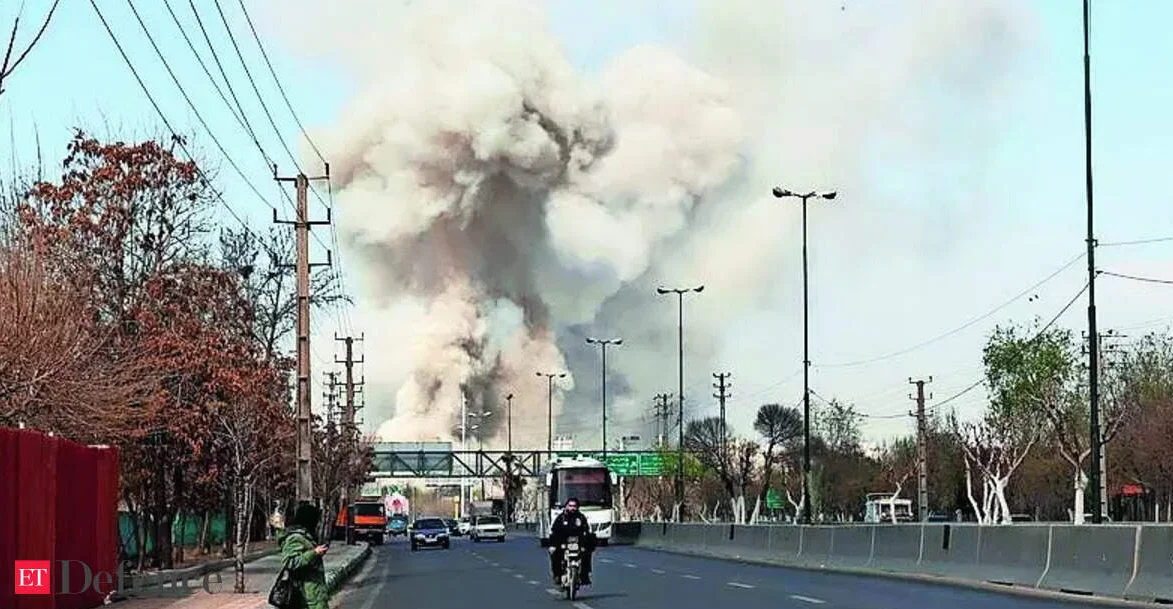
On a Thursday morning in Dubai, the air was thick with tension. Iranian state television broadcasted footage of missile launches and explosions across Tehran, while air sirens echoed through Tel Aviv and Jerusalem. This was not the first time the region had seen such chaos, but the recent sinking of an Iranian warship by a U.S. submarine had pushed the conflict to new heights. The war, which began on Saturday with the deaths of Iran’s Supreme Leader Ayatollah Ali Khamenei, had already claimed over 1,200 lives and disrupted global oil and gas supplies.
The Sinking of the IRIS Dena
The catalyst for this escalation was the sinking of the Iranian frigate IRIS Dena in the Indian Ocean. According to Iranian Foreign Minister Abbas Araghchi, the incident was an ‘atrocity at sea,’ and he warned the U.S. that it would ‘bitterly regret’ this act. The frigate, which was carrying nearly 130 sailors, was struck without warning in international waters, killing at least 87 people. The incident has since become a rallying point for Iranian hardliners, with Ayatollah Abdollah Javadi Amoli issuing one of the few clerical statements to date, calling for ‘the shedding of Zionist blood, the shedding of Trump’s blood.’
‘Fight the oppressive America, his blood is on my shoulders,’ he declared on state television. The statement was a rare and alarming departure for an ayatollah, one of the highest-ranking figures in Iran’s religious hierarchy. This call for violence underscored the deepening rift between Iran and the West, with the U.S. and Israel now directly involved in a conflict that has shown no signs of abating.
The War’s Escalation and Regional Impact
Iran’s response to the sinking of the IRIS Dena was swift and devastating. On Thursday, the country launched a new wave of attacks targeting Israel, American bases, and countries across the region. Israeli military officials confirmed that they had struck 80 targets in Lebanon linked to the Iranian-backed Hezbollah militant group, while a wave of strikes on Iran had hit long-range ballistic missile launch sites and other strategic targets. The Israeli military also reported that it had launched a ‘large-scale wave of strikes against infrastructure’ in Iran’s capital, with explosions heard in multiple locations in Tehran.
The conflict has not only claimed lives but has also disrupted the flow of oil and gas, snarling international shipping and stranding hundreds of thousands of travelers. The war has entered its sixth day, with no clear end in sight. The U.S. and Israel have repeatedly shifted their stated objectives, suggesting that toppling the Iranian government could be one of their goals, though the exact aims and timelines have remained fluid.
The Role of Limpet Mines and Torpedoes in Modern Warfare
As the conflict intensifies, the use of torpedoes and other naval weapons has become increasingly relevant. Limpet mines, a type of naval mine that can be attached to the hull of a ship, have long been a part of naval warfare. These mines, which can be detonated remotely, have been used historically to disrupt enemy ships and submarines. In this current conflict, the sinking of the IRIS Dena by a U.S. submarine has raised questions about the role of such weapons in modern warfare.
While the U.S. has not confirmed the use of limpet mines in the incident, the sinking of the IRIS Dena in international waters has sparked renewed interest in the potential use of such weapons in future conflicts. The U.S. Navy has a history of using limpet mines in various operations, and their deployment could have serious implications for the stability of the region.
Trump’s Involvement and the Future of Iran
Adding to the complexity of the situation is the involvement of former U.S. President Donald Trump. Despite stepping down from the presidency, Trump has remained a vocal figure in the ongoing conflict. In a recent interview with Axios, Trump stated that he should be involved in choosing Iran’s next supreme leader. He ruled out Mojtaba Khamenei, a front-runner to replace his father, Ayatollah Ali Khamenei, and called the younger Khamenei a ‘lightweight.’
‘I have to be involved in the appointment,’ Trump said, drawing a parallel to his involvement in the political situation in Venezuela. Trump’s comments have raised questions about the extent of his influence on U.S. foreign policy and the potential for further escalation of the conflict. His desire to be involved in the selection of Iran’s next leader has added another layer of complexity to an already volatile situation.
The Human Cost and Global Implications
The war has already claimed over 1,200 lives in Iran, more than 70 in Lebanon, and around a dozen in Israel. The toll on civilians has been immense, with families torn apart and communities left in ruins. The conflict has also disrupted the global supply of oil and gas, with international shipping routes affected by the ongoing attacks. The economic impact of the war is being felt worldwide, with prices for fuel and other essential goods rising sharply.
As the conflict continues, the international community is watching closely. The situation in the region has the potential to escalate further, with the risk of a wider war looming. The involvement of major powers such as the U.S., Israel, and Iran has created a volatile environment where miscalculations could lead to catastrophic consequences.
The Road Ahead
With no clear end in sight, the future of the conflict remains uncertain. The involvement of high-profile figures such as Trump and the call for violence from an ayatollah have added layers of complexity to the situation. The use of torpedoes and limpet mines in the sinking of the IRIS Dena has also raised questions about the future of naval warfare in the region.
As the war continues, the focus will likely shift to the potential for a diplomatic resolution. However, with the current trajectory of the conflict, the possibility of a ceasefire remains slim. The situation is likely to remain tense for the foreseeable future, with the potential for further escalation and the risk of a wider war.






Comments
No comments yet
Be the first to share your thoughts