

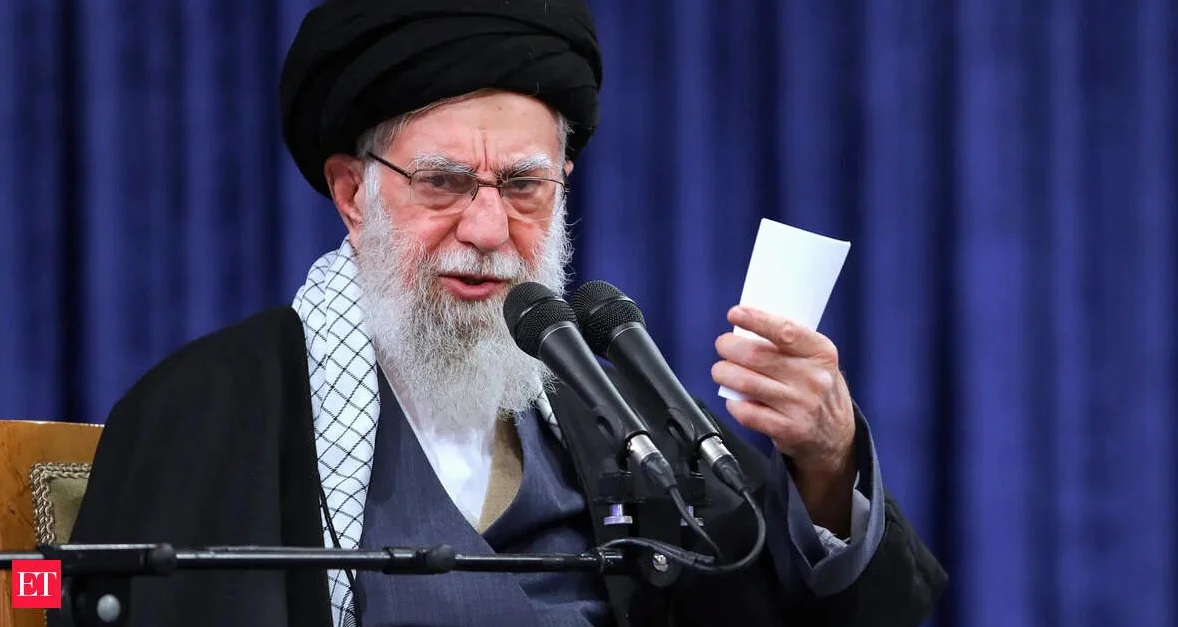
The status of Iran’s Supreme Leader Ayatollah Ali Khamenei remains uncertain after U.S. and Israeli airstrikes on Iran, with conflicting reports about whether he is alive or dead. The question has become a focal point in global news following the attacks, which targeted areas linked to Khamenei in Tehran.
Impact on Regional Tensions
Israeli media, including Channel 12, reported that Khamenei may have been killed in the opening strike near his offices in Tehran. However, no independent confirmation of his death has been provided. Iran’s Foreign Minister Abbas Araghchi told NBC News that Khamenei and other top officials are alive as far as he knows.
Satellite images showed damage near Khamenei’s compound, but Iran claims the supreme leader was moved to a secure location before the attack. The exact location of Khamenei remains under scrutiny amid conflicting claims and ongoing conflict.
What Analysts Say
Israeli media cited unnamed security assessments suggesting Khamenei had been hit, a claim many outlets repeated but stressed was unconfirmed. Iran denied the claim, insisting its senior officials are safe. International agencies have not independently confirmed either version, and the situation remains unresolved.
Reuters reported that Khamenei was not in Tehran at the time of the strikes, with a source indicating he had been moved to a secure location. The New York Times shared satellite images showing damage near his compound, but it is unclear whether this confirms his presence at the site.
Israel confirmed the strikes and named the operation Operation Lion’s Roar. Prime Minister Benjamin Netanyahu stated that Iran was building atomic bombs and missiles, and that the strikes aimed to stop its nuclear program. He also urged Iranians to change their government.
US Involvement and Reactions
U.S. President Donald Trump released a video after the strikes, stating that the Iranian regime threatens the United States and its allies. He urged Iranians to stay home as bombs would drop and said when the strikes end, people should take over their government.
Many questioned why Trump attacked Iran, why the U.S. bombed Iran, and whether the U.S. is now at war with Iran. U.S. intelligence and the UN nuclear watchdog have previously stated there is no proof that Iran seeks a nuclear weapon. Iran maintains that its program is civilian in nature.
In response to the strikes, Iran launched missile attacks on U.S. bases in Qatar, the UAE, Saudi Arabia, and Bahrain, as well as attacks on Israel. Iran stated it would defend its homeland and said it had tried to prevent war, with the armed forces prepared to respond with strength.
Reports by Reuters indicated that Defense Minister Amir Nasirzadeh and Major Guards commander Mohammad Pakpour were killed in the conflict, raising fears of a broader war with Iran in 2026.
Khamenei, who is 86 years old, has been the Supreme Leader of Iran since 1989, succeeding Ayatollah Ruhollah Khomeini. He holds authority over the military, judiciary, and government and has faced sanctions and protests. He has consistently called the U.S. Iran’s enemy.
Khamenei is married to Mansoureh Khojasteh Bagherzadeh, and they have six children. Some of his relatives live in Paris, while his children reside in Iran. One of his grandsons, Mohammad Bagher Khamenei, is known publicly.
The question remains: Is Iran’s Supreme Leader dead or alive, and where is Ayatollah Ali Khamenei? Iran says he is alive, while Israeli media await confirmation. The situation remains fluid as the conflict continues to unfold.






Comments
No comments yet
Be the first to share your thoughts