

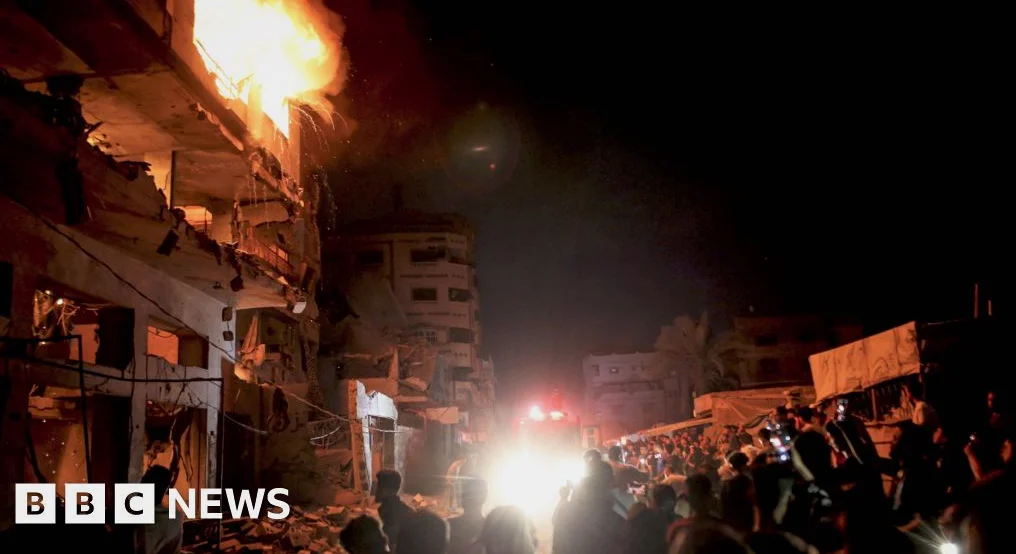
Israel’s military says it killed Hamas commander Mohammed Deif in a recent airstrike, according to reports. Deif was reportedly killed in the attack, which occurred in the Gaza Strip. The Israeli government has faced international criticism over its military operations in the region, which have led to a high civilian death toll and widespread displacement.
Israel’s Military Operations and International Reactions
Since the Hamas-led attack on Israel on October 7, 2023,during which 1,200 Israelis were killed and 250 taken hostage,Israel has carried out an extensive air campaign in Gaza. According to a recently published academic study, an estimated 75,200 Palestinians have died in the conflict between October 2023 and early January 2025. The Gaza Strip is now in ruins, with nearly half a million people facing famine-like conditions and one-third of the population lacking regular food access.
Approximately 1.9 million people—90 percent of Gaza’s population,have been displaced. Only 16 of the region’s 36 hospitals remain partially operational. The Israeli government has also been accused of war crimes and crimes against humanity, with the International Criminal Court (ICC) issuing arrest warrants in November 2024 for Prime Minister Benjamin Netanyahu, former Defense Minister Yoav Galant, and Deif.
Regional Tensions and U.S.-Iran Ceasefire Momentum
Israel’s military operations have not been limited to the Gaza Strip. On the same day it claimed to have killed Deif, Israel also launched an airstrike in Beirut, Lebanon,its first since a ceasefire with the country. The attack was part of a broader escalation that has raised concerns about regional stability. Israeli Prime Minister Benjamin Netanyahu stated via X that Israel had targeted the commander of Hezbollah’s elite Radwan unit, emphasizing that “no terrorist can be exempt” and that “the long arm of Israel will seize every enemy and killer.”
Israel’s actions have also complicated ongoing U.S.-Iran ceasefire talks. Al Jazeera reported that at least 13 people were killed in the latest attacks. IDF Chief of Staff Eyal Zamir stated there are “no constraints on the use of force” and that Israel will not step back until a long-term solution is in place for northern Israel’s security.
International Law and Public Perception
International law experts are increasingly questioning whether Israel’s actions in Gaza may constitute genocide, despite the International Court of Justice’s (ICJ) strict requirements for proving genocidal intent. After 22 months of war, a clear pattern is emerging. The ICC has already issued arrest warrants for Israeli officials, and the legal basis for further proceedings remains under discussion. Meanwhile, the war has also sparked a global debate over the role of Western countries in supporting Israel’s military actions.
Many Muslim-majority countries and their diasporas have expressed concern over what they see as a double standard in how the West handles human rights issues. A Muslim-American academic with Turkish roots noted that, despite the diversity of views among Muslims globally—ranging from secular to Islamist, from pro-LGBTQ to anti-LGBTQ,many now see the West’s unwavering support for Israel as evidence of a lack of genuine commitment to human rights and democracy.






Comments
No comments yet
Be the first to share your thoughts