

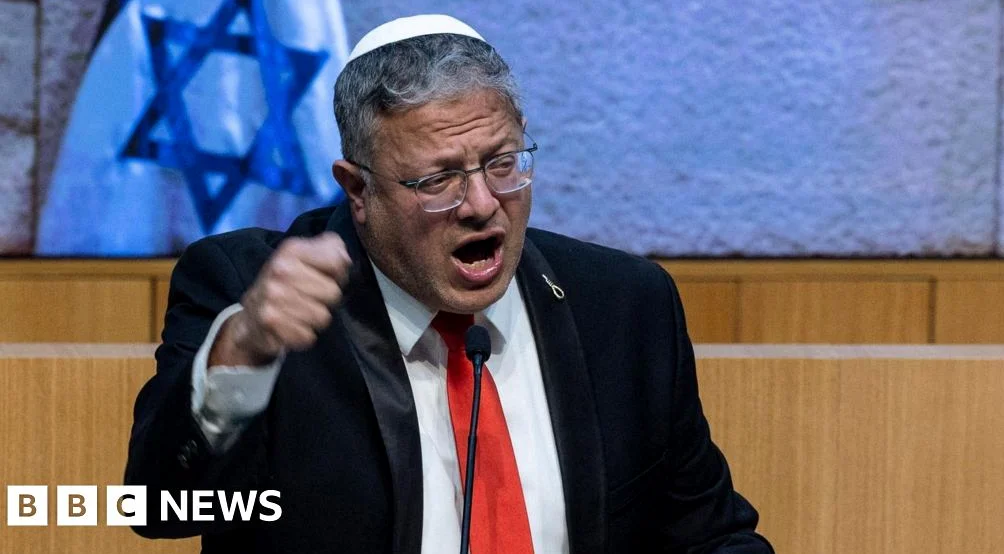
Israel has passed legislation allowing the death penalty for Palestinians convicted of carrying out deadly attacks, a move that has drawn criticism from human rights groups and international observers. The law. Signed into effect by Israeli officials. Targets individuals found guilty of lethal attacks against Israeli citizens or security personnel. According to The Guardian. The law was passed by the Israeli Knesset, marking a significant shift in the country’s legal approach to terrorism.
Legal Framework and Implementation
The new law. Which was introduced by Israeli lawmakers, allows for the imposition of the death penalty on Palestinians convicted of attacks that result in the deaths of Israeli citizens or security forces. The New York Times reports that the law includes specific provisions that outline the circumstances under which the death penalty can be applied, including the severity of the attack, the number of casualties, and the intent behind the act.
According to The Guardian. The law was passed in response to a series of high-profile attacks that have targeted Israeli civilians and security personnel. The legislation was supported by several right-wing lawmakers who argue that the death penalty serves as a deterrent against future attacks, while However, critics argue that the law disproportionately targets Palestinians and could be used as a political tool to suppress dissent.
Human rights organizations. Including Amnesty International. Have condemned the law as a violation of international human rights standards. The New York Times reports that the law was written in such a way as to ensure that it is unlikely to apply to Jewish extremists who commit similar crimes, raising concerns about its fairness and impartiality.
International Reaction and Human Rights Concerns
The passage of the law has drawn widespread condemnation from international human rights organizations and foreign governments. The United Nations has expressed concern over the potential for the law to be used as a tool of repression against Palestinians, particularly in the context of the ongoing Israeli-Palestinian conflict.
Amnesty International has warned that the law could lead to the execution of Palestinians who are not given a fair trial, citing concerns about the lack of due process and the potential for political bias. The organization has called on the Israeli government to repeal the law and to uphold international human rights standards.
According to The Guardian, several European countries have also criticized the law, with some calling for sanctions against Israel if the law is implemented. The European Union has stated that the law undermines the rule of law and violates the principles of international human rights law.
Meanwhile, the Israeli government has defended the law, arguing that it is a necessary measure to protect Israeli citizens from terrorist attacks. Israeli officials told The New York Times that the law will be applied only in cases where the evidence is clear and the sentences are justified under the law.
Palestinian Reactions and Local Impact
The law has sparked outrage among Palestinians, who view it as a further escalation of violence and repression. In the West Bank and Gaza, protests have erupted in response to the new law, with demonstrators demanding an end to the Israeli occupation and the repeal of the legislation.
According to a report from Al Jazeera, Palestinian civil society organizations have called for international support to challenge the law, arguing that it violates the rights of Palestinians and exacerbates the already dire situation in the region. The Palestinian Authority has also condemned the law, stating that it is a violation of international law and a threat to peace in the region.
Local communities in the West Bank have expressed fear and anger over the new law, with many families of victims of attacks questioning whether the law will bring justice or further violence. A mother of a child killed in an attack told Al Jazeera, ‘This law will not bring peace. It will only make things worse.’
Israeli security forces have also faced criticism for their handling of the situation, with some accusing them of using excessive force against Palestinian protesters. The New York Times reports that several incidents of violence have been recorded in the West Bank, with human rights groups documenting cases of excessive use of force and arbitrary arrests.
What’s Next and Forward-Looking Implications
The passage of the law has raised serious concerns about the future of the Israeli-Palestinian conflict and the potential for further violence. International observers are closely watching how the law will be implemented and whether it will lead to an increase in tensions between Israelis and Palestinians.
Human rights groups are calling for a review of the law and for the Israeli government to engage in dialogue with international partners to address the concerns raised by the legislation. The United Nations has warned that the law could have far-reaching consequences for the region and could undermine efforts to achieve a peaceful resolution to the conflict.
Israeli officials have stated that the law will be enforced in accordance with the country’s legal framework, but critics argue that the law lacks transparency and accountability. The New York Times reports that the law will be reviewed by the Israeli Supreme Court, which will assess its compliance with international human rights standards.
As the situation unfolds, the international community is watching closely to see how the law will be applied and whether it will lead to a de-escalation of tensions or further violence in the region. The future of the Israeli-Palestinian conflict remains uncertain, and the new law is likely to be a flashpoint in the ongoing struggle for peace and justice in the region.






Comments
No comments yet
Be the first to share your thoughts