

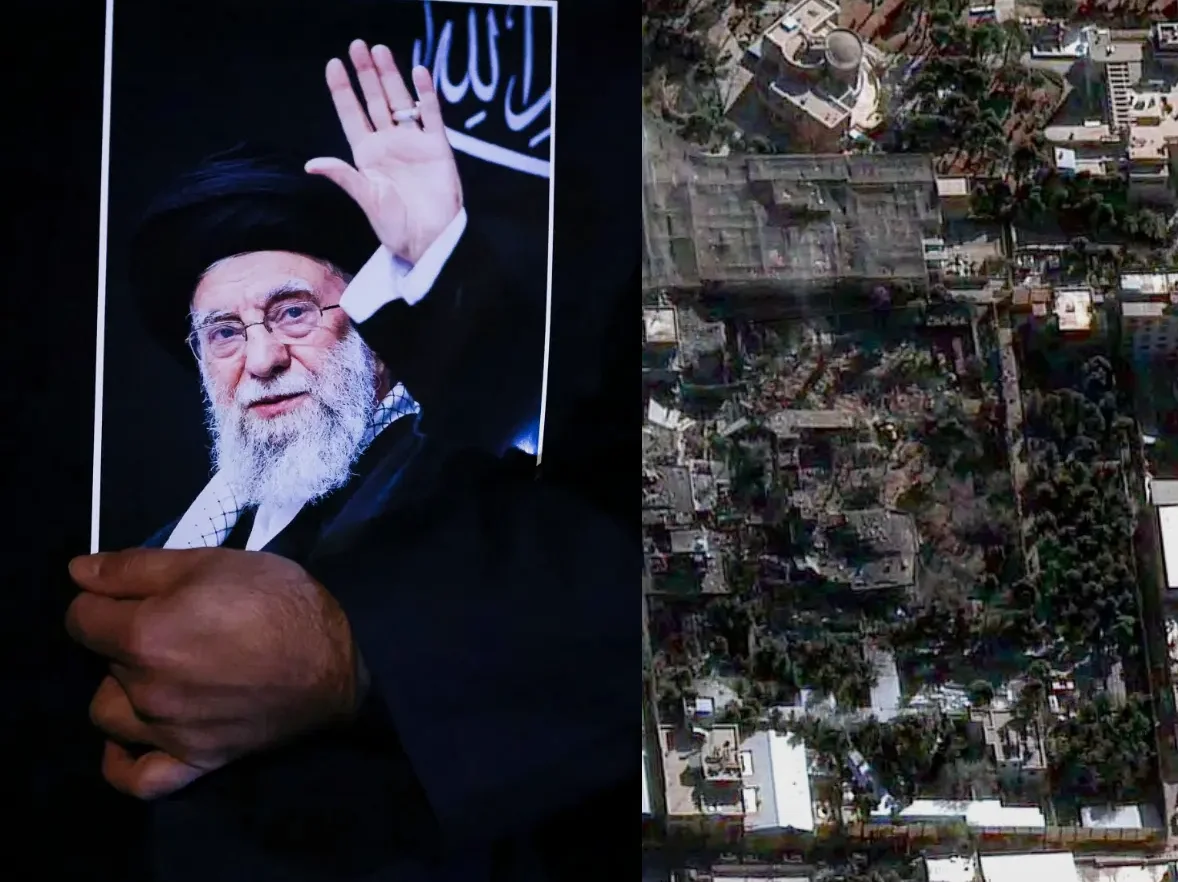
Israel executed a sophisticated deception operation that misled Iran into believing its military was on a weekend break, allowing the country to launch a surprise missile attack that killed Supreme Leader Ayatollah Ali Khamenei. The attack, which involved high-altitude Blue Sparrow missiles, struck Khamenei’s palace in Tehran shortly after he arrived for a meeting with senior officials.
Strategic Deception and Timing
The Israeli Defense Forces (IDF) reportedly created a false impression that military personnel had left for Shabbat celebrations, using photos and information to suggest that top leadership was going home for the weekend. This tactic was designed to prevent Iran from detecting any buildup of activity around the IDF’s central military complex in Tel Aviv.
The IDF released statements confirming that on the Friday of the attack, they deliberately gave the appearance that the military was shutting down for the weekend. High-ranking officials ensured Iran saw them leaving the premises and returning to their homes. Soon after, they returned to the headquarters in disguise and launched the operation just as Khamenei arrived at the palace.
Advanced Missiles and Technical Capabilities
The attack involved the use of Blue Sparrow missiles, which are capable of traveling to the edge of space before striking their targets. These missiles are modeled after the USSR’s Scud missiles and the Iranian Shahab-3 missiles, making them extremely difficult to detect and intercept once they leave Earth’s atmosphere.
According to reports, Israeli jets took off at 7:30 am Iran time and got into position. At 9:40 am, the Blue Sparrow missiles were launched, with 30 of them striking the Ayatollah’s compound. The precision and timing of the attack suggest a high level of technological and strategic coordination.
Electronic Warfare and Intelligence Gathering
In addition to the missile strike, the IDF interfered with more than a dozen mobile phone towers near Pasteur Street in Tehran to prevent Khamenei’s security from receiving warnings of the attack. Earlier reports indicated that Israel had access to all the cameras in Tehran that the regime uses to monitor its population.
These cameras were used to track the movement of Khamenei’s bodyguards. Information was transmitted back to Tel Aviv and southern Israel, where it was used by Mossad to determine the bodyguards’ addresses, schedules, and who they were assigned to guard. One angle allowed them to see where the guards parked their personal cars when arriving at Khamenei’s compound.
“We knew Tehran like we know Jerusalem,” an Israeli intelligence official told the Financial Times. All this data, combined with Israeli AI tools and algorithms, helped Israel trace Khamenei’s exact location, ultimately leading to his death.
The operation highlights the advanced capabilities of the Israeli military and intelligence agencies in executing complex, multi-layered attacks. It also highlights the growing use of space-capable weapons in modern warfare, which can bypass traditional defense systems and strike with minimal warning.
Analysts suggest that the attack could have significant implications for regional stability. The loss of Khamenei, who has been a central figure in Iranian politics for decades, may lead to a power vacuum or a shift in Iran’s strategic direction. However, the exact sequence of events and the full extent of the operation’s impact remain unclear.
With the situation in the Middle East already tense, the incident could further escalate tensions between Israel and Iran. The international community is closely watching to see how both sides respond to the developments.






Comments
No comments yet
Be the first to share your thoughts