

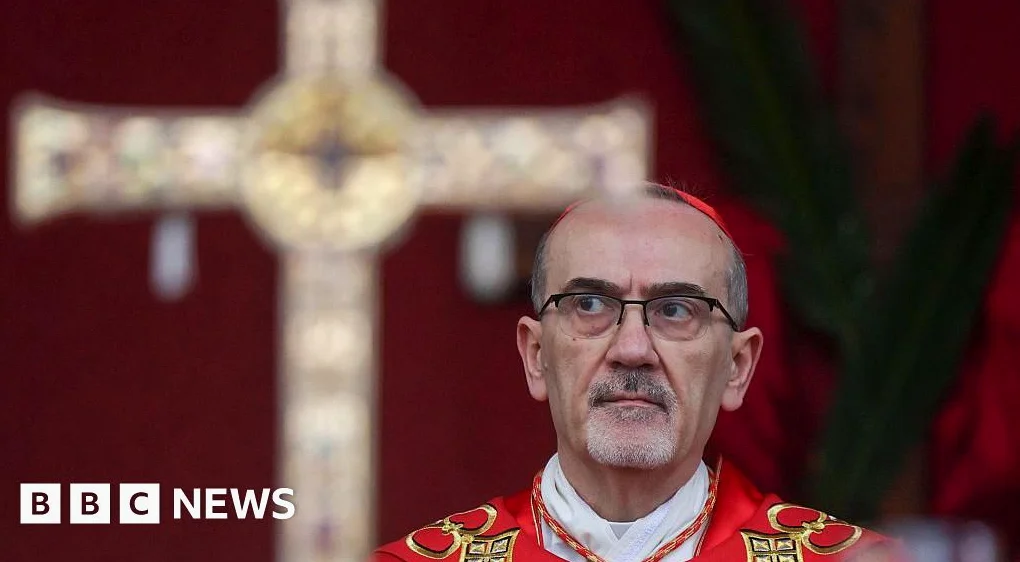
Israeli police blocked the Latin Patriarch of Jerusalem from celebrating Palm Sunday Mass at the Church of the Holy Sepulchre, a site many believe is where Jesus was crucified, according to multiple reports. The incident, which occurred on April 5, 2025, marked the first time in centuries that the annual ceremony could not be held at the church, according to the Latin Patriarchate of Jerusalem.
Historical Significance and Religious Impact
The Church of the Holy Sepulchre, located in the Christian Quarter of Jerusalem’s Old City, is one of the most sacred sites in Christianity. It is believed to house the tomb of Jesus Christ, making it a central location for Christian pilgrimage and worship. The Palm Sunday Mass is traditionally held in the Kidron Valley, near the site where Jesus is believed to have entered Jerusalem on his final journey.
According to the Latin Patriarchate of Jerusalem, the Mass was moved to a nearby location due to security concerns. Father Fouad Twal, the Latin Patriarch, stated, ‘It is the first time in centuries that we have not been able to hold the Palm Sunday Mass in the Kidron Valley. This is deeply painful for the entire Christian community.’
The move has sparked concern among religious leaders and pilgrims. A statement from the Greek Orthodox Church noted that the disruption ‘undermines the spiritual significance of the event and sends a message that the site is not fully accessible to all faiths.’
Security Measures and Political Context
Israeli police cited increased security threats as the reason for the blockage. According to Reuters, the decision was made after intelligence reports indicated a heightened risk of unrest in the area. The police emphasized that their actions were aimed at preventing potential clashes between different religious and political groups.
However, some critics argue that the move is politically motivated. A report from Al Jazeera highlighted that the Latin Patriarchate has long expressed concerns about the lack of access to holy sites for non-Muslim groups, particularly in the wake of recent tensions in the region. ‘This is not just about security; it’s about control over sacred spaces,’ said a senior Palestinian Christian leader in a statement to the outlet.
According to the Israeli Ministry of Religious Affairs, the decision was made in coordination with the Jerusalem municipality and other religious authorities. ‘Our priority is to ensure the safety of all worshippers and pilgrims,’ an official said in a statement.
International Reactions and Religious Unity
The incident has drawn international attention, with religious leaders and human rights organizations expressing concern over the restrictions on access to holy sites. The Vatican issued a statement condemning the decision, stating, ‘We call on all parties to respect the rights of religious minorities and ensure that sacred sites remain open to all who wish to worship there.’
In France, the Catholic Church’s official newspaper, La Croix, reported that the move has raised questions about the treatment of Christian communities in the Holy Land. ‘This is a symbolic act that affects not only the Catholic Church but the broader Christian presence in Jerusalem,’ wrote the editor in an editorial.
Meanwhile, in the United States, the National Council of Churches released a statement calling for ‘dialogue and cooperation between all religious groups to protect the sanctity of these sites.’ The statement also urged the Israeli government to ‘ensure that all faiths have equal access to holy places.’
Local Impact and Community Response
Local Christian communities in Jerusalem have expressed disappointment and frustration over the incident. According to a report from the Israeli newspaper Haaretz, many pilgrims had traveled from around the world to attend the Palm Sunday Mass, only to find it relocated. ‘It’s heartbreaking to see such a sacred event disrupted,’ said one pilgrim from Italy, who had traveled 12 hours by bus to be there.
Some local residents have also raised concerns about the broader implications of the decision. ‘This isn’t just about one Mass; it’s about the right to worship freely in our own city,’ said a local shopkeeper in the Christian Quarter.
Despite the restrictions, the Latin Patriarchate has continued to hold the Mass in an alternate location. According to the Patriarchate’s official website, the service was attended by approximately 500 people, a fraction of the usual turnout. ‘We remain committed to our faith and to our community, even in difficult circumstances,’ said a spokesperson.
What’s Next and Why It Matters
Religious leaders are calling for a meeting with Israeli authorities to discuss the issue and seek assurances that such disruptions will not occur in the future. The Vatican has already indicated that it may take further steps if the situation does not improve. ‘We cannot allow the sanctity of these places to be compromised,’ a Vatican official said in a private meeting with diplomatic representatives.
The incident also highlights the ongoing tensions over access to holy sites in Jerusalem, which has long been a flashpoint in the region’s complex political landscape. The city’s status as a shared holy site for Jews, Christians, and Muslims makes it a sensitive and often contested area.
As the Christian community continues to handle these challenges, the incident serves as a reminder of the delicate balance required to maintain religious harmony in one of the world’s most contested cities. The outcome of this situation will likely have lasting implications for interfaith relations and the treatment of minority religious groups in Israel.






Comments
No comments yet
Be the first to share your thoughts