

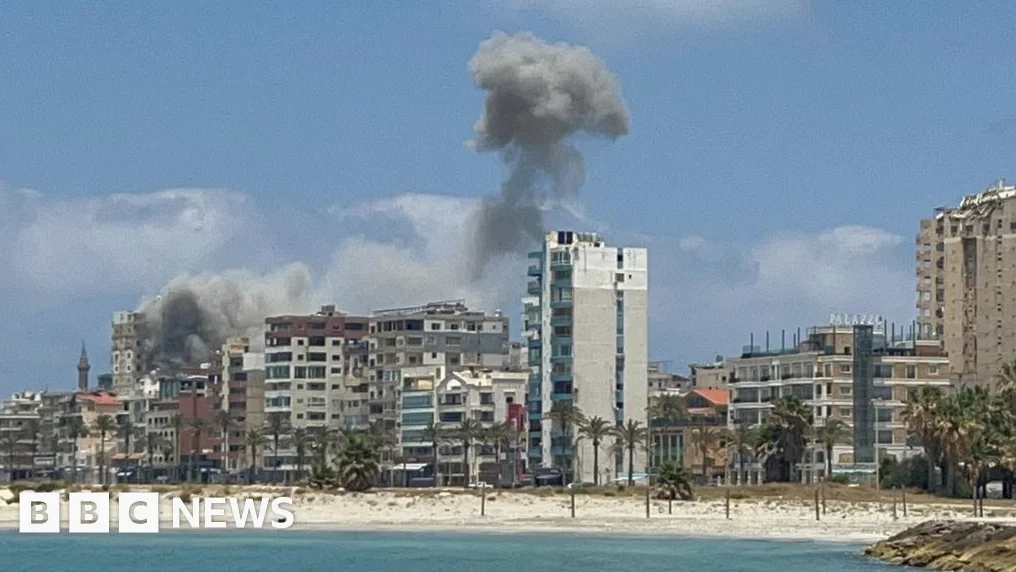
Israeli air strikes hit the Lebanese city of Tyre despite an Iranian warning to halt hostilities, according to reports; Tensions have escalated since mid-April when a ceasefire between Israel and Hezbollah was in place. The conflict has been further complicated by diplomatic efforts involving the U.S., with President Donald Trump asserting that Israel and Hezbollah have agreed to dial back fighting. However, uncertainties persist as both sides continue to threaten military action.
Trump’s Mediation and the Status of Ceasefire Talks
U.S. President Donald Trump said on Monday that Israel and Hezbollah have agreed to dial back fighting after he spoke with Israeli Prime Minister Benjamin Netanyahu and communicated with Hezbollah through mediators. Trump announced the development in a social media post, stating that Israeli forces would not send troops to Beirut and that those on their way had already been turned back. He added that Hezbollah had agreed to stop all shooting and that neither side would attack the other.
Netanyahu, while confirming the conversation, cast it more as a warning than a sign of restraint — he told Trump that Israel would strike targets in Beirut if Hezbollah’s attacks did not stop. The Israeli military will continue its operations in southern Lebanon, he said; there was no immediate confirmation from Hezbollah.
Lebanese Authorities and the U.S. Proposal
According to a statement from the Lebanese Embassy to the U.S., Lebanese authorities secured Hezbollah’s approval for a proposal by U.S. Secretary of State Marco Rubio. The proposal called for Israel not to strike Beirut’s southern suburbs and for Hezbollah not to attack northern Israel; Moments after Trump’s message, Israel detected missile launches from Lebanon and warned Israelis in parts of northern Israel to take cover.
Meanwhile, a separate report indicated that Israel and Iran halted renewed fighting on June 8 after it had resumed for the first time in two months since the April 8 ceasefire. This followed Trump’s call for an immediate cessation of hostilities. The confrontation had escalated toward the brink of a full-scale war after Iran retaliated with ballistic missile strikes in response to an Israeli airstrike on Beirut.
Uncertainties and Future Threats
Despite the apparent de-escalation. Uncertainties have resurfaced regarding ceasefire negotiations — Israel remains committed to targeting Hezbollah in Lebanon, and Iran has warned of renewed military action. In addition, Yemen’s Houthi rebels have threatened to block the passage of Israel-linked vessels through the Red Sea; the situation remains fluid, with both sides maintaining their military postures and the U.S. continuing to mediate efforts.






Comments
No comments yet
Be the first to share your thoughts