

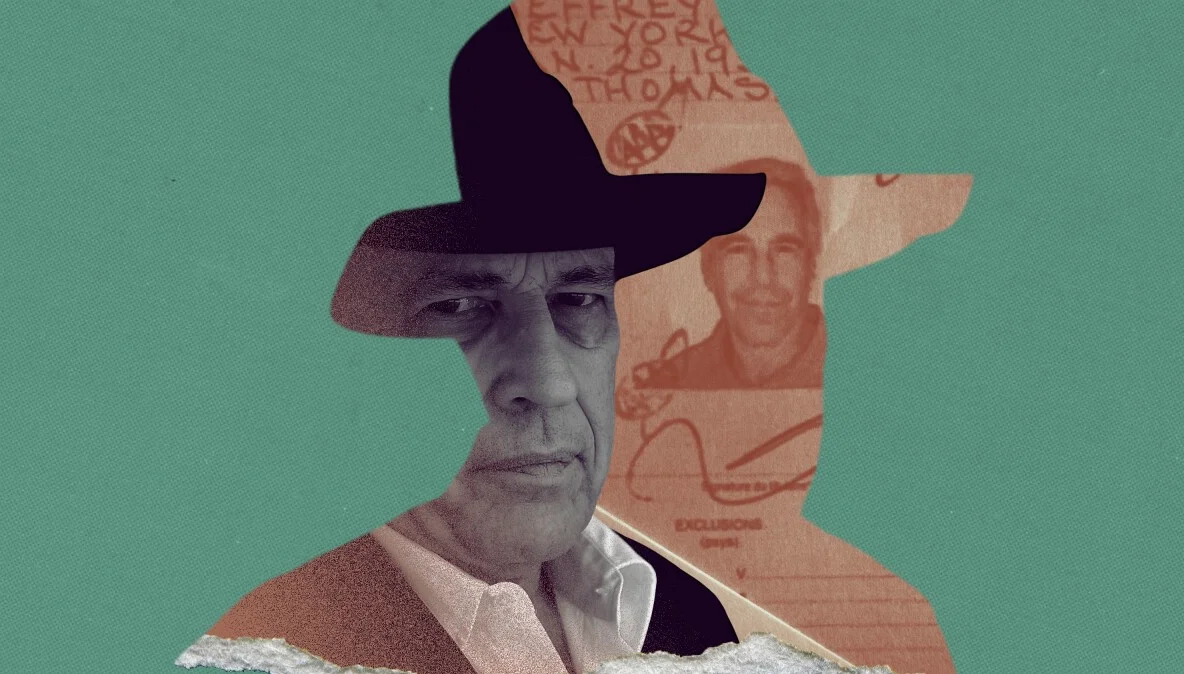
The release of the Epstein files has uncovered a complex web of connections that span criminal activity, complicity, and intellectual circles. Among the names that have emerged repeatedly is John Brockman, a literary agent with an enviable client list that includes Nobel Prize winners and prominent scientists. Brockman’s role in Epstein’s network has raised questions about the intersection of power, influence, and academic prestige.
Epstein’s Academic Entrée
Jeffrey Epstein was known for cultivating relationships with influential figures across culture, politics, and academia. One of his primary connections to the academic world was through Brockman, a literary agent with a reputation as a gatekeeper to scientific and intellectual elites. Brockman’s client list includes notable figures such as Richard Dawkins, Daniel Dennett, Jared Diamond, Martin Nowak, and Steven Pinker.
PZ Myers, a prominent science writer, has described Brockman as the “king of scientific publishing.” According to Myers, anyone seeking to publish a science book would have had to make the pilgrimage to New York and “kiss the feet of John Brockman.”
The Edge Foundation and Epstein’s Influence
Brockman was more than just a literary agent; he was a networker and salon impresario with an intellectual agenda. He founded the Edge Foundation in the late 1980s, which became a hub for what Brockman called “third culture” intellectuals—scientists who could communicate directly with the public. The Guardian once called Edge “the world’s smartest website.”
Edge became known for its annual questions, such as “What is your dangerous idea?” or “What scientific idea is ready for retirement?” These questions were answered by Edge-affiliated thinkers and then compiled into books. Edge also hosted what Brockman called “The Billionaires’ Dinner,” an exclusive gathering that brought together his literary clients with tech titans like Jeff Bezos, Sergey Brin, Elon Musk, Larry Page, and Eric Schmidt.
Epstein was not merely an observer at these events. A BuzzFeed News review of Edge’s IRS filings shows that Epstein was the foundation’s primary donor for years. His final recorded donation was in 2015, the same year that the Billionaires’ Dinners ceased.
Brockman’s Connection to Epstein
M. Syd Rosen, a historian of science who wrote his dissertation on Brockman at the University of Cambridge, recently spoke about Brockman’s ties to Epstein. Rosen, who is working on a book about Brockman, interviewed him five times in 2022. Brockman agreed to the interviews on the condition that Rosen not ask about Epstein. Since the Epstein scandal broke, Brockman has not publicly commented on the matter.
Rosen explained that the most documented thing Brockman received from Epstein was financial support. Epstein provided hundreds of thousands of dollars to the Edge Foundation, a significant sum for a small organization. Epstein was not a passive donor; he participated in Edge dinners and subsidized the work of some of the attendees.
Epstein, after his 2008 conviction and subsequent imprisonment, sought to rehabilitate his reputation. He used people with social and financial capital to help him “launder” his image. Websites like jeffreyepsteinscience.com were created, which listed various outfits Epstein had funded and prizes he had given. One of these sites falsely referred to Epstein as being associated with “The Edge organizatin (sic) Inc.”
These websites were part of Epstein’s effort to distance himself from his past. One of the testimonials featured on the site was from Martin Nowak, whose lab at Harvard received $6.5 million from Epstein. Nowak stated, “There are not any disadvantages to associating with him.”
Many public intellectuals who have distanced themselves from Epstein have claimed that they were not aware of his criminal activities. However, some documents suggest that members of the Edge network may have been more involved in shielding Epstein than previously thought. An email from Richard Dawkins to Brockman in 2011 referenced a journalist’s piece about Lawrence Krauss, a Brockman client, and mentioned Epstein’s arrest.
Dawkins wrote, “There’s a rather nasty young woman called Rebecca Watson who seems to be running some kind of witch hunt against Lawrence Krauss because of his defense of Jeffrey Epstein.” He also asked Brockman to remind him of the circumstances of Epstein’s arrest, suggesting that Epstein’s case was not as black as painted.
Brockman forwarded this email to Epstein, and the message included a note that said, “FYI, see Richard Dawkins email below alerting me to a campaign against our friend LMK re: his friendship with you.”
Rosen suggested that this interaction implies a level of complicity or at least a willingness to shield Epstein. However, he clarified that there is no evidence that members of the Edge network were aware of ongoing criminal activity by Epstein.
Brockman’s rise to prominence began in the mid-1960s, when he was part of the downtown avant-garde in New York. He briefly managed an institution called the Film-Makers’ Cinematheque, which featured experimental cinema known as “expanded cinema.” This experience may have shaped his approach to networking and influence.
Brockman’s father was a wholesale flower dealer in Boston, and Brockman often cited his father’s advice about selling things before they’re dead. This early lesson in the attention economy may have contributed to his success in connecting scientists with the public.




Comments
No comments yet
Be the first to share your thoughts