

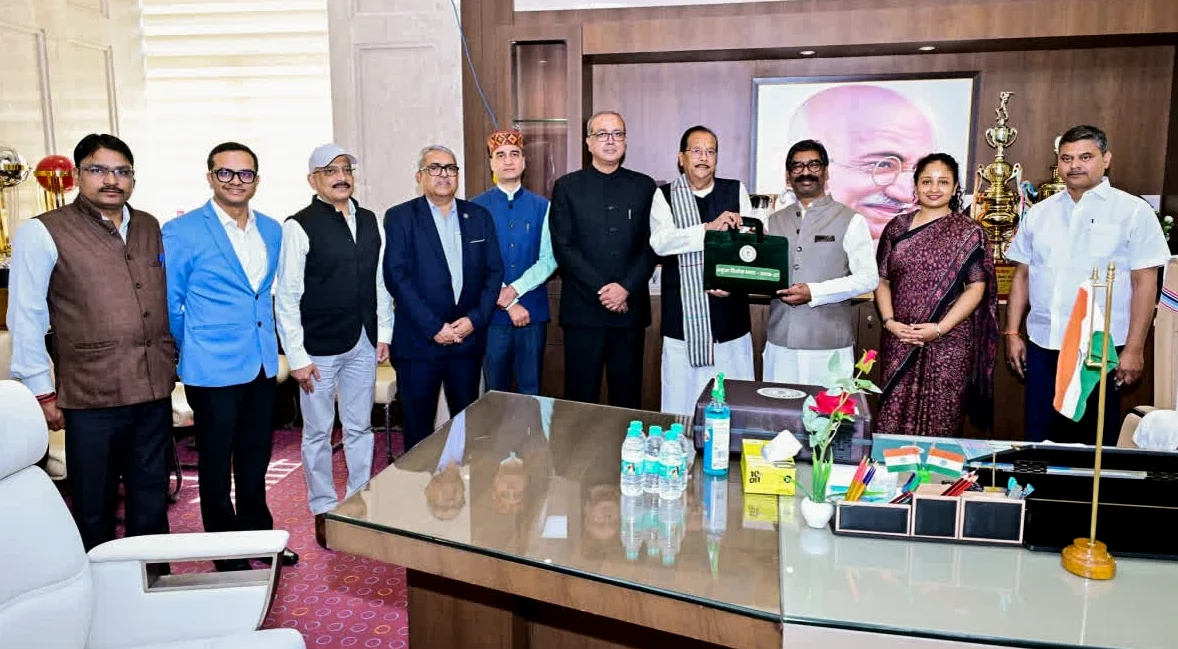
Ranchi: The Jharkhand government has submitted a Rs 1.58 lakh crore budget for the 2026-27 fiscal year, marking a 9% increase compared to the Rs 1.45 lakh crore budget of the previous year. The budget, presented by Finance Minister Radhakrishna Kishore, emphasizes inclusive growth and development for all sections of society, including the poor, farmers, tribals, and women.
Sectoral Allocation and New Initiatives
According to Kishore, the budget includes Rs 32,055.83 crore for the general sector, Rs 67,459.54 crore for the social sector, and Rs 59,044.63 crore for the economic sector. A new initiative, the Mahila Khushhali Yojna, aimed at supporting women in agricultural activities, will receive Rs 25 crore. Additionally, 100 new Chief Minister schools of excellence are planned to be opened in the next fiscal year.
The budget also highlights Jharkhand’s rich resources, including mineral deposits, religious sites such as the Baba Baidyanath temple in Deoghar and the Rajrappa temple, and popular tourist spots like Netarhat. Kishore emphasized the government’s commitment to inclusive growth and development, despite challenges posed by the opposition.
Central Government Criticisms and Financial Challenges
Kishore accused the central government of providing inadequate financial assistance to Jharkhand. He stated that the state did not receive the central tax share of Rs 5,000 crore and grants-in-aid of Rs 11,000 crore. He also noted that the share of central taxes is gradually declining, adding that the state has to bear an additional Rs 5,640 crore due to the VB-G RAM G Act.
Furthermore, the Finance Minister criticized the Union government for not clearing dues amounting to Rs 1.36 lakh crore in lieu of coal mining by central public sector units. Kishore mentioned that the budget proposes Rs 1.20 lakh crore for revenue expenditure, a 9.2% increase from the previous year. Capital expenditure is set at Rs 37,708 crore, reflecting an 8.5% increase over the previous year’s budget.
Implications for Development and Social Welfare
The social sector allocation of Rs 67,460 crore is expected to have a significant impact on the welfare of the poor and vulnerable groups. This includes initiatives aimed at improving education, healthcare, and economic opportunities for women and other marginalized communities. The new Mahila Khushhali Yojna is designed to provide targeted support to women in agriculture, potentially improving their economic status and productivity.
With the opening of 100 new CM schools of excellence, the government aims to enhance the quality of education in the state, which could lead to long-term benefits for the youth and the economy. These schools are expected to focus on providing better infrastructure, trained teachers, and modern teaching methods.
The budget also highlights the state’s efforts to use its natural and cultural resources for development. By promoting tourism and investing in infrastructure, Jharkhand aims to attract more investment and create employment opportunities for its residents.
Despite the opposition’s challenges, Kishore remains committed to ensuring the state’s all-round development. The government’s emphasis on inclusive growth suggests a focus on reducing disparities and ensuring that all sections of society benefit from development initiatives.
The budget for 2026-27 is a significant step in Jharkhand’s development journey, with the potential to impact the lives of millions of residents. The success of this budget will depend on effective implementation and the government’s ability to address the financial challenges it faces, including the need for adequate central support.





Comments
No comments yet
Be the first to share your thoughts