

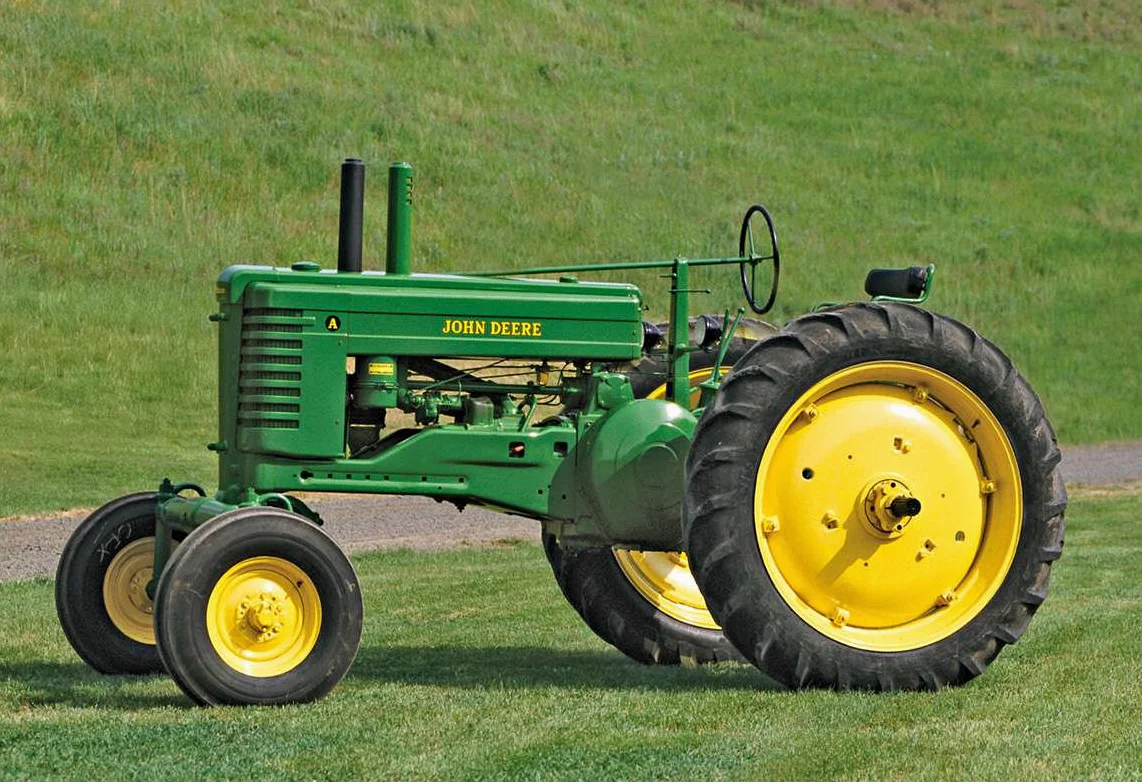
John Deere. One of the most recognizable names in agricultural and construction machinery, is handling a significant legal development. The company agreed to a $99 million settlement with farmers and individuals who participated in a class-action lawsuit related to equipment repair issues, according to The Drive. The settlement includes a 10-year agreement to provide digital tools for maintenance and repair, addressing longstanding concerns about software restrictions and access to diagnostic systems.
Resilience in the 1930s: Deere’s Comeback During the Great Depression
In the early 1930s. Deere faced one of its most difficult periods in its then 90-plus-year history, as tractor sales plummeted during the Great Depression, and By 1930, only 38 companies remained in the tractor manufacturing industry, down from 193 in 1929, according to Successful Farming. Deere’s stock dropped from over $300 a share in the late 1920s to $29 by the end of 1930; While not on the brink of bankruptcy, the firm experienced a funding shortfall due to the failing U.S. bank system.
International Harvester had introduced the Farmall Regular in 1924, a flexible row crop tractor that outperformed Deere’s Model General Purpose (GP), introduced in 1928; Deere’s efforts to catch up were hindered by competitors like J.I. Case and Oliver, who offered machines with better fit and features. Charles Wiman. John Deere’s great-grandson. Took over as president in 1928 and created a Power Farming committee in 1931 to study and improve tractor technology, according to Successful Farming.
John Deere’s Cultural Impact and Innovation
John Deere’s influence extends beyond machinery. In Oregon, farmer Roy Hofer runs a private farm machinery museum featuring his collection of tractors and has become a leader in the American Farm Bureau Federation, as reported by Capital Press. Hofer’s passion for vintage equipment led to his national role with the Young Farmers & Ranchers Committee. His collection includes a rare John Deere 320, displayed at the John Deere Tractor and Engine Museum in Waterloo, Iowa.
Hofer also emphasizes the simplicity of older tractors, particularly those from the Dubuque Works factory, which produced smaller two-cylinder models. His experience highlights the enduring appeal of classic machinery and the community that surrounds it. The museum and his farm serve as meeting points for farmers and enthusiasts, building connections through shared interests in agricultural history.
John Deere’s Global Reach and Technological Leadership
John Deere’s technological leadership is also evident in Europe, where it played a key role in the Med Zone CUP 2026, an event held at El Valle Golf GNK Golf in Spain, according to Levante-EMV. The event brought together professionals from Italy, Germany, France, and Spain to showcase the latest innovations in golf course maintenance, including electric machinery, precision systems, and digital platforms. John Deere collaborated with Rain Bird and Wiedenmann to demonstrate how technology is changing the industry, with maintenance becoming a strategic and not just operational concern.
Meanwhile, TIKR.com reports that John Deere’s stock is currently trading at around $480, with a market capitalization of approximately $130 billion. The company is owned by major institutional investors, including Vanguard Group (8.24%), Cascade Investment (7.31%), and BlackRock (4.09%). These ownership patterns reflect confidence in Deere’s long-term profitability and its shift from a traditional equipment manufacturer to a technology-driven company in agriculture and construction.






Comments
No comments yet
Be the first to share your thoughts