

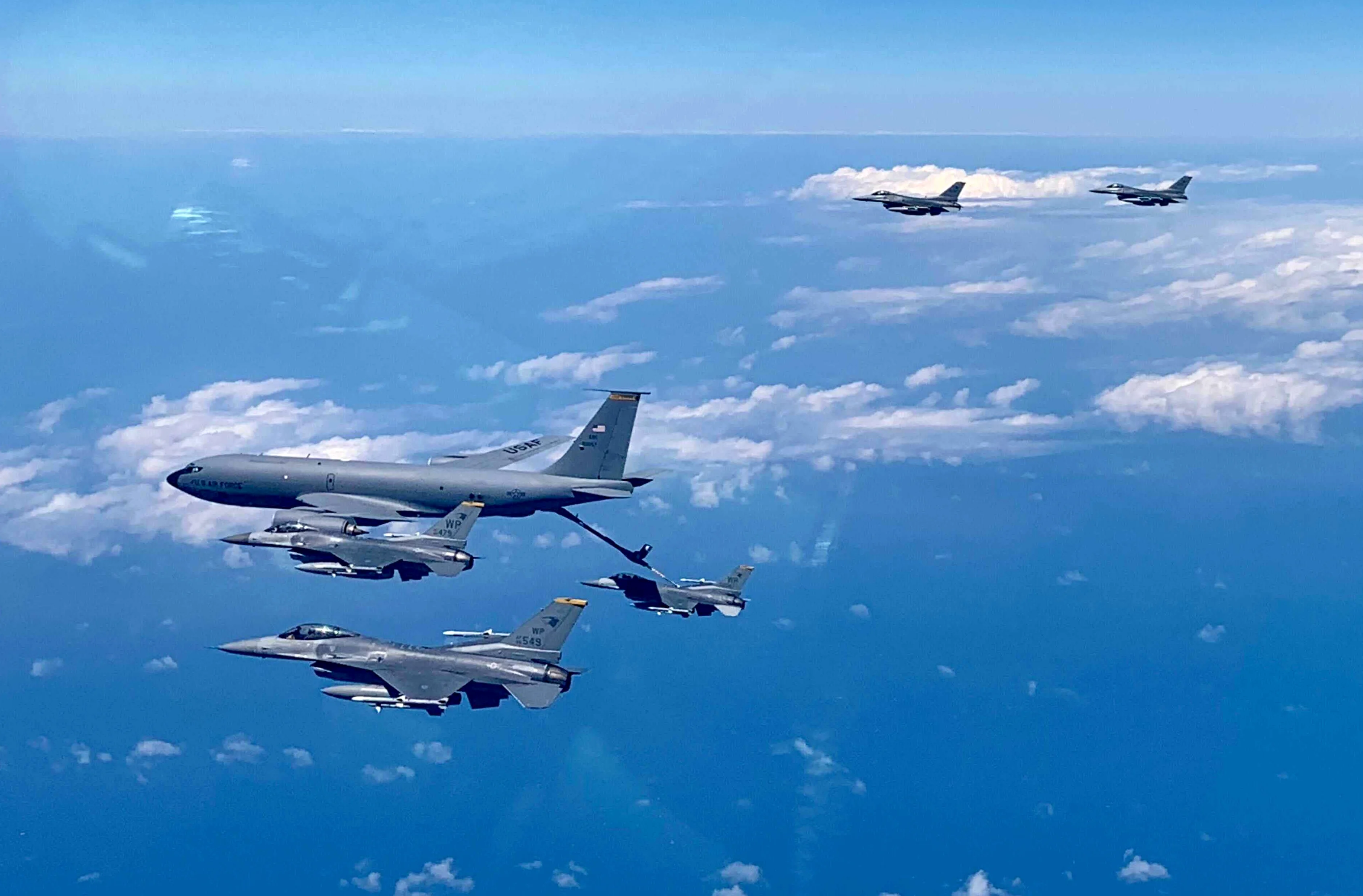
It was a quiet afternoon in western Iraq when a U.S. Air Force KC-135 refueling aircraft, part of a mission supporting operations against Iran, crashed in what the military described as ‘friendly’ airspace. Among the six service members who perished was Tech. Sgt. Ashley B. Pruitt, a 34-year-old mother from Bardstown, Kentucky, who had previously served in the Air National Guard in Covington, Washington. Her husband, Gregory Pruitt, described her as ‘radiant’—a light in the room, a mother to two children, and a dedicated airman with nearly 900 combat flight hours.
A Nation in Mourning
The Pentagon officially identified the six service members on March 16, confirming the names of Maj. John Klinner, Capt. Ariana G. Savino, Tech. Sgt. Ashley B. Pruitt, Capt. Seth Koval, Capt. Curtis Angst, and Tech. Sgt. Tyler Simmons. The crash, which occurred during a mission in support of broader regional objectives, has sent shockwaves through military communities across the United States, including in Covington, Washington, where Pruitt had once served.
Col. Ed Szczepanik, commander of the 6th Air Refueling Wing, released a statement expressing the anguish felt by the Air Force family. ‘To lose a member of the Air Force family is excruciatingly painful, especially to those who know them as son, daughter, brother, sister, spouse, mom, or dad. To lose them at the same time is unimaginable,’ he said.
The tragedy has also struck the hearts of military leaders across the country. Maj. Gen. Matthew S. Woodruff, the Ohio adjutant general, called the three service members from the Ohio Air National Guard ‘remarkable Airmen whose service and commitment embodied the very best of our Ohio National Guard. Their impact on their teammates and our mission will not be forgotten.’
The KC-135: A Pillar of Air Power
The KC-135 Stratotanker, the aircraft involved in the crash, has been a mainstay of U.S. military operations for over six decades. Designed for aerial refueling and air transport, the KC-135 has been instrumental in global military missions, from the Vietnam War to the wars in Iraq and Afghanistan. The aircraft in question was part of the 6th Air Refueling Wing based at MacDill Air Force Base in Florida and the 121st Air Refueling Wing from Rickenbacker Air National Guard Base in Columbus, Ohio.
Tech. Sgt. Ashley B. Pruitt, a key member of the 99th Air Refueling Squadron at Sumpter Smith Joint National Guard Base in Alabama, was an assistant flight chief of operations and an instructor in operating the boom of the KC-135. Her expertise and dedication were evident in her 900 combat flight hours and her two associate degrees from the Community College of the Air Force.
A Family’s Loss
The tragedy has left a profound impact on Pruitt’s family. Gregory Pruitt, her husband, described her as ‘radiant,’ a word that captures the essence of her personality and the light she brought to those around her. ‘If there was a light in the room, she was it,’ he said, struggling to hold back tears. Survivors include their 3-year-old daughter and Pruitt’s stepson.
Pruitt had previously deployed overseas three times, showcasing her commitment to service. Her family, rooted in Bardstown, Kentucky, has long been a source of pride for her, and her service in Covington, Washington, was a testament to her dedication to her country and her community.
Investigations and the Road Ahead
As the military investigates the cause of the crash, officials are reviewing flight records, maintenance logs, and mission parameters to determine the root causes and contributing factors. The incident has raised questions about the safety of aerial refueling operations in high-stakes environments, particularly in the context of ongoing operations against Iran.
While the military has focused on honoring the memory of the fallen, the incident has also sparked discussions about the risks faced by service members in modern warfare. The crash serves as a stark reminder of the dangers inherent in military operations, even in what is considered ‘friendly’ airspace.
The Human Cost of War
The loss of six service members in a single incident is not just a military tragedy—it is a human one. Each of the fallen had families, friends, and communities that will bear the weight of their absence. The impact of such losses extends far beyond the military, affecting the lives of those left behind.
As the investigation continues, the nation will watch closely, hoping for answers that can prevent similar tragedies in the future. The military has already begun to honor the memory of the fallen, with leaders from across the Department of Defense emphasizing the need to support their families during this difficult period.
Legacy and Memory
The service members who died in the crash will not be forgotten. Their legacy will live on in the lives they touched and the missions they supported. For the families of the fallen, including those in Covington, Washington, the loss is immeasurable, but their memory will endure.
In the days and weeks to come, the military will continue to honor the service and sacrifice of those who lost their lives. Their story is one of dedication, courage, and a deep commitment to country—a story that will be remembered for generations to come.






Comments
No comments yet
Be the first to share your thoughts