

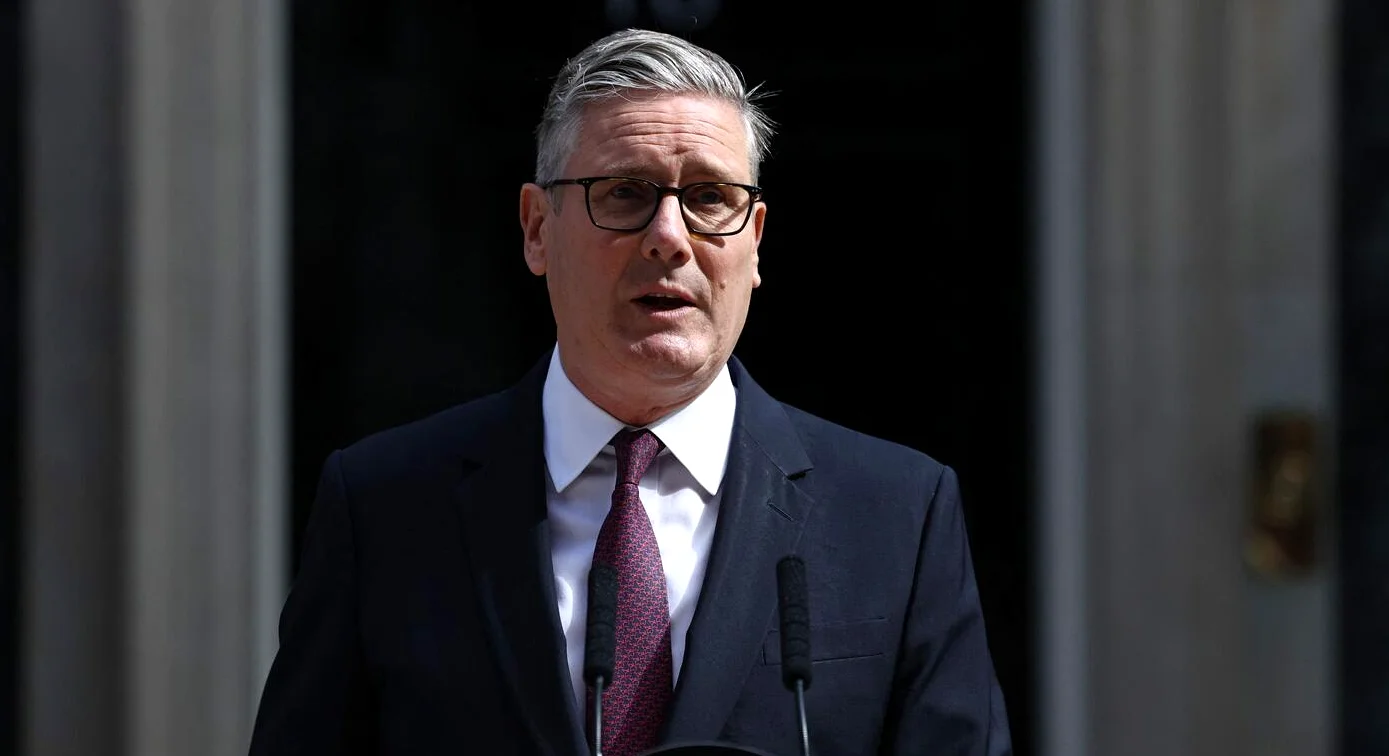
British Prime Minister Keir Starmer announced his resignation on Monday, saying he would step down as leader of the governing Labour Party but remain in a caretaker role until a new leader is elected. According to CNN. The move comes less than two years after Labour’s historic landslide victory in the July 2024 general election, which marked the first time the party had won a majority in over a decade. Starmer’s announcement adds to the political instability in the UK, which will now have its sixth prime minister in seven years.
Andy Burnham Set to Succeed Starmer
Andy Burnham. The former mayor of Greater Manchester. Has emerged as the most likely successor to Starmer — According to Tagesspiegel, Burnham announced his candidacy for the Labour Party leadership shortly after Starmer’s resignation. Burnham secured a parliamentary seat in the Makerfield constituency on Monday after winning a by-election, which is a prerequisite for challenging for the prime ministership, while Wes Streeting, a former health minister and another potential challenger, confirmed his support for Burnham.
Starmer’s resignation was expected to prevent a prolonged leadership contest, which could have further weakened the government; According to the Neue Zürcher Zeitung, Starmer had previously stated he would not step down, despite growing pressure from within his own party. However, the timing of Burnham’s by-election win appears to have accelerated the decision.
Public Discontent and Policy Missteps
Starmer’s tenure has been marked by a sharp decline in public approval. According to CNN, he is now the least popular prime minister in modern British history. Despite avoiding major foreign policy controversies or economic missteps, his domestic policies, such as a plan to increase heating costs for wealthier pensioners and cuts to disability benefits, drew significant criticism. A recent controversy involving the appointment of Peter Mandelson, a former associate of convicted sex offender Jeffrey Epstein, to the role of UK ambassador to Washington also contributed to the pressure on Starmer to resign.
His attempts to reverse some of those policies were met with resistance from both the public and his own party. Starmer’s government inherited the political and economic legacy of years of Conservative austerity, according to CNN. The timing of his resignation—nearly 10 years after the Brexit referendum,highlights the ongoing political instability in the UK.
Starmer’s Final Address and the Road Ahead
During his resignation speech at 10 Downing Street, Starmer said, “Every decision made during my tenure was the result of putting the country I love first.” According to Tagesspiegel, he added that his party had spoken and he would listen. After his speech, Starmer briefly embraced his wife, Victoria, and said he would now take time for his family.
Labour will begin the process of selecting a new leader on September 9 and aims to confirm a new prime minister by September 1, according to the 경향신문. With Burnham already in the House of Commons and the support of key Labour figures, he appears to be the frontrunner for the leadership. The international community is now watching closely to see how the UK will manage its next chapter of political uncertainty.





Comments
No comments yet
Be the first to share your thoughts