

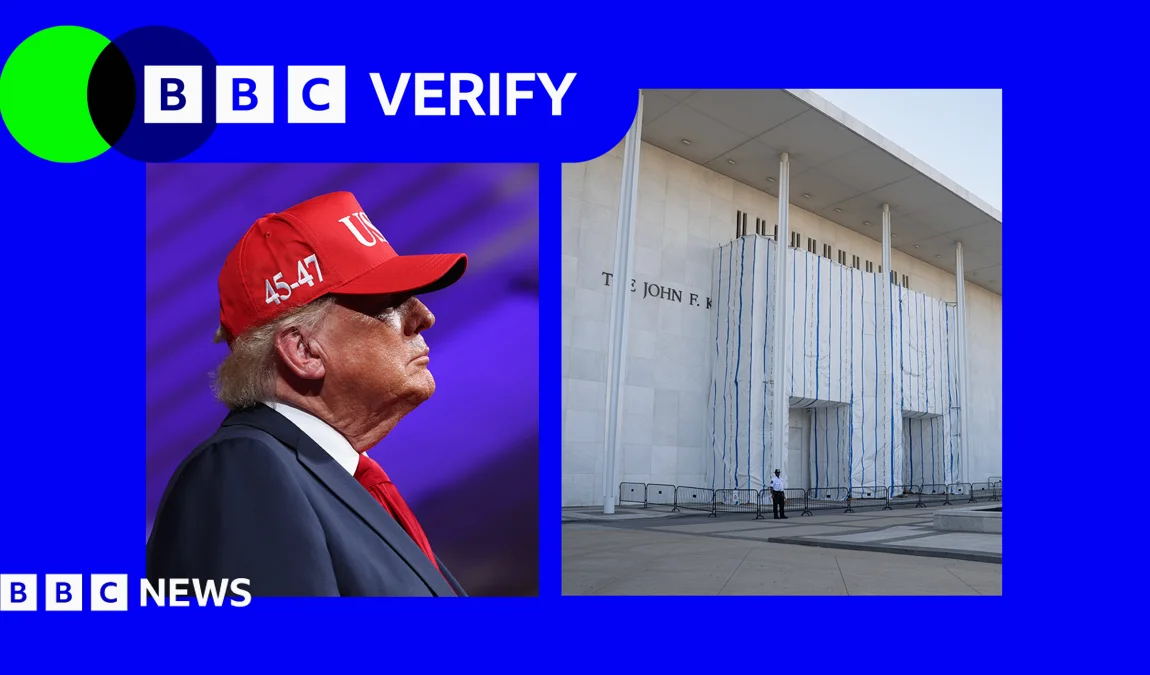
The Kennedy Center Board of Trustees voted to close the main building of the arts institution immediately, according to a report by the Washington Post — the decision was announced by President Donald Trump on his social media platform, Truth Social. The closure followed a court ruling that blocked the board’s attempt to add Trump’s name to the building in recognition of his role in the planned renovations.
Structural Risks and Financial Strain
The board’s decision was informed by a 57-page document provided ahead of the meeting, which warned that keeping the main building open posed safety risks to visitors and staff. The document included a two-page memorandum from Executive Director Matt Floca, installed by Trump in March, referencing an incident on Sept. 4 in which a portion of the ceiling in the grand foyer collapsed after heavy rains, according to the Washington Post.
A resolution to close the building was also filed in court as part of ongoing litigation to prevent Trump’s name from being added to the front portico. The resolution cited an August report by Virginia-based Delta Consulting Group, which found the Kennedy Center in an escalating state of disrepair, and Both Delta Consulting Group and the center’s executive director deemed the building unsafe for continued use.
Financial Mismanagement Claims
Separate reports suggest that the Kennedy Center has faced severe financial strain under Trump’s leadership. A Substack article revealed that the center lost $30 million in pledges and wrote off $48 million in what it called “bad debt” during Trump’s tenure. According to the article, the center’s financial difficulties have been exacerbated by political interference and controversial leadership decisions.
Trump himself has criticized the institution’s financial state, calling it “a mess” and claiming it has lost tens of millions of dollars, “even hundreds of millions of dollars.” These remarks align with broader concerns about the center’s sustainability and governance.
Political and Legal Challenges
The closure and financial issues are part of a larger legal and political battle over the Kennedy Center’s name and governance. The board’s attempt to add Trump’s name to the building was rejected by a federal court, which ruled that only Congress could make such a change. The court’s decision highlighted the complex legal framework surrounding public memorials and the limits of executive authority in this context.
Democratic Rep. [name withheld] has disputed the board’s claims about the center’s condition and safety, raising concerns about the transparency and motivations behind the closure, and the political tensions reveal the intersection of cultural institutions, executive power, and public accountability.
The Kennedy Center’s two-year closure is expected to begin immediately, with renovations set to follow — the financial and structural challenges now facing the institution reflect broader questions about the stewardship of public cultural assets in a politically polarized environment.


Comments
No comments yet
Be the first to share your thoughts