

 The Hindu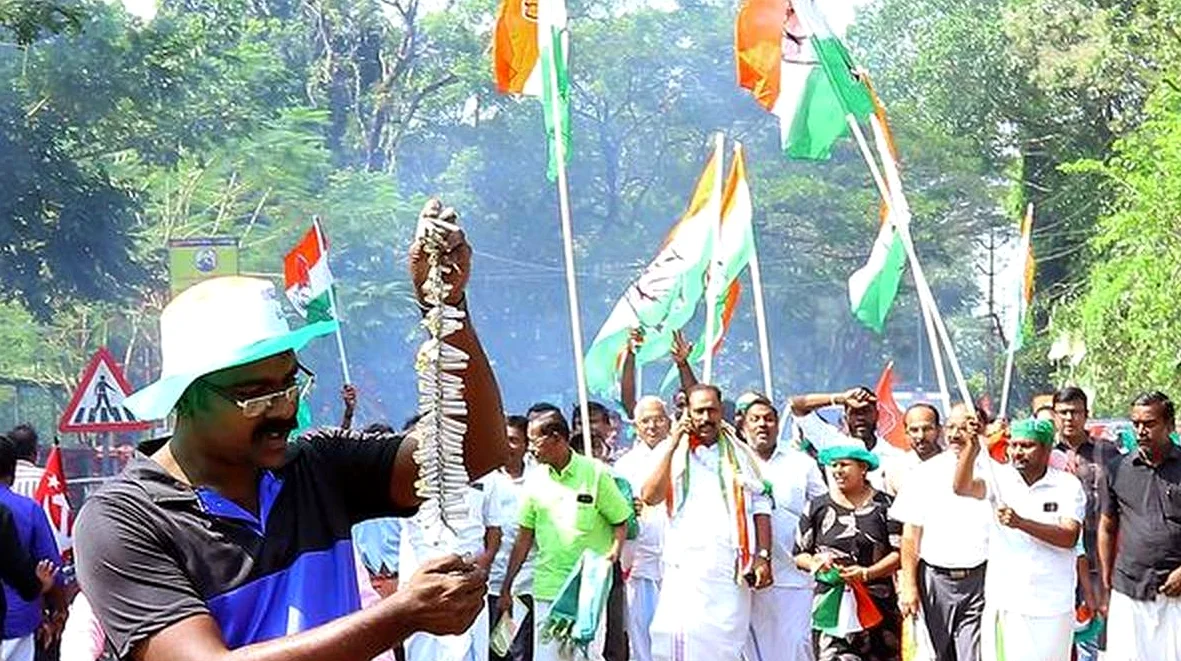
The Communist Party of India (Marxist) (CPI(M)) is grappling with internal and external challenges after a significant loss in the local body elections in Kerala, which many analysts see as a bellwether for the upcoming 2026 Assembly elections. The defeat, attributed in part to a decline in the quality of its grassroots work, has forced the party to reassess its strategy in the face of growing competition from the Congress-led United Democratic Front (UDF) and the BJP-led National Democratic Alliance (NDA).
The Erosion of Grassroots Strength
Ten years have passed since the CPI(M) first raised concerns about the erosion of its cadre’s effectiveness. A report from the party’s Kolkata Plenum in December 2015 highlighted a growing trend of cadres demanding to contest elections in areas where there was little support, leading to internal dissent and non-cooperation when decisions were made against their wishes.
Fast forward to December 2025, and the CPI(M) is still struggling to address these issues. The party’s preliminary assessment of the recent local elections indicated that its traditional strength in door-to-door campaigning, once a hallmark of its ‘squad work,’ had waned significantly. A senior CPI(M) leader lamented that this time, it was the UDF and NDA that showed greater diligence at the grassroots level, covering more areas systematically.
Internal Strife and Factionalism
Internal divisions have further complicated the CPI(M)’s position. The party, which had been on an atypical losing streak in local and Assembly elections since 2015, found itself facing an unprecedented number of rebel candidates in the 2025 civic elections. Factionalism resurfaced at the local level, with allegations of a ‘nexus with communal forces’ following the poor performance of Left-backed candidates in certain areas.
At a State secretariat meeting of the CPI(M), an exasperated senior leader called for ‘out-of-the-box solutions’ to engineer a turnaround in the lead-up to the Assembly polls. However, implementing such changes has proven to be a daunting task, particularly as the party’s leadership has been reshaped in recent years.
The Political Landscape and Challenges Ahead
Returning to power in the Kerala Assembly for an unprecedented second consecutive term in 2021, the CPI(M)-led Left Democratic Front (LDF) chose to distance itself from the old guard, with the exception of Chief Minister Pinarayi Vijayan, and instead a new generation of leaders. The government’s handling of the 2018 floods and the COVID-19 pandemic played a critical role in securing its re-election, but these successes have been overshadowed by recent controversies.
The Supreme Court’s 2018 verdict allowing women of all age groups to worship at the Sabarimala temple triggered a political storm, with the Left government maintaining a firm stance in favor of the court’s decision. However, the subsequent backlash and the politicization of religious issues have left fault lines in the party’s support base. The 2019 Lok Sabha elections saw the Congress and BJP capitalize on this, running on a platform that opposed the Sabarimala ruling, resulting in a crushing defeat for the Left.
Despite these challenges, the Left managed to secure a resounding victory in the 2021 State Assembly elections, with all sections of society, including religious minorities, rallying behind the party. However, the political landscape has since shifted, with the BJP gradually increasing its influence in the state and sections of the traditional Left constituency, particularly Hindu Other Backward Classes (OBCs), drifting away.
Analysts suggest that the recent local body elections serve as a referendum on the current government and a precursor to the 2026 Assembly polls. A month prior to the civic polls, the Kerala government announced its goal of eliminating extreme poverty, a program that lifted over 64,000 families out of extreme poverty through tailored plans. However, this narrative was overshadowed by internal disputes within the Left alliance, particularly over the government’s decision to join the PM-SHRI scheme, which the CPI had long opposed.
The CPI(M) has also faced challenges in maintaining its alliances, particularly with the Kerala Congress(M) (KC(M)), which helped secure Catholic Christian votes in 2021. However, tensions have since arisen over a range of issues, including the treatment of aided schools and human-animal conflicts in forested areas. While the Left Front has attempted to address these concerns, the Christian community, a significant portion of the settler-farmer population, remains critical of the government’s policies.
With the 2026 Assembly elections approaching, the CPI(M) faces an uphill battle. The party must not only address internal dissent and factionalism but also handle the growing influence of the BJP and the shifting dynamics of its traditional support base. The recent local elections have underscored the need for a renewed strategy, one that can reinvigorate the party’s grassroots strength and address the growing concerns of its constituents.




Comments
No comments yet
Be the first to share your thoughts