

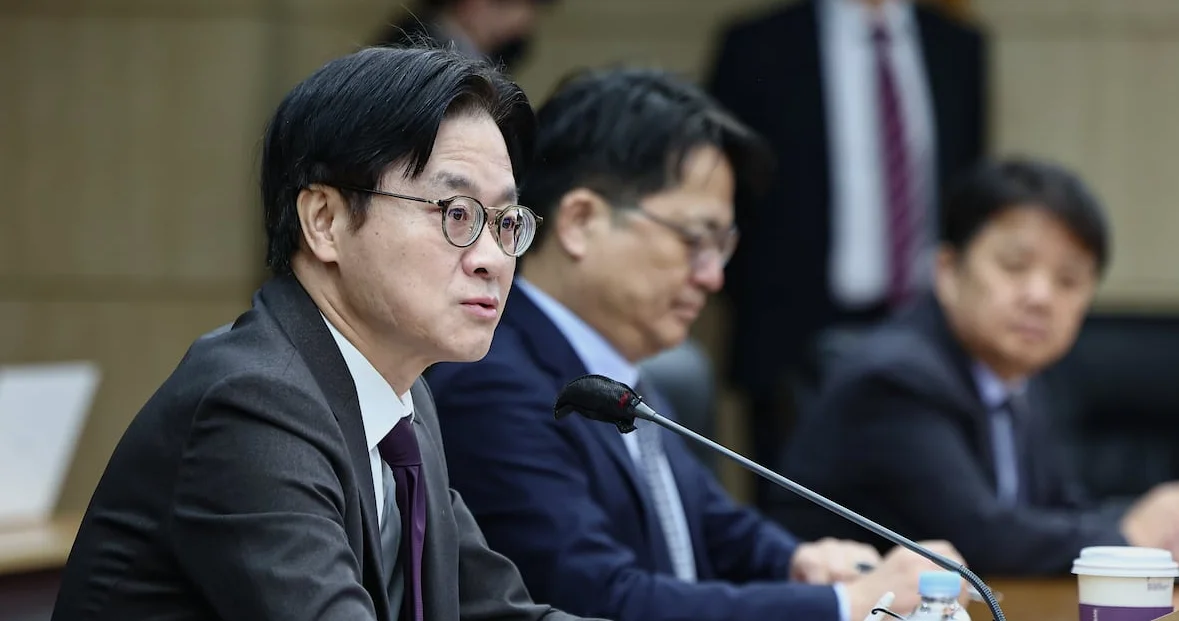
SEOUL — South Korea’s business leaders raised alarms after the U.S. Supreme Court struck down reciprocal tariffs on Thursday, prompting an immediate government huddle. Industry Minister Kim Jung-kwan led the session at the Seoul Technology Center at 10 a.m. Friday, joined by Trade Minister Yeo Han-koo, ministry department heads and commercial attachés from South Korea’s U.S. and Japan embassies.
The court ruled that tariffs imposed under the International Emergency Economic Powers Act, including those targeting fentanyl flows, were illegal and invalid. That wipes out the 15% reciprocal tariffs on South Korean goods. Tariffs on automobiles and steel, however, fall under separate laws like the Trade Expansion Act and stay in place untouched by the decision, officials said.
Minister Kim sought to steady nerves. “Export uncertainty to the U.S. has risen slightly, but conditions from the Korea-U.S. tariff deal hold firm overall,” he told participants. The government plans a thorough review of the ruling, U.S. follow-up steps and reactions from other major trading partners to shield Korean firms’ interests, he added.
The U.S. moved fast. The administration issued a proclamation for a 10% global tariff under Section 122 of the Trade Act, set to kick in at 12:01 a.m. on Feb. 24 local time. Exemptions cover natural resources, fertilizers, key minerals, coin metals, gold bars, energy products, beef, tomatoes, oranges, pharmaceuticals, select electronics, passenger vehicles, truck and bus parts plus certain aerospace goods.
South Korea’s Trade, Industry and Resources Ministry had war-gamed this exact scenario ahead of the court’s call. Now it will track U.S. implementation closely to curb disruptions, according to ministry statements.
Business groups fretted over renewed volatility. Tariff risks had eased after last year’s Korea-U.S. talks breakthrough. Now President Trump’s recent threats of hikes over stalled investment laws, piled on this ruling, fuel policy jitters.
“The Trump team’s flip-flopping on tariffs makes planning impossible. We’re stuck watching for now,” one business source said.
The auto sector dodged the worst. Negotiations last year cut tariffs from 25% to 15%. Since those are product-specific and outside the IEEPA scope, no big shifts loom immediately.
Shipbuilders see darker clouds. They locked in U.S. investment and operations under last year’s MASGA — Making American Shipbuilding Great Again — deal. “We based plans on those tariff outcomes. Any ripple from the ruling means revisions,” a shipbuilding industry source warned.
The ministry’s preemptive prep highlights South Korea’s vigilance on U.S. trade moves. With the 10% baseline tariff incoming, exemptions offer some relief for key exports. Still, companies brace for shifts as Washington recalibrates.


Comments
No comments yet
Be the first to share your thoughts