

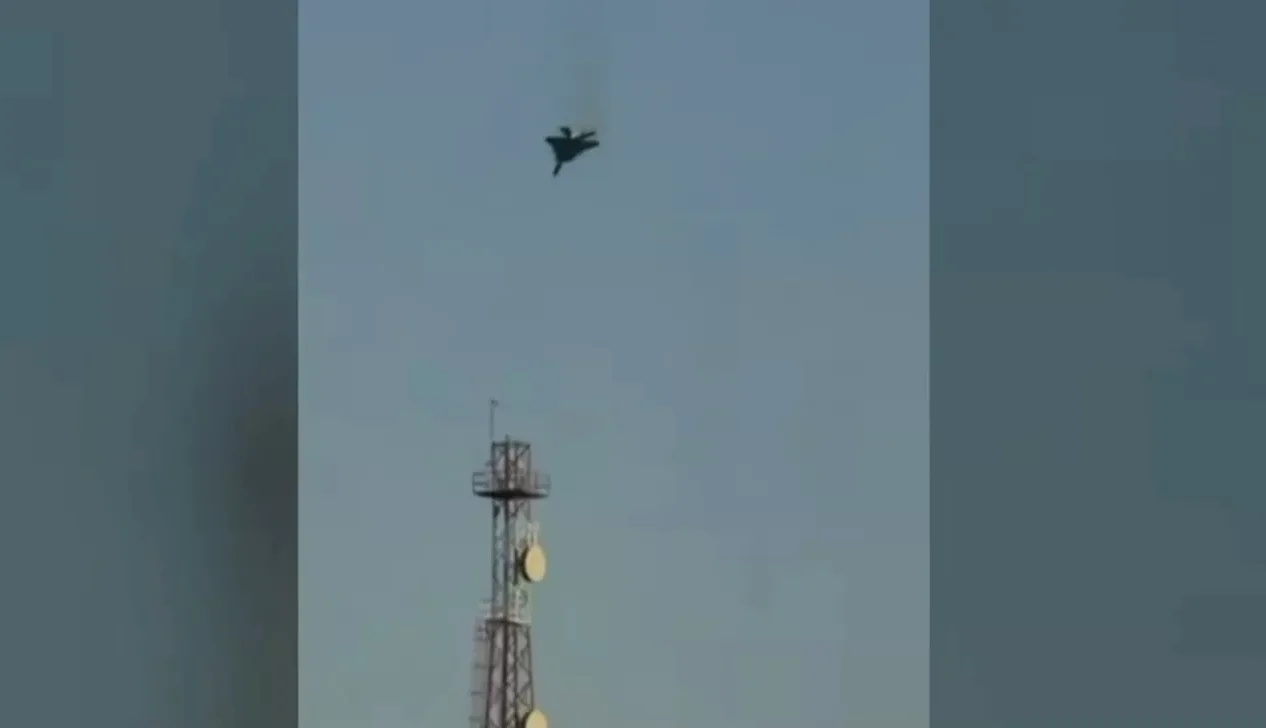
U.S. Central Command has confirmed that three U.S. F-15E Strike Eagles were shot down by Kuwaiti air defenses during a combat operation in the Gulf on Monday. The incident, described as a ‘friendly fire’ event, occurred during active hostilities involving Iranian attacks on U.S. and Israeli military targets across the region.
Operational Context and Crew Safety
The U.S. Air Force jets were flying in support of ‘Operation Epic Fury,’ a military operation launched earlier in the week. The statement from U.S. Central Command said the incident occurred during active combat, which included attacks from Iranian aircraft, ballistic missiles, and drones. All six aircrew members safely ejected and were recovered, with the command noting that they are in stable condition.
According to the statement, Kuwait has acknowledged the incident, and the U.S. expressed gratitude for the efforts of the Kuwaiti defense forces in the ongoing operation. The cause of the friendly fire is under investigation, with U.S. officials stating that additional details will be released when available.
Escalating Regional Tensions
The incident occurred amid a broader military escalation in the Gulf, following U.S. and Israeli strikes on Iran on Saturday. Iran responded by launching ballistic missiles and drones toward Israel and at multiple U.S. bases in the region, including those in Kuwait. The attacks also extended to the United Arab Emirates, where a drone strike caused a fire at a naval base hosting French forces.
The U.S. Central Command said that the incident with the Kuwaiti air defenses occurred during a period of heightened military activity, where U.S. forces were engaged in combat operations against Iranian-backed threats. The military operation, known as ‘Operation Epic Fury,’ has been ongoing since Saturday, with U.S. and allied forces conducting strikes in response to Iranian attacks.
In a separate development, the Chinese government urged the United States and Israel to cease hostilities and resume dialogue with Iran, expressing concern over the ongoing strikes. China’s Ministry of Foreign Affairs stated that Iran’s sovereignty, security, and territorial integrity should be respected.
Broader Implications and Forward-Looking Concerns
The incident involving the Kuwaiti air defenses highlights the risks of misidentification in high-intensity combat environments, where friendly fire incidents can occur due to the complexity of air traffic and the speed of engagement. Such incidents can have significant implications for military operations, international relations, and regional stability.
With the U.S. military currently operating in a high-stakes environment, the incident may prompt a review of air defense protocols and coordination mechanisms between allied nations. The U.S. Central Command is expected to release further details on the investigation, which may include an analysis of how the friendly fire occurred and steps to prevent similar incidents in the future.
Analysts suggest that the incident could also impact the broader geopolitical landscape, particularly in light of ongoing tensions between the U.S., Israel, and Iran. The Gulf region remains a flashpoint for military conflict, with multiple countries involved in a complex web of alliances, rivalries, and security concerns.
As the investigation continues, the U.S. military will likely work closely with Kuwaiti authorities to ensure that such incidents are minimized in the future. The friendly fire event also serves as a reminder of the dangers inherent in modern warfare, where even the most advanced air defense systems can misidentify friendly forces.






Comments
No comments yet
Be the first to share your thoughts