

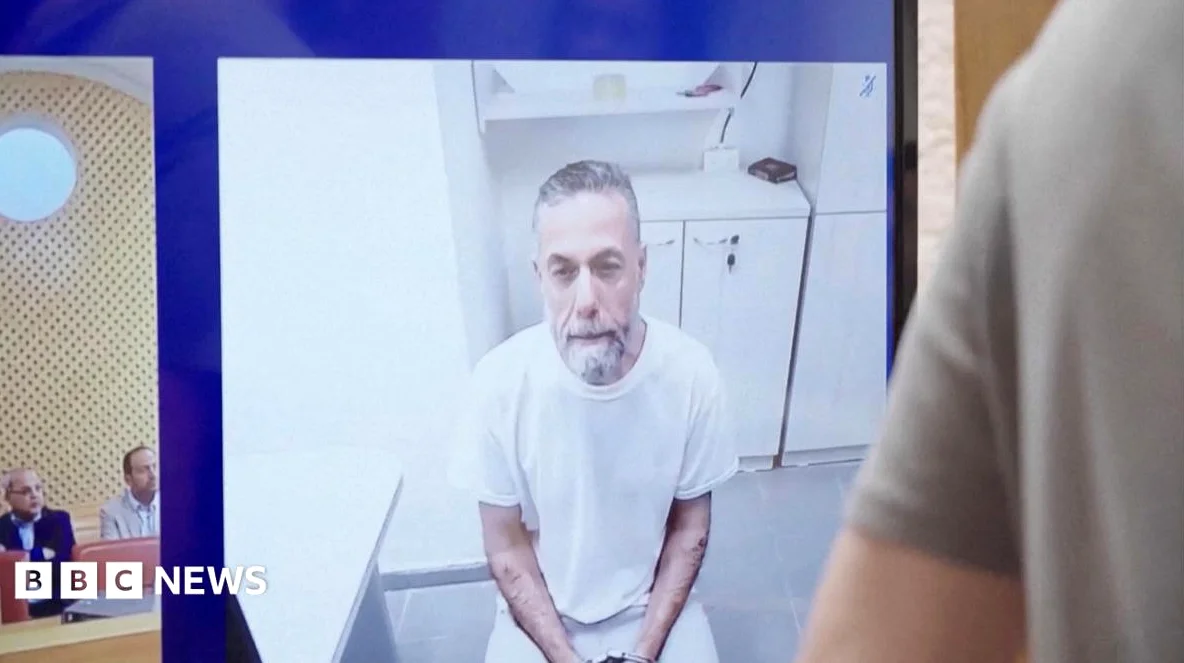
A lawyer representing Dr. Abu Safiya, a former director of Kamal Adwan Hospital in northern Gaza, said the doctor was severely beaten in an Israeli prison, with visible signs of torture and exhaustion. According to Nasser Odeh, the lawyer, Abu Safiya described being attacked by more than five prison guards using their hands, batons, and hammers after an appeal against his detention was heard at the Supreme Court in Jerusalem. He added that the doctor had not received any medical treatment since the incident.
Physical and Psychological Condition
Odeh described Abu Safiya’s condition during their meeting as dire. “He nearly lost consciousness several times,” Odeh said. “I had difficulty recognising his features. Bruises covered his face, around his eyes, on his neck, and on his ears. Signs of beatings and torture were clearly visible on his face. He was exhausted and unable to breathe, in a difficult physical, psychological, and mental state.”
Abu Safiya reportedly told Odeh: “I’m living in hell. The mind can’t imagine what I go through every day. I think someone has decided to kill me.” Odeh said he had not lost hope that he would see his client again, adding, “I hope to see him soon out of prison. His place is outside prison, his place is in the hospital.”
Denial and Legal Action
In a statement to the BBC, the Israel Prison Service rejected the account as false. Meanwhile, Israel’s Supreme Court has ordered the government to respond by Tuesday to a petition calling for the release of Abu Safiya and 13 other Palestinian doctors from Gaza held without charge in Israel.
Abu Safiya was detained in December 2024 when the Israeli military forced patients and medical staff to leave the hospital, stating it was a “Hamas terrorist stronghold.” According to the UN, he was treating patients and leading the hospital as the area was under “near total siege” by Israeli forces.
Context and Implications
Odeh said Abu Safiya told him: “Thank you Nasser, but I think it will be the last time we will meet.” This statement exposes the gravity of the situation and the fear among detainees and their legal representatives.
The detention of medical professionals has raised concerns about the conduct of the Israeli security forces and their treatment of captured individuals, particularly those providing essential services under difficult conditions.
While the Israel Prison Service has denied the allegations of mistreatment, the lawyer’s account, supported by visible physical signs, highlights the need for further investigation into the circumstances of Abu Safiya’s detention and the broader issue of treatment of detainees in Israeli custody.





Comments
No comments yet
Be the first to share your thoughts