

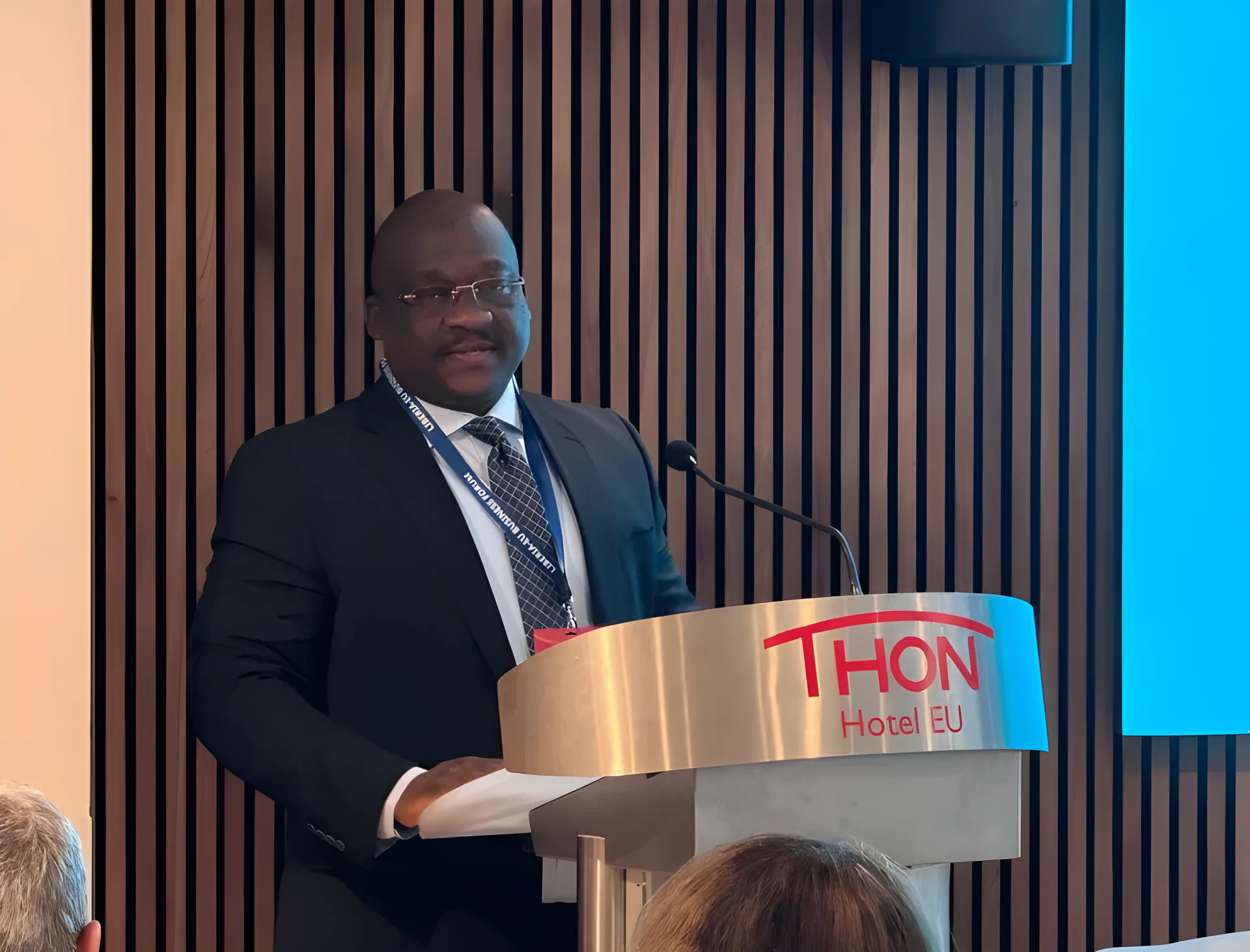
Liberia is preparing for a significant phase in its electricity sector, as the Liberia Electricity Corporation (LEC) has revealed a €1.6 billion investment roadmap aimed at expanding nationwide access, modernizing infrastructure, and restoring public confidence in the state utility. The plan, announced at the Liberia-EU Business Forum in Brussels, outlines a strategic partnership approach that positions the country as a destination for long-term infrastructure investment.
Four Pillars of the Power Sector Overhaul
Liberia Electricity Corporation Managing Director Mohammed M. Sherif emphasized that the proposed investment portfolio will accelerate growth and self-reliance across LEC’s generation, transmission, and distribution networks. The plan is structured around four key pillars: digital transformation, governance reform, revenue recovery, and large-scale infrastructure expansion.
“We are no longer in crisis stabilization mode,” Sherif said. “We want a strategic partnership, including an infrastructure partnership. The Liberia Electricity Corporation is investment-ready.”
First-Ever Modern Grid Monitoring System
For the first time in Liberia’s history, LEC will deploy a modern Supervisory Control and Data Acquisition (SCADA) system to manage the national grid. The SCADA system will enable real-time monitoring, predictive maintenance, and faster outage response, significantly improving the efficiency of the electricity sector.
“The first time in Liberia that we will have this modern SCADA system to help us with our national dispatch center,” Sherif said. “The SCADA helps us clearly see what is happening on the grid.”
The digital shift will also include smart automation tools and customer platforms, allowing users to report issues via a mobile app and receive responses directly. This initiative is designed to reduce human bottlenecks and improve customer service.
$50 Million Smart Meter Initiative
Liberia’s government has allocated $50 million in the national budget for smart metering, marking the first such capital injection in post-war Liberia’s history. The rollout of smart meters is aimed at reducing commercial losses and improving cost recovery.
“The government put $50 million in the budget,” Sherif said. “All those will help.”
LEC has also intensified anti-power theft operations, including nighttime enforcement. “We have been able to arrest 251 people,” Sherif revealed, noting that these efforts are already yielding results in terms of revenue recovery.
Rebuilding public confidence is a central focus of the reform agenda. Sherif acknowledged that customer trust in LEC has declined over the years, citing delays in meter installations and weak customer service response as contributing factors.
“LEC had eroded customer confidence,” he admitted. “Governance reforms, board oversight, and measurable performance benchmarks will be central to restoring accountability and service delivery standards.”
Under rural electrification efforts, LEC has installed approximately 3,900 streetlights across counties including Bong, Nimba, and Montserrado, improving visibility and reducing security concerns in previously dark communities. Some areas had gone without electricity for more than 40 years.
LEC is also targeting central and northwestern Liberia through expanded transmission lines, including a proposed double-circuit 66kV line from Botota through Lofa County.
A major component of the reform agenda is hydropower expansion, including the long-discussed Mankoffa (SP2) project and additional St. John River developments. Preliminary studies estimate potential output at up to 250 megawatts, with projected costs between €600 million and €620 million.
“Mankoffa is an intergenerational project,” Sherif said. “We should think beyond a particular regime.”
Strengthening domestic base-load capacity will reduce reliance on imported electricity from Côte d’Ivoire and Guinea, insulating Liberia from regional supply disruptions. “These are sovereign-scale development assets,” he said. “We need low-cost renewable base load for decades.”
Industrial growth is directly linked to electricity expansion, with the proposed Monrovia Industrial Park requiring up to 85 megawatts of dedicated supply. “Installing a substation there will unlock that entire economic activity,” Sherif said.
LEC is also focusing on electrifying agricultural hubs such as Lofa County, describing it as Liberia’s “food basket,” and positioning the country as a regional energy and trade player.
The reform plan aligns with the European Union’s Global Gateway strategy, Mission 300 electrification targets, and the U.N. Sustainable Development Goals, including those related to health, food security, infrastructure, and job creation. “We need to go to 75 percent electrification,” Sherif said. “It is consistent with the global gateway the EU is targeting.”
With total funding requirements estimated at $1.6 billion, Sherif made a direct appeal to investors, development finance institutions, and international partners. “We are open,” he said. “We have a PPP framework. It becomes a win-win for all of us.”
For a country where power outages remain routine and access is uneven, Sherif’s message was clear: Liberia is moving beyond crisis management toward structured, investment-driven transformation. “We don’t want incremental fixes,” he said. “We predict. We plan. And we deliver.”



Comments
No comments yet
Be the first to share your thoughts