

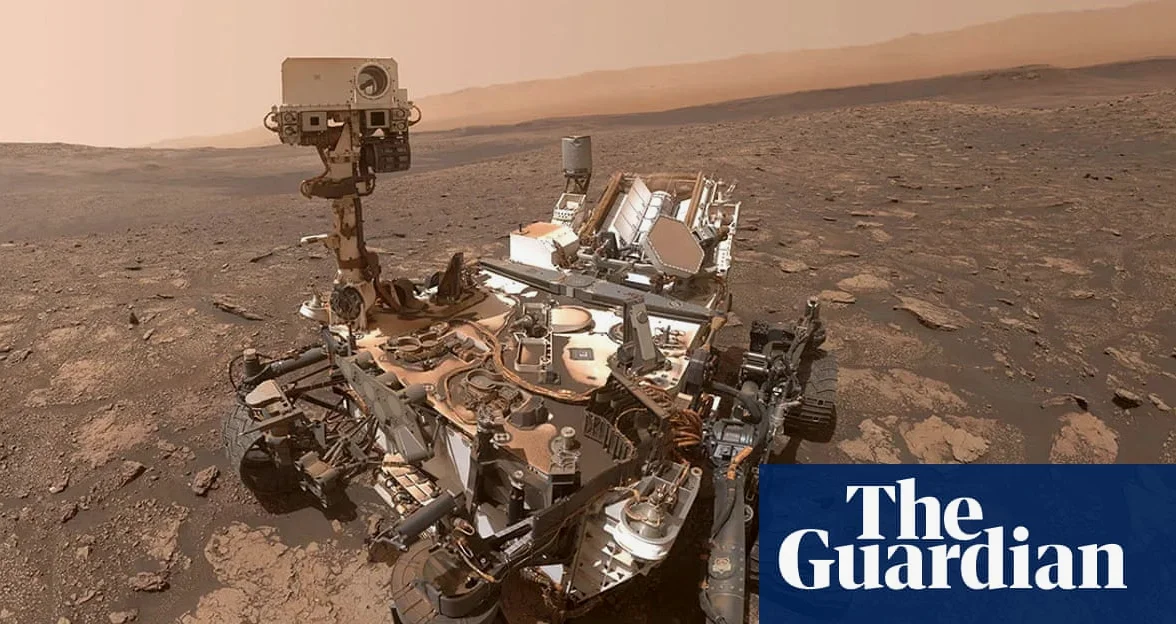
NASA’s Curiosity Mars rover has identified a diverse mix of organic molecules on the Red Planet, including nitrogen and sulfur-bearing compounds that are considered essential ingredients for life. The discovery marks the first time a new kind of chemical experiment has been performed on another planet, but the findings were published in the journal Nature Communications and led by Amy Williams, an associate professor at the University of Florida.
Organic molecules hint at ancient habitability
The Curiosity rover. Which has been exploring Gale crater since 2012, recently used its Sample Analysis at Mars (SAM) instrument suite to detect organic compounds in the clay-rich sandstone of the Glen Torridon region. The molecules include benzothiophene. A substance typically delivered to planets via meteorites, while this marks the first time benzothiophene has been identified on Mars.
According to Williams, the presence of these chemicals suggests Mars once had conditions that could support life,or at least the ingredients necessary for it. “It’s really useful to have evidence that ancient organic matter is preserved,” Williams said. “That is a way to assess the habitability of an environment.”
Significance of the experiment
The experiment used a chemical known as tetramethylammonium hydroxide (TMAH) to detect organic molecules. The newly identified compounds are similar to the raw materials that helped spur life on Earth. However, the experiment cannot determine whether the molecules originated from ancient Martian life or from non-biological geological processes.
What makes this finding especially significant is that it came from a chemical experiment conducted directly on Mars—something never done before on another world. The results show that the Martian surface is capable of preserving complex organic molecules over incredibly long periods, potentially up to 3.5 billion years.
Implications for future missions
The discovery opens the door to finding more advanced signs of past life in future missions. “If we want to search for evidence of life in the form of preserved organic carbon, this demonstrates it’s possible,” Williams added. The findings are expected to guide future exploration and analysis of Mars’ habitability.






Comments
No comments yet
Be the first to share your thoughts