

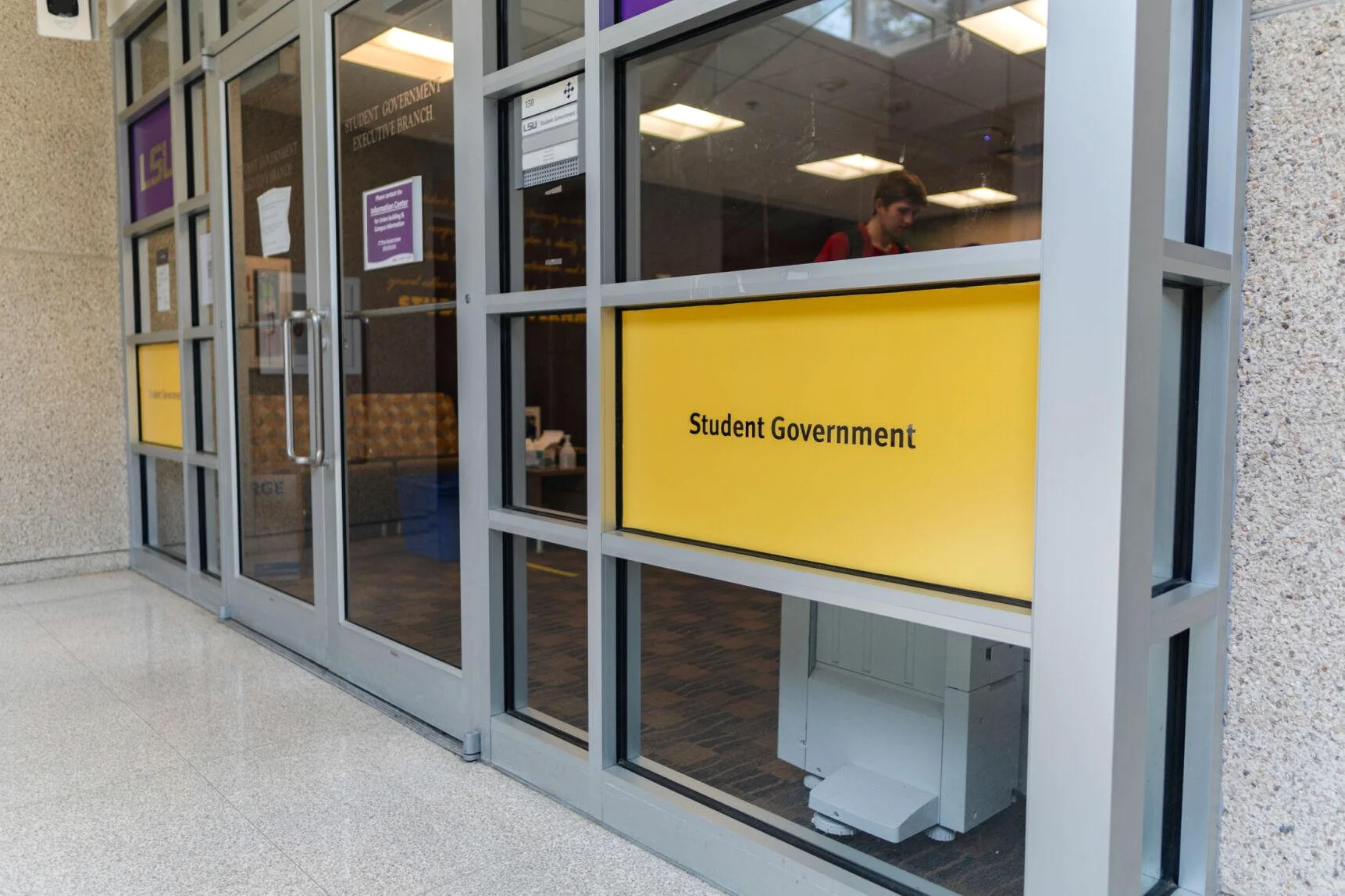
The fate of LSU student body president candidate Jack Miller is still in question after the Student Government Judicial Branch did not render a decision during a hearing held Monday. Miller, who is running on the MillerHebert ticket, faces allegations of failing to establish a civics commission as required by the academic year timeline.
Impeachment and the Alleged Failure to Establish a Civics Commission
The LSU Student Senate voted to bring an impeachment against Miller last Wednesday, citing his alleged failure to establish a civics commission within 45 days of the academic year beginning. The commission, which was first proposed in the Student Government Bill 6 (SGB 6), was intended to promote civic engagement and student involvement in the political process.
During the Student Senate session, Miller declined to answer questions from senators, prompting Sen. Calvin Feldt to state that the body had no choice but to refer the matter to the Judicial Branch. Three witnesses were called to testify, including Sen. Joshua Jones, Assistant Director of Public Policy and Governmental Relations Alli Chaumont, and Vice Presidential Special Assistant Carlie Fajardo, who is currently serving as a campaign manager for the MillerHebert ticket.
“I think [Miller] has done a great job of going above and beyond in doing what President Lavar appointed him to do,” Fajardo said. “To me, that’s doing his job because he was appointed to that position to achieve the goals of this administration, and [establishing a civics commission] was not one of them.”
Key Evidence and Testimonies
An Oct. 15 message thread was presented as evidence during the hearing, showing a conversation between Miller and sitting Student Body President Lavar Henderson. In the messages, Miller asked Henderson whether or not they should start the civics commission back up, with Henderson replying that Miller would be the sole chair and would have the responsibility of starting it.
“If Lavar had told him directly to create it, then he probably should have,” Fajardo said, emphasizing that the responsibility for initiating the commission fell on Miller.
Sen. Konnor Crowder, who initially presented SGB 6, argued that Miller should have been aware of his duties. He claimed that Miller was on the Senate body when the civics commission was voted to be established.
“I think it’s kind of funny that he doesn’t know his position; however, the Senate knows the position,” Crowder said. “Yes, [Senate] may not answer to [the] president … we answer to the students that we represent … any of our concerns represents the students as a whole.”
The Defense’s Argument and the Timeline Debate
The defense argued that Miller is the force trying to make the civics commission active and that the prosecution’s claims that Miller did everything at the last minute are unfounded. The defense stated that there was no set deadline for Miller to establish the commission and that he submitted marketing requests for the commission long before the impeachment process began.
According to the defense, Miller has been “clearly and intentionally” working on the civics commission since he was appointed director. They also claimed that the timeline the prosecution has been following was written by Crowder and that these guidelines were put into play after Miller was already in the position.
“While others, including the co-authors who are members of that certain ticket, want this to hinder this election, or my immediate plans, that is not something that will happen,” Miller said. “I am dedicated to the student body and all my actions and the things I’ve done … have reflected that.”
The Student Government elections are set for Thursday and Friday, and if Miller is impeached, he will no longer be eligible to run on the MillerHebert ticket. A new head would need to be appointed, which could significantly impact the election’s outcome.
The trial ended with no decision being made, but Chief Justice Austin Arcenaux told the Reveille that the committee hopes to have a decision by Wednesday. The uncertainty surrounding Miller’s eligibility continues to cast a shadow over the upcoming elections, as students await a resolution to this critical issue.
The case has raised broader questions about the responsibilities of student government officials and the clarity of their duties. With the election just days away, the outcome of the judicial hearing could have significant implications for the future of LSU’s student government.


Comments
No comments yet
Be the first to share your thoughts