

 BBC
BBC 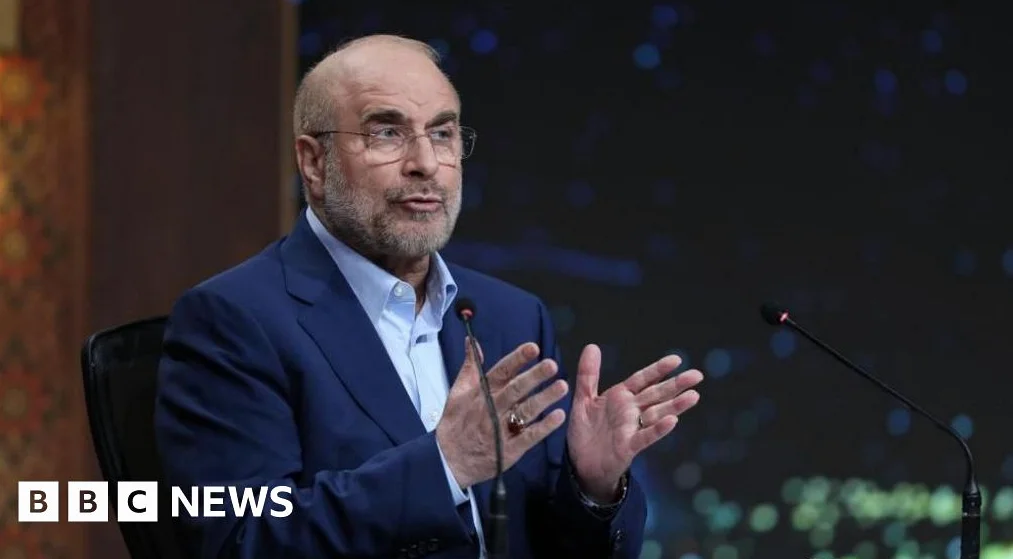
Lyse Doucet reported that if US Vice President JD Vance and Iran’s Parliamentary Speaker Mohammad Bagher Ghalibaf meet in Islamabad this weekend, it will mark a historic moment. This would be the highest-level face-to-face talks between the United States and Iran since the 1979 Islamic Revolution, which shattered their strategic bond and cast a long shadow over their relations.
Escalating Tensions and Ceasefire Challenges
The two leaders may not smile or even shake hands, but the meeting would signal a desire to end the ongoing conflict that has sent shocks worldwide and avoid further escalation. However, there is no chance of President Trump’s optimistic prediction of a ‘peace deal’ within this two-week ceasefire, which has already been contested and broken since its announcement earlier this week.
Even at the last moment. Iranians were uncertain whether they would attend the talks, while Israel insisted there would be no ceasefire in Lebanon. Despite these uncertainties. The potential for serious and sustained talks would represent the most significant push since Trump pulled out of the 2015 nuclear deal in 2018.
Historic Negotiations and New Approaches
The last high-level meetings between the US and Iran were between then Secretary of State John Kerry and then Foreign Minister Mohammad Javad Zarif; Since then, efforts, including under President Biden, have made little progress. Ali Vaez of the International Crisis Group notes that the dispatch of more senior officials and high stakes of failure could open new possibilities, though he cautions that the current situation is ‘exponentially harder.’
The gaps between the two sides remain wide, and distrust is deep — For Tehran, the recent series of negotiations in June 2025 and February this year were abruptly interrupted by the outbreak of an Israeli-American war. When they do talk, their negotiating styles are starkly different.
Contrasting Negotiation Styles
President Trump has boasted that his special envoy Steve Witkoff, a former property developer, and his son-in-law Jared Kushner are the best dealmakers, but However, Iran insists on engaging with JD Vance, who is seen as the strongest skeptic of the military campaign in Trump’s team. Iran also insists that negotiations be conducted indirectly through Oman, their trusted mediator.
While some direct conversations took place in Geneva in February, Iranian hardliners were said to have constrained negotiators; Witkoff’s style, arriving alone without notes, heightened Iranian suspicion, leading to talks going in circles. Kushner’s addition to Witkoff’s team contrasted sharply with the negotiations of a decade ago, which involved experienced diplomats and leading physicists, as well as senior European diplomats and UN Security Council members.
Progress was made in February this year with the assistance of the IAEA head Rafael Grossi and seasoned mediators, as Iran offered new concessions, including the dilution of its highly enriched uranium. However, the outbreak of war again shifted the security calculus for all sides. Hardline voices in Iran’s security establishment now argue for the development of a nuclear bomb, and Iran will insist on keeping its ballistic missiles for self-defense and control over the Strait of Hormuz.
Gulf states, who previously opposed the 2015 nuclear deal, are now demanding that the missiles which struck their countries be addressed in negotiations — Israel, particularly Prime Minister Benjamin Netanyahu, is expected to push for these concerns to be addressed. There is an echo of another historic time when Iran’s late Supreme Leader Ayatollah Ali Khamenei allowed negotiations to intensify, calling it ‘heroic flexibility.’
Now, Mojtaba Khamenei, who rose to power after his father’s assassination, has given the go-ahead for negotiators to meet in Islamabad. However, the extent of his involvement is unclear, and hardliners, particularly the Islamic Major Guards, are calling the shots. Iran’s economy is in crisis, and it faces significant dissent after January’s protests, which were crushed with many thousands of casualties.
President Trump insists that six weeks of war achieved ‘regime change’ and describes Iran’s new leaders as ‘less radical, much more reasonable.’ The moment of truth could be approaching for all sides. Thirteen years ago, as talks began, the two sides were ‘far apart.’ Iran demanded recognition of its right to enrich uranium, which the US rejected. For now, the US seems to be saying that right would be recognized as long as there is no enrichment in Iran. History may not repeat itself, but it does rhyme.






Comments
No comments yet
Be the first to share your thoughts