

 The Guardian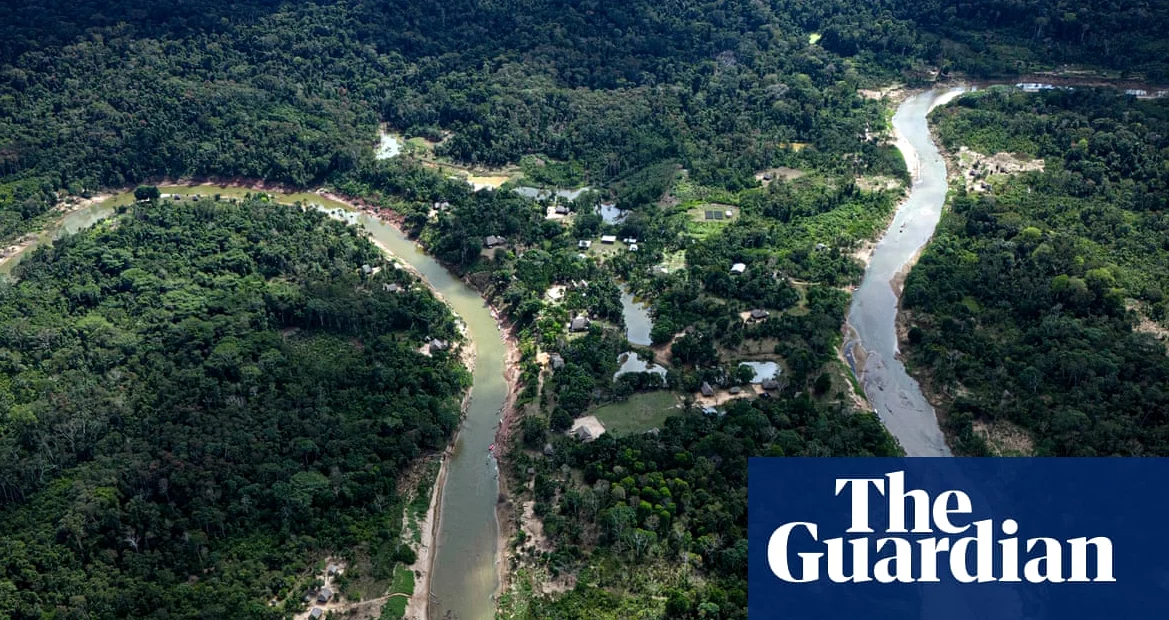
Organized crime groups are reportedly running rampant across the Amazon region on the Brazilian-Peruvian border, with Indigenous leaders describing the situation as communities being “taken hostage.” Masked men have invaded villages, armed with semi-automatic weapons, threatening residents and destroying the rainforest.
Armed Intrusions into Indigenous Territory
Earlier this month, masked men armed with semi-automatic weapons entered homes in Apiwtxa, a village located in the Kampa do Rio Amônia Indigenous territory; the intruders were searching for targets and intimidating residents, according to local leaders.
Francisco Piyãko. The general coordinator of the Organisation of Indigenous People of the Juruá River, described the invasion as the most dangerous threat faced by the Asháninka people. “Either the state steps in to provide protection, or communities will start organizing to defend themselves – and that would be disastrous,” he said.
Concerns Over Drug Trafficking and Environmental Crime
The petition by the Asháninka people comes amid growing concerns about the nexus of drug trafficking and environmental crime in the Amazon; Brazilian climate scientist Carlos Nobre has described this as the greatest new threat to the Amazon Forest.
The Brazilian side of the border is in Acre state, where the forest remains relatively healthy compared to the heavily logged and violent Peruvian side, while Acre has a history of environmental activism and violence, including the 1988 assassination of environmental campaigner Chico Mendes.
Apiwtxa was the last Indigenous village visited by British journalist Dom Phillips before he was murdered in 2022 while researching illegal extractivist activities in the Amazon. Phillips was investigating illegal extractivist activities in another area menaced by arms and drug smugglers.
According to the Asháninka petition to the Brazilian government, the most recent intrusion into Apiwtxa involved five heavily armed, Spanish-speaking men who entered the village on the evening of July 6. One community member described them as “clearly ready to attack with lethal intent.”
This was the second time in several days that masked gunmen had entered the village looking for leaders, as Frightened villagers took their children into one building for protection and notified the authorities. The army arrived at midnight. But by then the would-be assassins had disappeared into the forest, leaving only tracks.
Call for Government Action and Security
The Asháninka delegation in Brasília is calling for a permanent security presence along the border to prevent the free movement of drug traffickers, illegal loggers, and the illicit construction of “virus roads” that push into the forest without environmental oversight. They also want greater protection for their leaders and operations to combat organized crime in the area.
The neighboring Peruvian department of Ucayali has the widest network of illegal roads in the Peruvian Amazon, providing transport for gangs involved in environmental crime, gold, money laundering, and drugs. In the past five years, coca cultivation in Ucayali has tripled.
“It is increasingly clear that the fight against organized environmental crime in the Amazon ultimately demands better intelligence and strategic prioritization,” the institute said. The Igarapé Institute, a public security thinktank, has said that organized crime needs a more strong response by governments across the region.
Piyãko added that this was now a matter of urgency. “If the Peruvian and Brazilian governments joined forces and wanted to resolve the situation, they could. Because they have the means to combat this.”
He warned that if the state doesn’t protect these territories, they will be dominated by this criminal system, or the people will be forced to defend themselves on their own. “This could lead to very serious situations, because as the net tightens around these territories, tensions rise.”






Comments
No comments yet
Be the first to share your thoughts