

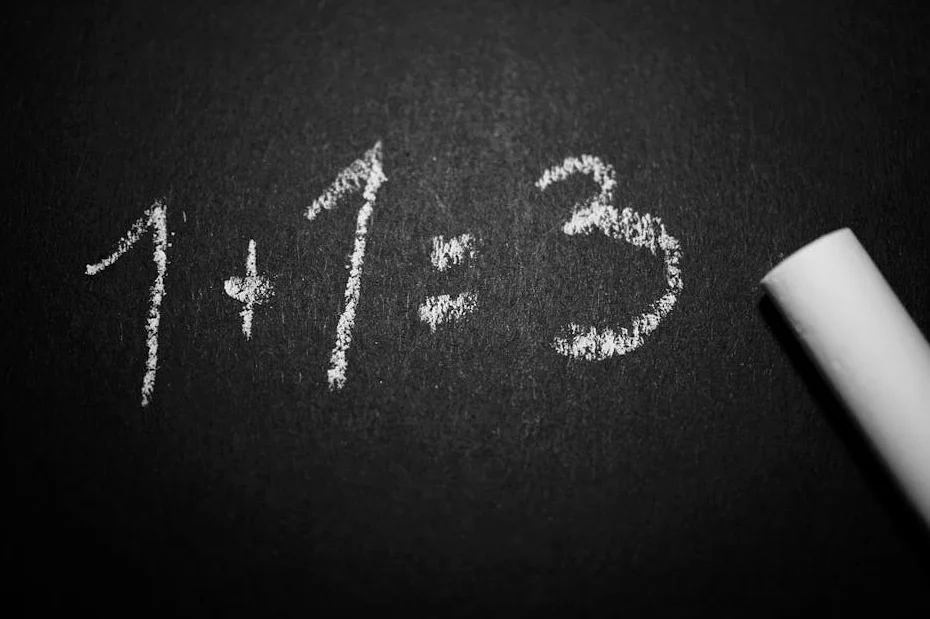
LOS ANGELES — Mathematics transcends rote computation, serving as a lens for beauty, truth and hidden patterns in the universe, according to science writers K.C. Cole and John Allen Paulos.
Cole, a professor at the University of Southern California’s Annenberg School of Journalism, explores this in her book The Universe and the Teacup. She argues math distills nature’s messy chaos into elegant essence. Symmetry in a snowflake, she writes, mirrors the laws governing galaxies. ‘Beauty in the mathematical sense is a lot more than a pretty face,’ Cole states. ‘It is a way of distilling the essence of things out of the messy mix that nature presents us.’
The book applies math to real-world puzzles. It explains risk through probability, scale in everyday decisions, and cause-and-effect in policy debates. Math reveals illusions in human perception, Cole notes, and guides practical choices like bridge-building or Mars missions. Without it, she says, humanity’s quest for cosmic truths stalls.
Paulos, a Temple University mathematician known for his sharp cultural critiques, takes a journalistic angle in A Mathematician Reads the Newspaper. Newspapers brim with math’s ‘eternal romance,’ he contends, from HIV trends to smoking-lung cancer links. Yet poor teaching leaves most readers blind to its power.
‘Mathematics isn’t a matter of plugging numbers into formulae,’ Paulos writes. It’s a mindset for questioning quantitative complexities in society. He urges news outlets to embrace probabilistic and dynamic analyses. ‘Newspapers will remain our primary means of considered public discourse’ by reflecting math’s growing role, he predicts, even as multimedia rises.
Both authors counter math’s intimidating reputation. Geometer Bill Thurston calls it ‘mindware’ for grasping inexpressible concepts. Wavelet pioneer Ingrid Daubechies likens it to poetry. Physicist James Jeans saw the universe’s architect as a pure mathematician.
Math has exposed quarks, dark matter and anti-matter, the books note. It sifts signal from noise, validating truths across scales—from subatomic particles to election strategies. Cole emphasizes its role in self-understanding, bridging heart and intellect. Numbers aren’t foes but allies in handling life.
Paulos laments math’s mind-numbing classroom delivery, which breeds misconceptions. He pairs Shakespeare with Newton to prove its broad reach. Cole agrees: the same principles enchanting a snowflake uphold universal laws. Truth and beauty intertwine in math’s coin, she concludes.
These works demystify the field for non-scientists. They show math clarifying policy, health risks and existential questions. Neither book peddles formulas. Instead, they champion math as a human endeavor—objective yet influenced by culture, logical yet brimming with wonder.
Officials and scholars alike praise such perspectives. Math’s tools, when wielded well, offer clarity amid complexity. Cole’s panoramic view and Paulos’s newspaper lens invite readers to wield them.




Comments
No comments yet
Be the first to share your thoughts