

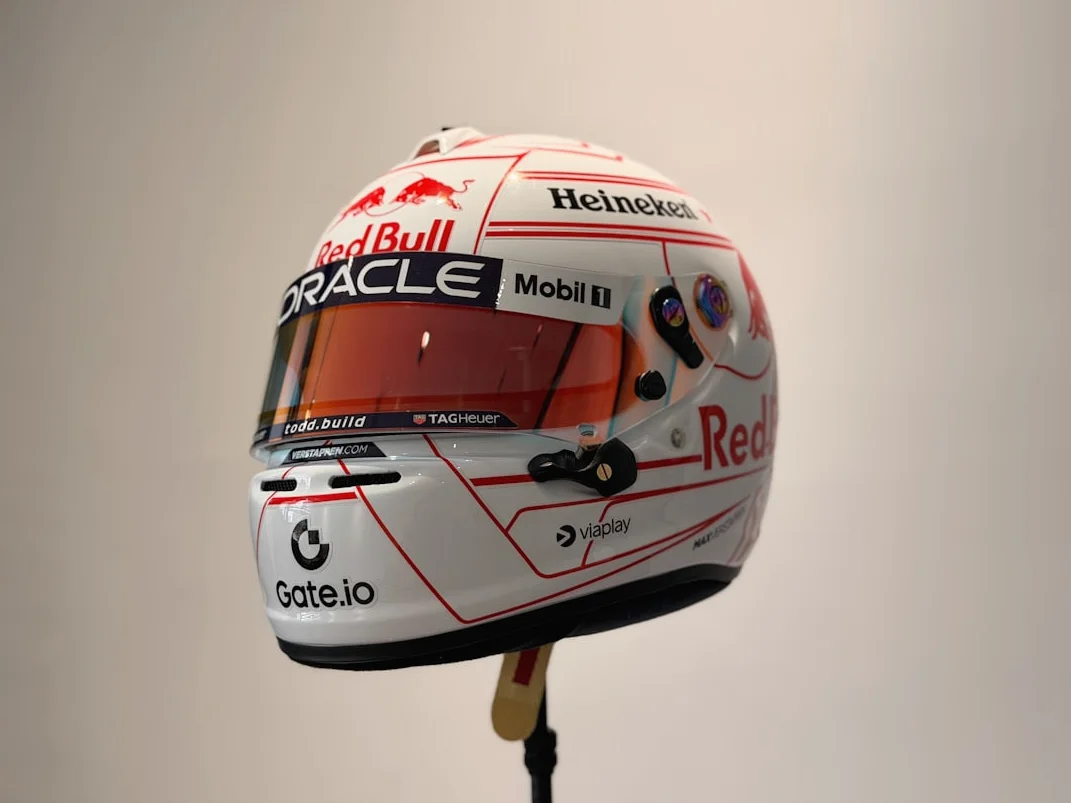
Max Verstappen, the reigning Formula One World Champion, retired from the Chinese Grand Prix after experiencing a critical power loss in his Red Bull car, marking a significant setback in his campaign for a fourth consecutive title. The incident, which occurred during the race, highlighted ongoing concerns about the reliability of F1 cars, with Verstappen expressing frustration over what he described as ‘fundamentally flawed’ machinery. Meanwhile, Lewis Hamilton and Kimi Antonelli delivered standout performances, with Hamilton securing a podium finish for Ferrari and Antonelli claiming his first-ever Grand Prix victory.
Verstappen’s DNF: A Critical Setback
According to reports from GPblog, Max Verstappen’s retirement from the Chinese Grand Prix was a stark contrast to his usual dominance on the track. The Red Bull driver, who had been in contention for the lead, was forced to retire after his car lost power mid-race, a situation that left both the driver and his team in disarray. Verstappen’s team had previously expressed concerns about the reliability of their cars, with the driver himself warning that the current state of F1 vehicles poses a threat to the sport’s integrity. ‘These cars are fundamentally flawed,’ Verstappen said in a post-race interview, emphasizing the need for immediate improvements in car reliability.
Verstappen’s retirement not only cost him valuable points but also disrupted his momentum heading into the next races. His team, Red Bull Racing, is now under pressure to address the technical issues that led to the power loss. According to gpfans.com, the incident has raised questions about the reliability of the 2026 F1 cars, with some analysts suggesting that the problem may be more widespread across the grid.
The German-language outlet web.de reported that Verstappen’s frustration was palpable, with the driver describing the situation as a ‘fight for survival’ during the race. His comments have sparked a broader conversation within the F1 community about the need for a more strong and reliable car design to ensure the safety and competitiveness of the sport.
Hamilton and Antonelli Shine: A New Era in F1
Lewis Hamilton’s performance in the Chinese Grand Prix was nothing short of remarkable, securing a podium finish for Ferrari. According to gpfans.com, Hamilton’s third-place finish was the best result for Ferrari in the 2026 season, a significant achievement given the team’s struggles in previous races. Hamilton, who has been a stalwart of the sport for over a decade, expressed his satisfaction with the result, stating that it was an honor to share the podium with Kimi Antonelli, the young Mercedes driver.
Kimi Antonelli, making his debut in the Chinese Grand Prix, delivered a historic win, becoming the first driver from Mercedes to claim victory in the race. His performance was a testament to his skill and composure under pressure, with the young driver managing to outmaneuver his rivals in a closely contested race. According to GPblog, Antonelli’s win has been hailed as a turning point in his career, with many analysts predicting that he could be a strong contender for the 2026 championship.
Hamilton’s comments on sharing the podium with Antonelli were particularly notable, as he praised the young driver’s talent and potential. ‘It’s an honor to share this podium with Kimi Antonelli,’ Hamilton said, highlighting the generational shift in F1 and the emergence of new talent that could reshape the sport’s future.
Local Reactions and Broader Implications
The Spanish-language outlet MARCA reported that the race in China was not only a significant event for the drivers but also a reflection of the broader impact on the F1 community. Checo Pérez and Fernando Alonso, who finished ahead of Max Verstappen, were praised for their performances, with Pérez securing a strong result for his team. Meanwhile, Alonso’s performance for Aston Martin was noted as a mixed bag, with the driver acknowledging the team’s challenges but also expressing confidence in their ability to improve.
Local reactions in China were also highlighted, with fans expressing disappointment over Verstappen’s retirement but admiration for Hamilton and Antonelli’s performances. According to web.de, Chinese fans were particularly excited about Antonelli’s historic win, with many viewing it as a sign of the sport’s growing appeal in Asia. The event also saw increased media coverage, with local outlets emphasizing the significance of the race in the context of F1’s global expansion.
The impact of the race extended beyond the track, with discussions about the reliability of F1 cars and the future of the sport. The German-language outlet web.de noted that Verstappen’s comments on the ‘fundamentally flawed’ cars have sparked a debate among fans and experts about the need for technological advancements to ensure the sport’s longevity. This discussion is particularly relevant as F1 continues to push the boundaries of innovation in both car design and safety protocols.
Looking Ahead: What’s Next for F1?
As the 2026 F1 season progresses, the focus will shift to addressing the technical issues that plagued the Chinese Grand Prix. Red Bull Racing, in particular, will need to implement urgent changes to their car’s power unit to prevent similar incidents in the future. According to GPblog, the team is already working on potential upgrades, with the goal of ensuring that Verstappen can compete at his best in the upcoming races.
For Lewis Hamilton and Kimi Antonelli, the Chinese Grand Prix has been a defining moment. Hamilton’s podium finish for Ferrari has reinvigorated the team’s hopes for a strong performance in the remaining races, while Antonelli’s victory has set the stage for a potential title challenge. According to gpfans.com, both drivers are expected to play a crucial role in the championship race, with Antonelli’s rise to prominence likely to reshape the dynamics of the sport.
The broader implications of the race extend to the future of F1 as a whole. The discussions around car reliability and the need for innovation will be critical in shaping the sport’s direction. As the season moves forward, the focus will be on ensuring that the technical challenges faced in China are addressed, paving the way for a more competitive and exciting F1 season.






Comments
No comments yet
Be the first to share your thoughts