

McDonald’s is grappling with a dual crisis that has sparked public debate and raised questions about food safety and transparency. At the center are two separate issues: an online rumor suggesting the chain uses non-beef ingredients in its burgers and a confirmed rodent sighting at a restaurant inside a Dinuba Walmart SuperCenter. Both events have drawn sharp reactions from the public, regulators, and industry figures, highlighting the delicate balance between myth and reality in brand management.
Urban Legend and Real-Life Incident Collide
A widely circulated online rumor claimed that McDonald’s uses non-beef ingredients in its burgers, including an implausible suggestion that human meat might be involved. Social media personalities and commentators quickly debunked the claim, pointing to routine meat testing and the sheer scale of the company’s operations as evidence against the rumor. However, the myth gained traction due to a specific numerical claim that the chain sells about 2.5 billion burgers annually, which some online users used to argue that there are not enough cows to supply the product.
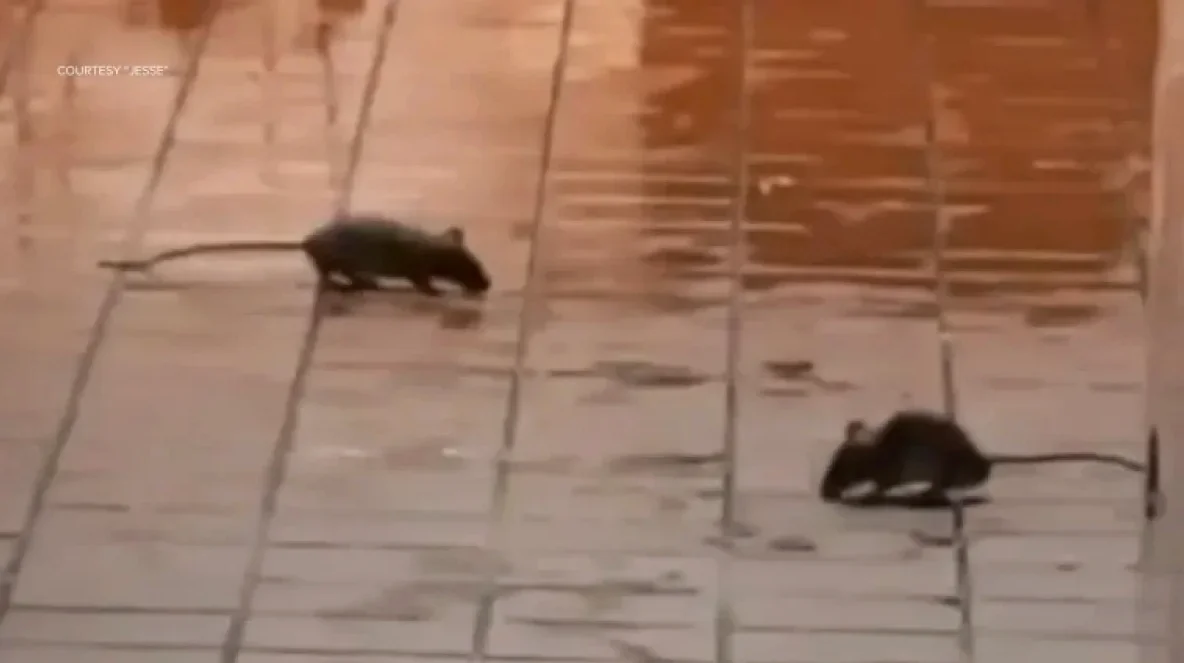
Separately, a concrete issue emerged when three rodents were spotted inside a McDonald’s located within a Walmart SuperCenter in Dinuba, California. The incident prompted an immediate closure of the restaurant, with Walmart issuing a statement confirming the closure and stating that facility and service partners were engaged to implement corrective measures before considering a reopening. Video footage of the rodents inside the store area where the restaurant operates was shared widely, amplifying public concern.
Reputational Risk and Public Confidence
The combination of a conspiracy theory and a documented hygiene issue has created a perfect storm for McDonald’s, testing the limits of consumer trust. The urban legend, with its sensational premise, is easily repeated and difficult to verify, while the rodent incident is a tangible failure in a specific outlet’s control systems. The juxtaposition of these two issues risks amplifying reputational damage more than either event would independently.
From an operational standpoint, the two problems require different responses. Myth-busting relies on transparency about supply chains and testing regimes, while an on-the-ground contamination event demands quarantine, sanitation, pest control, and third-party verification before reopening. Both situations require clear communication to distinguish fact from fiction and prevent the conspiracy narrative from persisting after remediation.
Expert Reactions and Public Statements
Gordon Ramsay, a well-known celebrity chef, offered a blunt critique of McDonald’s flagship sandwich, describing a stripped-down Big Mac as two bland basics and questioning its appeal from a chef’s perspective. Mike Haracz, a former McDonald’s corporate chef, suggested that changes to buns and burger processes had been made in ways that left regular cheeseburgers less appealing to consumers.
An Instagram commentator known as Snackolator addressed the human-meat urban legend directly, calling it absurd and explaining why routine meat testing would expose any such misuse. Walmart, the property operator, issued a formal statement confirming the closure of the restaurant and the engagement of facility and service partners to implement corrective measures before determining when it is safe to reopen.
These responses illustrate a split between culinary opinion, internal operational critique, and public-health action. The chef critiques speak to product positioning and taste, while the consumer influencer focused on debunking an extreme claim. The corporate landlord statement described the procedural response to a hygiene breach, emphasizing the need for documented remediation and inspection before reopening.
Locally, the Dinuba closure forced an immediate halt to service at a single outlet and triggered remediation steps by the tenant and the property manager. More broadly, the juxtaposition of an absurd ingredient rumor with an actual visible pest problem creates fertile ground for misinformation to harden into belief, especially when social amplification outpaces factual correction. For a global food chain, even isolated incidents can ripple through public perception if not addressed with clear, verifiable updates about testing, sanitation, and oversight.
Institutions tasked with food safety and public health typically require documented remediation and inspection before reopening. Walmart’s commitment to work with its tenant partner and to monitor conditions reflects that process-oriented expectation. The company has not provided a timeline for when the restaurant might reopen, but it has pledged to ensure the facility meets all safety standards before resuming operations.
Both the debunked urban legend and the verified rodent sightings show how fragile consumer trust can be when extraordinary claims collide with tangible lapses in a single location. The chain’s response and local remediation will be closely watched to determine whether they are enough to close the loop between myth and reality and restore confidence at the community level and beyond.






Comments
No comments yet
Be the first to share your thoughts