

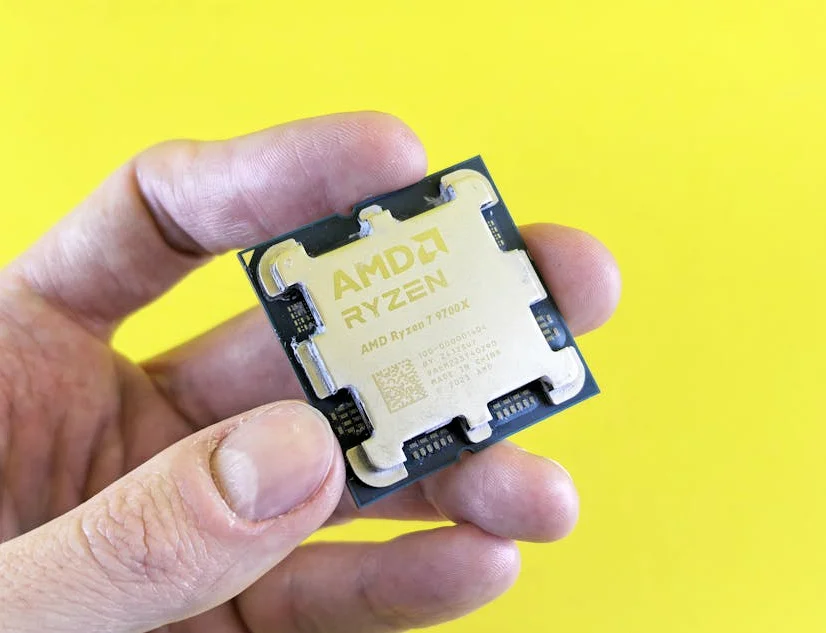
Meta and AMD have revealed a significant multi-year, multi-generation partnership that could shift the balance of power in the global AI chip market. The deal, announced on Tuesday, involves Meta deploying up to 6 gigawatts of AMD GPUs to scale its AI infrastructure and accelerate the development of advanced AI models.
AMD’s Push to Challenge Nvidia’s Dominance
AMD has long sought to close the gap with Nvidia, the dominant player in the AI and data center chip market. This partnership marks a major step forward in that effort. According to the agreement, AMD will supply custom chips optimized for Meta’s specific AI workloads, with initial shipments expected in the second half of 2026.
The first deployment will support 1 gigawatt of computing power, with the potential for scaling up to 6 gigawatts. That amount of power is enough to sustain nearly 4.5 million homes, highlighting the massive scale of Meta’s AI operations.
AMD’s 6th Gen EPYC CPUs will also play a key role in the deal, with Meta expected to become one of the top customers for these processors. The agreement includes performance-based terms that could allow Meta to acquire up to 160 million AMD shares, representing approximately 10% of the company, if certain milestones are met. The first tranche of shares will vest once the initial gigawatt of chips is delivered, with additional vesting tied to further chip shipments and stock price thresholds.
Meta’s AI Arms Race and Compute Demands
For Meta, the deal comes as it intensifies its AI arms race against competitors like Google and OpenAI. The company is racing to develop more powerful AI systems, with the ultimate goal of achieving artificial general intelligence (AGI), a level of AI that can perform any intellectual task a human can.
Such systems require unprecedented amounts of computational power. Nvidia currently dominates this space, controlling an estimated 84% of the AI and data center market. With a market capitalization of around $4.6 trillion, Nvidia has become the world’s most valuable company.
By partnering with AMD, Meta aims to reduce its reliance on a single supplier. This strategy is increasingly common among tech giants, as companies seek to diversify their compute resources and avoid supply chain bottlenecks or potential vendor lock-in.
Mark Zuckerberg, Meta’s CEO, expressed enthusiasm about the partnership in a press release. He stated, “We’re excited to form a long-term partnership with AMD to deploy efficient inference compute and deliver personal superintelligence. This is an important step for Meta as we diversify our compute.”
AMD’s Expanding Role in AI Infrastructure
This partnership with Meta follows a similar agreement AMD signed with OpenAI in October, under which the company will deploy another 6 gigawatts of AI chips. These deals highlight AMD’s growing role in the AI infrastructure sector, as it positions itself as a viable alternative to Nvidia.
AMD CEO Lisa Su praised the collaboration in a press release, saying, “We are proud to expand our strategic partnership with Meta as they push the boundaries of AI at unprecedented scale. This latest partnership would place the company at the center of the global AI buildout.”
AMD’s stock rose approximately 10% in early trading following the announcement, signaling investor confidence in the company’s growing influence in the AI market.
The agreement with Meta comes just days after the company announced a separate long-term deal with Nvidia, though the details of that partnership remain undisclosed. This suggests that Meta is pursuing a multi-vendor strategy to ensure it has access to the best available compute resources.
As the demand for AI-driven applications continues to grow, the competition among chipmakers is expected to intensify. The outcome of these partnerships could have significant implications for the future of AI development and the broader tech industry.






Comments
No comments yet
Be the first to share your thoughts