

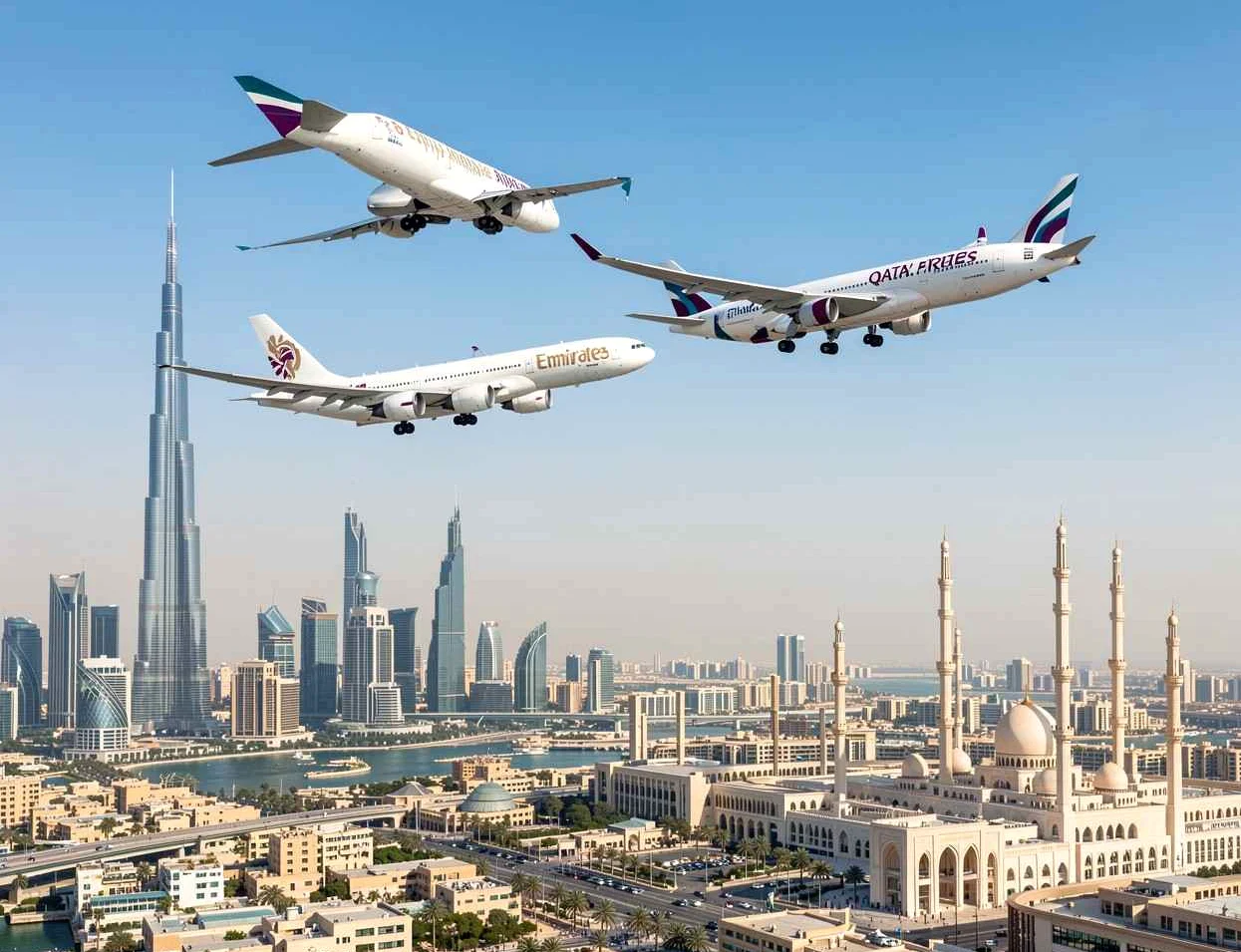
Amid rising geopolitical tensions across the Middle East, airlines such as Emirates, Qatar Airways, Etihad Airways, Turkish Airlines, and Saudi Airlines are reaffirming their commitment to passenger safety and operational excellence. While airspace closures and military activity have disrupted flight operations in the region, these carriers are handling the challenges with a focus on security and reliability, ensuring that travelers can still trust their flights.
Operational Adjustments and Safety Protocols
With airspace restrictions in countries like Iran, Israel, and Iraq, airlines have had to adapt their flight routes to avoid unsafe corridors. Emirates, Qatar Airways, and Etihad Airways have been working closely with aviation authorities, including the International Civil Aviation Organization (ICAO) and national regulators, to ensure that flights operate only in designated safe airspace. These adjustments have not only minimized risks to passengers but also allowed for the continued operation of international routes.
According to the International Air Transport Association (IATA), airlines are regularly monitoring geopolitical developments and adjusting flight schedules accordingly. This proactive approach has helped maintain the safety and continuity of air travel across the region. In the UAE, for example, the General Civil Aviation Authority (GCAA) has been issuing real-time updates to ensure that flights remain within secure boundaries.
Safety Ratings and Passenger Trust
Despite the volatility in the region, airlines like Emirates, Qatar Airways, and Etihad Airways have maintained top safety ratings from organizations like AirlineRatings.com. Emirates, known for its state-of-the-art fleet and exceptional service, continues to be a trusted choice for millions of travelers. Qatar Airways has retained its seven-star safety rating, while Etihad Airways, currently holding a Seven Star Plus rating, is recognized as one of the world’s safest carriers.
Saudi Airlines, too, has been reinforcing its safety standards, ensuring that its flights meet global benchmarks. The airline has implemented advanced technologies and training programs to maintain high levels of operational efficiency, even in the face of regional instability.
“Our commitment to passenger safety has not wavered, even in times of geopolitical uncertainty,” said an Emirates spokesperson. “We continuously monitor and adjust our operations to ensure that all flights are conducted in the safest possible conditions.”
Impact on Tourism and Travel
The ongoing tensions have had a noticeable impact on the tourism industry in the Middle East, particularly in the UAE, Qatar, and Saudi Arabia. Dubai, Abu Dhabi, and Doha have seen a temporary decline in tourist arrivals due to airspace restrictions and heightened security concerns. However, these countries are working to mitigate the effects of the unrest and are preparing for a recovery in the coming months.
In the UAE, for example, Dubai has focused on maintaining its appeal as a global travel destination, with efforts to boost hotel occupancy and attract business travelers. The country’s tourism sector has shown resilience, and its long-term outlook remains positive, with plans to recover from the current disruptions.
Qatar is also preparing for the 2026 FIFA World Cup, which is expected to draw millions of international visitors. The event is anticipated to provide a significant boost to the country’s tourism industry, even as the geopolitical climate remains volatile.
Saudi Airlines has been working closely with the government to ensure that its aviation services remain operational and that travelers can continue to rely on the airline’s safety and efficiency. The airline has also been expanding its network to connect more international destinations, reinforcing its role as a key player in the Middle East’s aviation sector.
“We are committed to providing safe and reliable travel for our passengers, even during these challenging times,” said a Saudi Airlines representative. “Our teams are continuously monitoring the situation and making necessary adjustments to ensure the safety and comfort of our travelers.”
As the situation in the Middle East evolves, airlines are expected to continue adapting their operations to ensure that flights remain secure and reliable. With a focus on passenger safety, these carriers are demonstrating resilience and commitment, ensuring that travelers can still trust their flights despite the region’s current challenges.






Comments
No comments yet
Be the first to share your thoughts