

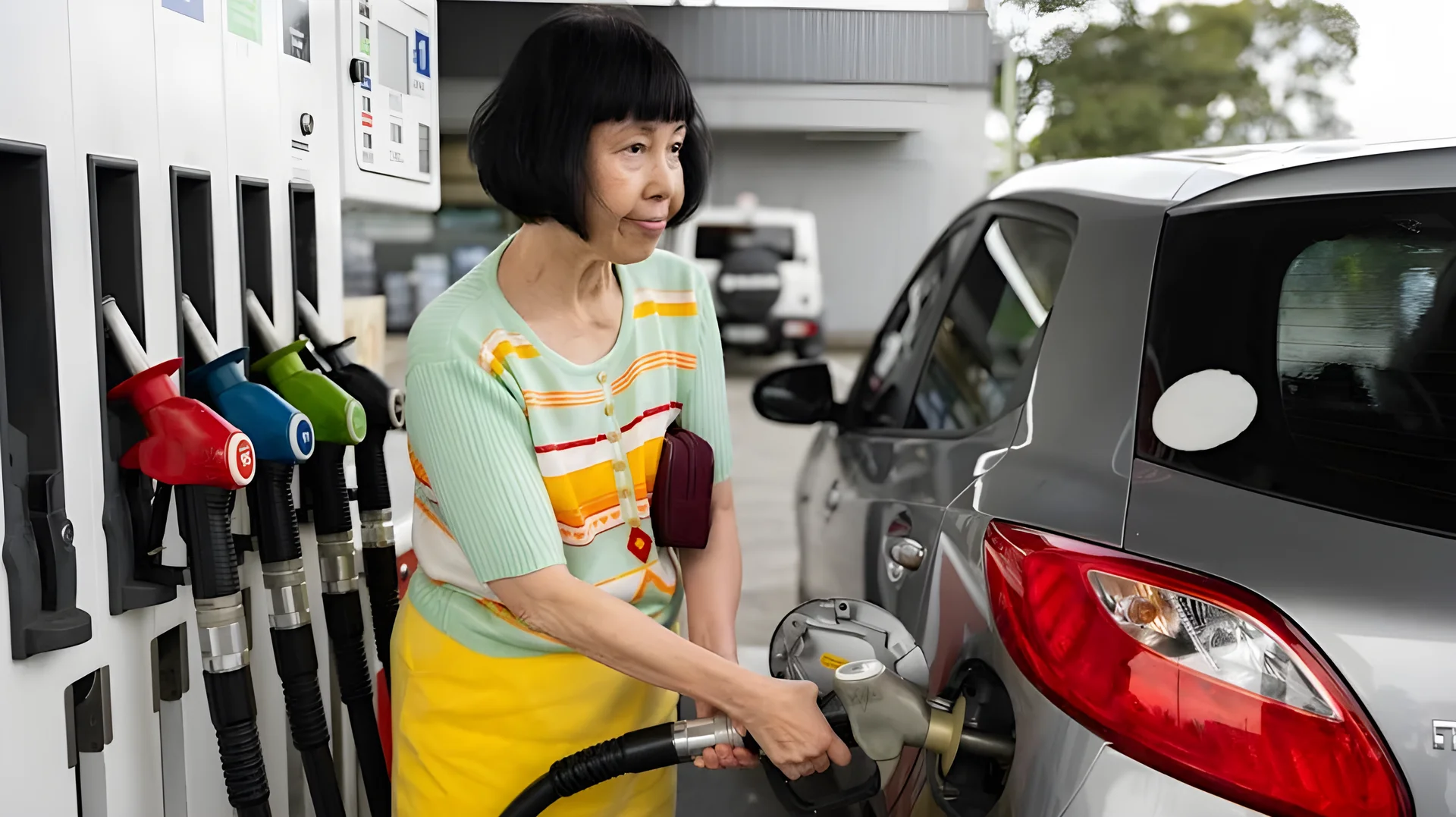
On a sweltering afternoon in Sydney, Amy Mok pulled up to a service station and stared at the price board with a mix of dread and resignation. The premium unleaded price had climbed to $2.39 a litre, and she knew it was only going to get worse. In the background, the sounds of war echoed across the Middle East, where a complex web of retaliatory strikes had set the stage for a global energy crisis.
The Ripple Effect of Conflict
The Middle East has always been a volatile region, but the recent escalation in hostilities has taken the world by surprise. The latest chapter began with U.S.-Israeli strikes on Iran, which triggered a chain reaction of retaliation from Tehran. Drone attacks on Saudi Aramco’s Ras Tanura refinery, one of the largest in the region, have disrupted crude oil exports and sent shockwaves through global markets.
Ras Tanura, with a capacity of 550,000 barrels per day, is a linchpin in the global oil supply chain. Its closure has not only reduced Saudi Arabia’s output but also triggered a surge in Brent crude prices, which rose by nearly 10% in a single day. Analysts warn that if the Strait of Hormuz, through which 20% of the world’s oil passes, is blocked, prices could skyrocket to $100 per barrel, a level not seen in over a decade.
A Global Price Shock
The impact of these events is not confined to the Middle East. In Australia, where oil prices have already been climbing steadily, consumers are bracing for further increases. Service stations in Sydney now charge over $2.10 per litre for regular unleaded, with some stations hitting $2.15. Economists predict that the ongoing conflict could push these prices even higher, adding to the growing burden on households already reeling from inflation and economic uncertainty.
“The situation is extremely volatile,” said Alexey Mikheyev, an investment strategist at VTB My Investments. “If the conflict were to suddenly resolve, the global oil market balance would not be significantly affected. But the risk premium in oil prices is already high, and the entire $20 premium could vanish in a matter of days if the situation stabilizes.”
Escalation in Lebanon and the Gulf
The conflict has also taken a personal toll on civilians in southern Lebanon, where the Israeli military has issued evacuation orders for several villages. The Israeli Defense Forces (IDF) warned residents to move at least 1,000 meters away from areas suspected of housing Hezbollah members or military equipment. This comes amid renewed hostilities following a reported rocket attack by Hezbollah on an Israeli military site near Haifa.
Hezbollah claimed the attack was in retaliation for the killing of Iranian Supreme Leader Ali Khamenei in coordinated U.S.-Israeli airstrikes on Tehran. The incident marks a significant escalation and the first reported rocket attack by Hezbollah on Israel since a ceasefire agreement in November 2024. The situation has raised fears of a broader regional war, with Gulf Arab states vowing to respond to what they describe as “unjustified aggression” by Iran.
Europe’s Diverging Stance
While the U.S. and its allies continue to support Israel, European countries have taken a more cautious approach. Spain has emerged as the most vocal opponent to the U.S.-Israel military operation against Iran. Prime Minister Pedro Sánchez called the attacks a “breach of international law” and warned that they contribute to a “more uncertain and hostile international order.”
Spain’s stance has drawn praise from figures like Hollywood actress Susan Sarandon, who praised the country for taking a “right side of history” position on the Israel-Gaza conflict. The Spanish government has also activated a crisis cabinet to protect its citizens, with approximately 30,000 Spaniards in the Middle East affected by the escalating tensions.
The Human Cost and Global Implications
As the conflict continues, the human cost is mounting. Civilians in both Lebanon and the Gulf are caught in the crossfire, with evacuation orders and military maneuvers creating a climate of fear. Meanwhile, the global economy is feeling the strain of rising oil prices. Experts warn that if the situation spirals further, the consequences could be severe, with energy markets facing a potential shock that could ripple through economies worldwide.
“The entire $20 risk premium in oil prices would quickly disappear if the conflict were to resolve,” Mikheyev said. “But the risk is that the situation could get worse, and the market is already reacting to the uncertainty.”
A Precarious Balance
As the world watches the events unfold, the stakes are higher than ever. The Middle East has long been a flashpoint for global tensions, but the current situation is unprecedented in its scale and complexity. The interplay between military actions, economic consequences, and international diplomacy is creating a precarious balance that could tip at any moment.
For now, the world holds its breath, hoping that cooler heads will prevail. But with oil prices rising and hostilities escalating, the specter of a broader conflict looms large, with the potential to reshape the global energy landscape and the lives of millions around the world.






Comments
No comments yet
Be the first to share your thoughts