

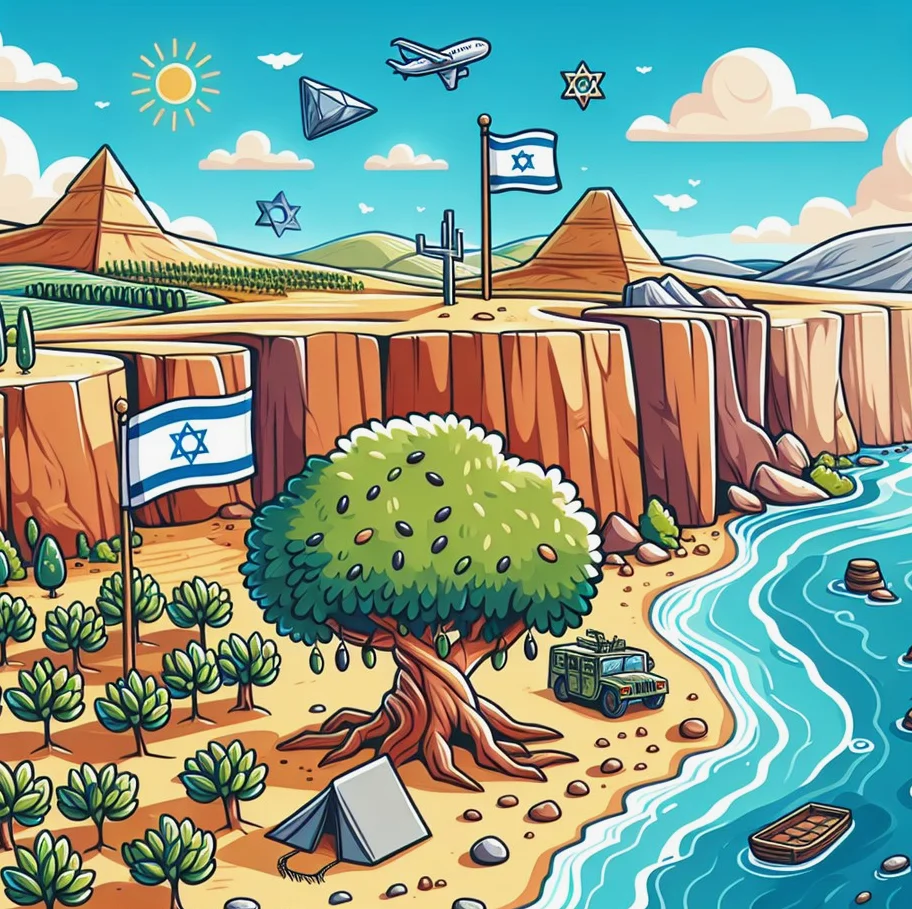
The Middle East is on the brink of a full-scale conflict after Israel and the United States conducted military strikes against Iran on Saturday, prompting a swift retaliatory missile attack from Tehran. The escalation has sparked international concern over the potential for a wider confrontation in a region already strained by decades of tensions.
Escalation and Global Reactions
Tehran’s missile response marked a significant escalation, with reports indicating that the attack targeted military installations in the western part of the country. The strikes by Israel and the U.S. were reportedly aimed at disrupting Iran’s nuclear capabilities and military infrastructure, according to officials.
World leaders have quickly reacted to the developments. German Chancellor Olaf Scholz, French President Emmanuel Macron, and British Prime Minister Rishi Sunak have all issued statements condemning Iran’s military actions and urging restraint. In a joint statement, the three leaders called for an immediate de-escalation and a return to diplomatic negotiations to prevent further violence.
Macron has called for an emergency meeting of the United Nations Security Council, warning that the outbreak of war between these nations could have severe consequences for global peace and stability. He emphasized the need for international law to be upheld and for the protection of civilian lives to remain a top priority.
Regional and Global Concerns
Leaders from Canada and Spain have also joined the calls for restraint, with Canadian Prime Minister Justin Trudeau and Spanish Prime Minister Pedro Sánchez expressing concerns over the potential for an extended regional conflict. Sánchez warned that the situation could spiral into a broader war involving multiple countries in the Middle East.
The international community is particularly concerned about the safety of civilians in the region. With the potential for retaliatory strikes from other regional actors, including Syria, Lebanon, and Yemen, the risk of a wider war has increased significantly. Reports suggest that Iran’s allies, such as Hezbollah in Lebanon and the Houthis in Yemen, could be drawn into the conflict, further complicating the situation.
Analysts have warned that the current situation is reminiscent of the 2019 strikes on Iran’s military bases in Iraq, which led to a brief but intense escalation of hostilities between the U.S. and Iran. However, this time, the involvement of Israel has introduced a new dimension to the crisis, as the country is a key U.S. ally and a major power in the region.
What’s Next and the Road Ahead
The coming days will be critical in determining whether the situation can be de-escalated or if the conflict will spread further. The U.S. and Israel have not yet announced their next steps, but military analysts suggest that both countries are closely monitoring Iran’s response and the reactions of other regional players.
Iran has not made any formal statements on its next moves, but its military has been on high alert in recent weeks. The country has also been conducting drills and increasing its military presence along its borders, raising concerns among its neighbors.
According to experts, the U.S. may face a difficult decision in the coming weeks. If the conflict continues to escalate, it could force the administration to consider more aggressive military actions, which could further inflame tensions in the region. On the other hand, a return to diplomacy could offer a path to de-escalation, but it would require significant concessions from both sides.
The international community, particularly the European Union and the United Nations, will likely play a crucial role in mediating any future negotiations. However, with the current geopolitical climate, it remains to be seen how effective these efforts will be.
For ordinary people living in the Middle East, the immediate threat is to their safety and livelihoods. The region has already suffered from years of conflict and instability, and any further escalation could have devastating consequences for civilians. The potential for an extended war could lead to a humanitarian crisis, with millions of people displaced and economic systems in the region collapsing.
As the situation unfolds, the world will be watching closely to see whether diplomacy can prevail over military action or if the region is on the brink of a new and more dangerous chapter in its long-standing conflicts.


Comments
No comments yet
Be the first to share your thoughts