

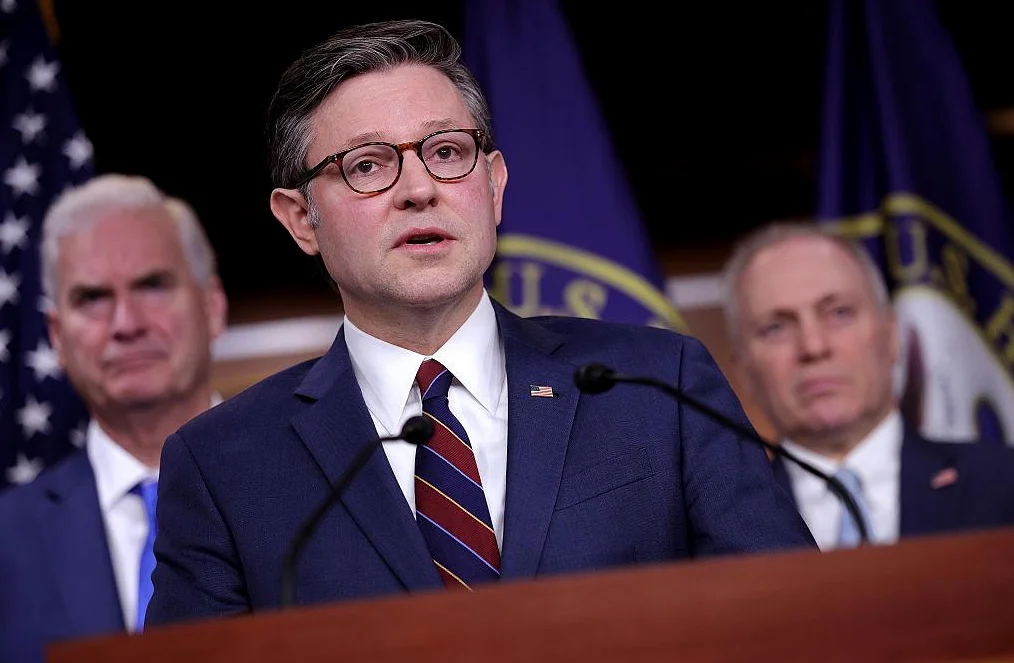
Speaker Mike Johnson. R.-La., is forging ahead with a new proposal to renew a key American spy power after two failed votes earlier this month, while his bill, revealed Thursday, is largely unchanged from a previous plan which failed in a series of overnight votes. The program at center of the debate, Section 702 of the Foreign Intelligence Surveillance Act (FISA), is set to expire on April 30.
FISA 702 and Privacy Concerns
FISA 702 allows U.S. intelligence agencies to intercept the electronic communications of foreign nationals located outside of the United States. Some of the nearly 350. 000 foreign targets whose communications are collected under the provision are in touch with Americans, whose calls, texts and emails could end up in the trove of information available to the federal government for review.
For almost two decades, privacy-minded lawmakers from both parties have sought to require specific court approval before federal law enforcement can conduct a targeted review of an American’s information gathered through the program. The lack of any such warrant requirement helped sink an effort last week to extend the program for 18 months, as well as a separate vote on a five-year renewal.
Johnson’s Revised Plan
Trump officials, like those in past administrations, have argued that such a warrant requirement would overburden law enforcement and endanger national security. Johnson’s latest proposal would reauthorize the program for three years, but does not include a warrant requirement. Instead, the bill calls for the FBI to submit monthly explanations for reviews of Americans’ information to an oversight official as well as criminal penalties for willful abuse, among other tweaks.
Leadership Challenges and Failed Votes
Back on Capitol Hill, another snafu inside the House GOP leadership has come to light. Johnson, House Majority Leader Steve Scalise and House Majority Whip Tom Emmer lost a Tuesday vote on a labor policy bill sponsored by Rep. Ashley Hinson (R-Iowa), who is running for Senate. This was a very embarrassing episode, and potentially preventable, depending on who you ask.
Hinson’s bill would change the definition of “hours worked” to exclude education and training. What’s become clear is that the House GOP leadership’s current processes aren’t designed for this historically-narrow majority, and most members in the Republican Conference recognize they need to change how they operate.
With less than 10 months until Election Day, many rank-and-file Republicans feel like they’re free agents and are completely willing to buck their leaders to gain tap into. But the GOP leadership also has some blame here. They’re still putting bills on the floor that their vulnerable members oppose.
And House Republicans have a major attendance issue that they can’t seem to resolve. All of this calls into question what, if anything, GOP lawmakers can get done in the next few months. Johnson arrived at Joint Base Andrews to find out that the U.S. government plane he was scheduled to take to England had mechanical issues. The Air Force offered to bump another congressional delegation from its jet to ferry the speaker to London, but Johnson refused the offer and instead flew Economy Plus on United Airlines from Dulles to London-Heathrow.
Johnson has official meetings in London in honor of the United States Semiquincentennial and will be the first speaker of the House to address the British Parliament. This incident highlights the logistical and leadership challenges that Johnson faces, both domestically and internationally.


Comments
No comments yet
Be the first to share your thoughts