

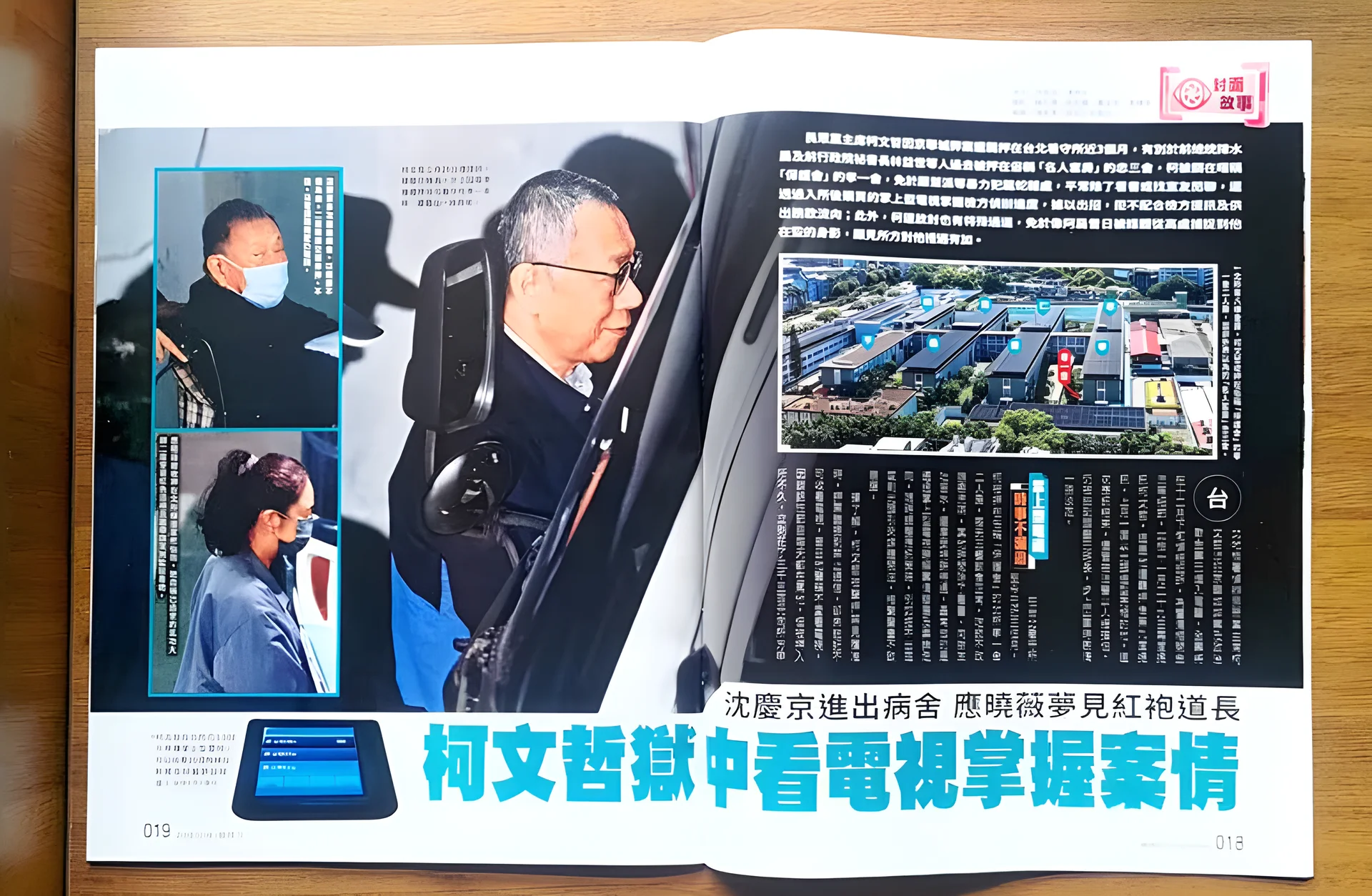
Taiwan’s news media landscape is dynamic and fast-paced, with a complexity that rivals that of much larger countries. Among the many outlets, Mirror Media’s weekly magazine and website stand out as a powerful force, shaping public discourse with high-profile investigative reports and leaks. However, their influence has raised questions about the accuracy of their reporting, the potential for bias, and the implications of allowing media to drive public opinion in a democracy.
Investigative Power and Public Influence
Mirror Media has become known for its ability to attract whistleblowers and deliver explosive reports that often set the news agenda. Their investigations into political scandals, corruption, and personal matters have made them a fixture in Taiwan’s media scene. In 2024, the outlet’s coverage of the Core Pacific case involving former Taipei mayor and Taiwan People’s Party (TPP) founder Ko Wen-je drew significant attention. The leaks provided a wealth of information that other outlets followed closely, despite the lack of definitive proof of wrongdoing at the time.
While many of Mirror Media’s stories cover routine news like traffic accidents, food trends, and celebrity scandals, it is their investigative journalism that has made them a dominant force. The outlet has been accused of partisan bias, particularly when its reports negatively impact one political party or individual. However, some analysts argue that the outlet’s focus is driven more by commercial interests than political leanings.
Accuracy and Misleading Reporting
Mirror Media has faced criticism for occasional inaccuracies in its reporting. In August 2024, the outlet reported that prosecutors had raided the legislative office of Vivian Huang, a then-TPP lawmaker. However, this was incorrect — the raid was actually conducted on Lin I-chin, a DPP legislator, over a separate case. Other outlets quickly published stories based on Mirror Media’s false report, highlighting the potential for misinformation to spread rapidly.
More concerning than outright falsehoods is the tendency for Mirror Media’s reporting to be misleading. In one case, the outlet reported that DPP legislator Wang Ting-yu was having an extramarital affair with a corporate executive. Wang later confirmed that he had divorced his wife and that the relationship was consensual. Despite this, the story was widely reported without the necessary context, leading to public speculation that was later proven inaccurate.
“The issue isn’t that Mirror Media ran with the leaks, but that they failed to provide context or warn readers about the potential for bias or incomplete information,” said one political analyst. “This can lead to public opinion being shaped by partial truths rather than full facts.”
Leak Controversies and Political Fallout
The leaks related to the Core Pacific case have raised significant questions about the source and motivation behind the information. The volume and timing of the leaks suggest that someone with access to the prosecutor’s office was providing information to Mirror Media. This has led to accusations that the leaks were politically motivated, particularly by the TPP, which alleged that the president and the DPP were using the judiciary to remove political opponents.
While these claims have not been proven, the leaks did have an immediate impact on Ko Wen-je’s public standing. His poll numbers dropped sharply as the information was released, even though no formal charges had been filed against him at the time. This highlights the power of media in shaping public perception, even when the facts are not yet clear.
The situation has sparked a broader debate about the role of media in a democracy. While investigative journalism is essential for holding power accountable, the potential for leaks to be used for political gain or to mislead the public is a serious concern. Critics argue that Mirror Media’s influence is too great and that the lack of oversight or transparency in how leaks are handled could undermine the rule of law.
As the legal proceedings against Ko Wen-je continue, the courts will have the final say on his guilt or innocence. The judges will have reviewed all the evidence and will render their decision on March 26, based on legal standards rather than public opinion or media speculation. Until then, Ko remains unconvicted and should be presumed innocent.
The case highlights the importance of a free press, but also the need for responsible journalism that provides accurate information and context. In a democracy, the rule of law must prevail over trial by media, and the public must be reminded that justice is not determined by headlines but by the evidence and the law.





Comments
No comments yet
Be the first to share your thoughts