

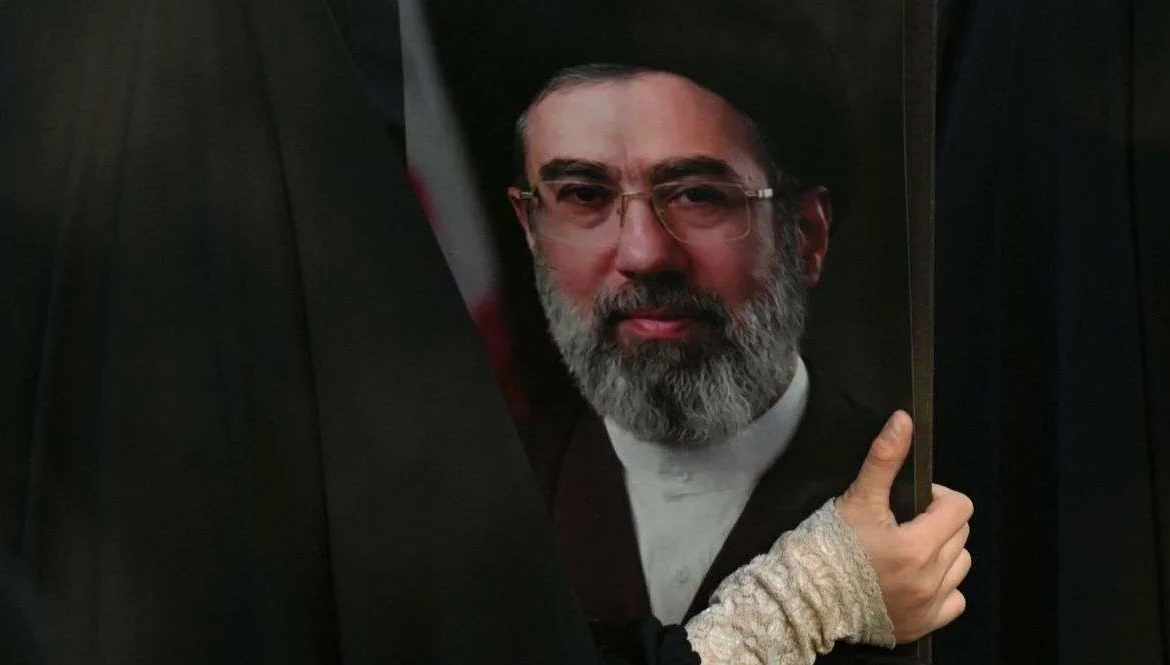
Iran’s newly appointed Supreme Leader Mojtaba Khamenei has issued a forceful response to the assassination of Ali Larijani, a senior security official, and has vowed retribution against those responsible. Khamenei described the killing as an act of cowardice and emphasized that justice will be served, warning that the perpetrators will soon pay for the blood spilled. In a message published on his official Telegram channel, Khamenei stated, ‘Every drop of spilled blood comes at a price, and the criminal murderers of these martyrs will soon have to pay it.’
Impact on Iran’s Political Landscape
The killing of Larijani, who was widely regarded as one of the most influential figures in Iran after the late Supreme Leader Ayatollah Ali Khamenei, has sent shockwaves through the country’s political landscape. Larijani, 67, was a key figure in Iran’s security apparatus and had served in various capacities for nearly five years, shaping the Islamic system with his wisdom and foresight. His death is being viewed as a significant blow to Iran’s leadership structure, particularly given that Khamenei himself was recently targeted in an Israeli attack on February 28.
Iran’s President Masoud Pezeshkian confirmed the killing of Intelligence Minister Esmail Khatib in Israeli strikes, calling it a ‘cowardly assassination.’ He also expressed deep anguish over the deaths of Larijani and Aziz Nasirzadeh, two prominent security officials. In a statement on X, Pezeshkian said, ‘The cowardly assassination of my dear colleagues Ismail Khatib, Ali Larijani, and Aziz Nasirzadeh, alongside some of their family members and accompanying team, has left us in deep mourning. I extend my condolences to the great people of Iran for the martyrdom of two cabinet members, the secretary of the Shura, and the military and Basij commanders.’
Larijani’s death has been attributed to Israeli fighter jets that targeted him while he was at his daughter’s house in the Pardis district, east of Tehran. This incident has further intensified tensions between Iran and Israel, with Iran accusing the ‘American and Zionist regime’ of orchestrating the attack. The loss of Larijani, who was considered the right-hand man of the late Supreme Leader, has raised concerns about the stability of Iran’s leadership and the potential for retaliatory actions.
Reactions and Repercussions
Khamenei’s response to the assassination has been unequivocal, emphasizing that the killing of such a prominent figure ‘attests to his importance and the hatred that the enemies of Islam harbor toward him.’ He warned the United States and Israel that ‘All blood has its price that the criminal murderers of the martyrs must pay soon.’
Khamenei also expressed deep sorrow over the death of Larijani, stating that he received the news of the ‘martyrdom’ of Larijani along with the death of his son and several of his colleagues. The Supreme Leader described Larijani as a ‘man of knowledge, foresight, and wisdom,’ and noted that the late security chief had dedicated nearly five years to the service of the Islamic system at different levels, shaping him into an eminent figure.
Israel has confirmed that it targeted Larijani as part of a broader strategy to weaken Iran’s leadership. However, the extent of the damage caused by the assassination remains unclear. The killing of such a high-profile figure has the potential to shift the dynamics of Iran’s internal power structure and could lead to increased calls for retaliatory actions against Israel and the United States.
The assassination has also reignited discussions about the role of external actors in Iran’s internal affairs. With the recent attacks on both Khamenei and Larijani, there is growing concern about the vulnerability of Iran’s leadership and the potential for further destabilization.
What’s Next for Iran and the Region
Analysts suggest that Iran may be on the brink of taking more aggressive actions in response to the assassinations. The government has already expressed its willingness to retaliate, and the loss of two senior officials could lead to a hardening of Iran’s stance toward Israel and the United States. The coming weeks will be critical in determining whether Iran will pursue diplomatic solutions or escalate hostilities.
With the recent attacks on prominent figures, Iran may be forced to reconsider its security strategies and possibly increase its military presence in the region. The international community is closely watching the situation, as any escalation could have far-reaching consequences for global stability.
As the situation unfolds, the focus will remain on Iran’s response to the assassinations and the potential for retaliatory actions. The loss of Larijani, in particular, has left a void in Iran’s leadership, and the government will need to handle this period of uncertainty carefully to maintain internal stability and external relations.
In the days ahead, the Iranian government is expected to hold a series of high-level meetings to assess the impact of the assassinations and determine the next course of action. These meetings will likely involve key figures within the security and military sectors, as well as political leaders, to ensure a unified response to the crisis.
The international community, including the United States and Israel, is also monitoring the situation closely. Any further attacks on Iranian officials could lead to a significant escalation in the conflict, with potential repercussions for global security and the stability of the Middle East.
Comments
No comments yet
Be the first to share your thoughts