

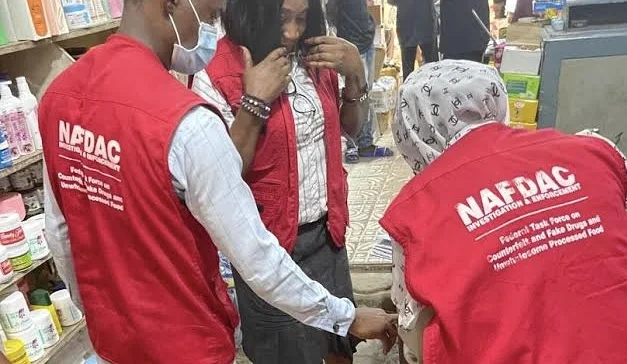
The National Agency for Food and Drug Administration and Control (NAFDAC) has uncovered a warehouse at the APT Trade Fair Complex in Lagos State containing over ₦3 billion worth of banned, fake, and unregistered cosmetic products. The facility was hidden within an uncompleted building at the complex, according to a statement released on Sunday via X.
Scope of the Seizure
Among the items recovered were 728 cartons of Crusader soap, 718 cartons of E45 soap, and Extract Gold whitening soaps, all of which have been officially banned by the federal government. Additional products such as perfumes, body oils, and cooking oils were also found and are currently under regulatory review.
According to NAFDAC, all seized items have been evacuated from the warehouse to prevent further distribution. The agency has taken measures to ensure these products do not reach consumers, emphasizing the potential health risks associated with their use.
The warehouse manager has been invited for questioning as part of an ongoing investigation. The agency is continuing its enforcement actions against illegal cosmetic trade operations across the country.
Health Risks and Public Advisory
NAFDAC highlighted the serious health risks posed by the sale and use of unregistered and banned cosmetic products. The agency urged members of the public to remain vigilant and report any suspicious activities to the nearest NAFDAC office.
“The use of these products can lead to severe health complications, including skin irritation, allergic reactions, and long-term toxic effects,” the statement said. “We urge consumers to verify the authenticity of products before use.”
These products are often sold in local markets and online platforms, sometimes under misleading brand names or packaging that mimics legitimate products. NAFDAC has been conducting regular raids to curb the illegal cosmetic trade, which has grown in recent years due to rising demand for beauty products and lax enforcement in some regions.
Historical Context and Regulatory Challenges
This is not the first time NAFDAC has uncovered large-scale operations involving fake cosmetics. In 2021, the agency seized over ₦2 billion worth of counterfeit beauty products from a warehouse in Ogun State. Similarly, in 2022, a raid in Kaduna State resulted in the confiscation of approximately ₦1.5 billion in banned skincare products.
Despite these efforts, the illegal cosmetic trade remains a persistent challenge for regulators. The lack of stringent quality control measures and the difficulty in tracing counterfeit products have made enforcement difficult. Additionally, the rise of e-commerce platforms has provided a new avenue for the distribution of fake products, making it harder for authorities to monitor and regulate the market.
According to a 2023 report by the Nigerian Institute of Advanced Legal Studies, the cosmetic sector in Nigeria is projected to grow by 8.5% annually, driven by increasing consumer awareness and demand for beauty products. However, this growth has also led to a surge in counterfeit goods, with over 30% of beauty products sold in local markets being unregistered or banned.
NAFDAC officials have called for stronger collaboration between government agencies, private sector stakeholders, and the public to combat the proliferation of fake cosmetics. They have also emphasized the need for stricter penalties for those involved in the illegal trade.
“We are committed to ensuring that only safe and approved products reach the market,” said a senior NAFDAC official. “Our goal is to protect public health and maintain consumer trust in the cosmetics industry.”
The agency is expected to release further details on the investigation and any potential legal actions against the warehouse manager and other individuals involved in the operation. The next steps may include court proceedings and the initiation of a broader campaign to raise awareness about the dangers of counterfeit cosmetics.
1 Comment