

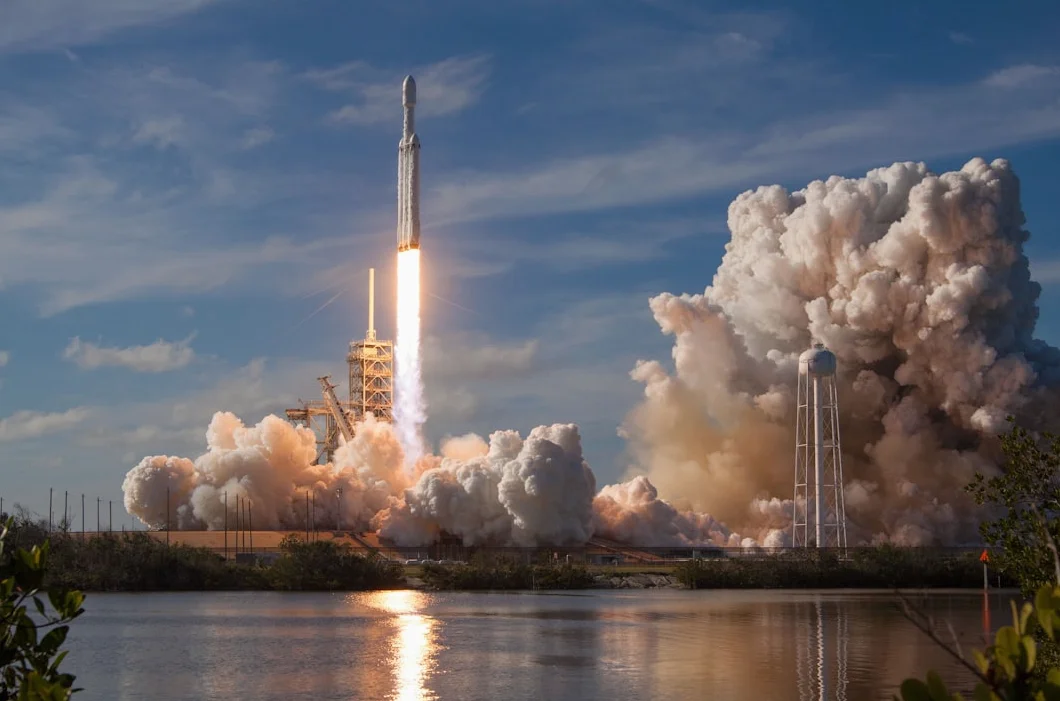
NASA successfully launched the Artemis II mission on April 1, marking the first crewed lunar voyage since 1972 and carrying a historic payload including Argentina’s ATENEA satellite. The mission. Launched from Kennedy Space Center in Florida at 6:35 p.m; EDT, features four astronauts: Reid Wiseman, Victor Glover, Christina Koch, and Canadian Space Agency astronaut Jeremy Hansen. The 10-day mission will orbit the Moon, paving the way for future lunar exploration and the eventual goal of landing the first woman and person of color on the Moon.
Historic Payload and International Collaboration
The Artemis II mission includes the ATENEA satellite, a small CubeSat developed by Argentina’s National Commission on Space Activities (CONAE). This satellite is the only Latin American payload selected by NASA to travel on the mission, marking a significant step in international collaboration for space exploration. ATENEA is designed to study the Earth’s magnetosphere and contribute to scientific research on solar radiation and its effects on the planet.
Global Reactions and Contextual Events
While NASA focused on its historic lunar mission, other global events unfolded, and In the United States, President Donald Trump addressed the nation, though his speech was criticized as ’embarrassing, incoherent’ and echoed previous statements. Meanwhile, in Iran, President Masoud Pezeshkian released an open letter to the American public, questioning the interests being served by the ongoing conflict with Israel — these events, though unrelated to the Artemis mission, highlight the complex geopolitical landscape against which NASA’s achievement unfolds.
Technical and Mission Details
The Artemis II mission is the first crewed flight of the Orion spacecraft, which will travel approximately 450,000 miles beyond Earth, circling the Moon and returning to Earth. This mission will test the spacecraft’s systems and provide valuable data for future lunar landings; NASA’s live coverage of the mission continues, with updates expected as the astronauts complete their journey. The mission’s success is critical for the Artemis program, which aims to establish a sustainable human presence on the Moon by the end of the decade.
The launch of Artemis II has been widely covered by international media, including Time Magazine, which highlighted the event as a significant milestone in space exploration. The mission’s crew includes experienced astronauts, with Christina Koch and Victor Glover having previously flown to the International Space Station; Jeremy Hansen, representing the Canadian Space Agency, is the first Canadian astronaut to be selected for a lunar mission.
Argentina’s involvement in the mission through the ATENEA satellite exposes the growing role of emerging space nations in global space exploration, and the satellite will be deployed during the mission and will operate in low Earth orbit for several months, transmitting data back to Argentina for analysis. This collaboration is part of a broader effort to include diverse nations in the Artemis program, enhancing the scientific and technological outcomes of the mission.
The Artemis program. Which includes both crewed and uncrewed missions, is a key component of NASA’s long-term strategy for lunar and interplanetary exploration. The success of Artemis II will be critical for planning the Artemis III mission, which aims to land the first woman and person of color on the Moon. NASA has emphasized the importance of international partnerships in achieving these goals, with contributions from countries such as Canada, Europe, and now Argentina.
As the Artemis II mission progresses, NASA continues to provide updates through its official website and social media channels. The public can follow the astronauts’ journey as they conduct experiments, test spacecraft systems, and prepare for future lunar missions. The mission’s success will not only advance scientific knowledge but also inspire a new generation of scientists, engineers, and explorers.






Comments
No comments yet
Be the first to share your thoughts