

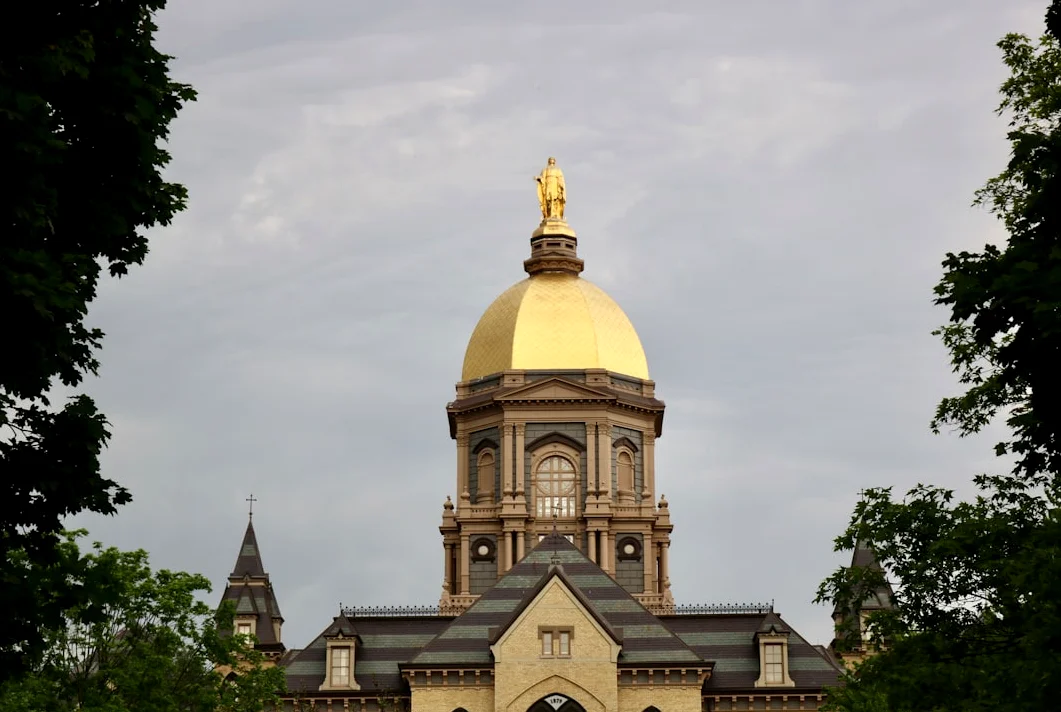
Lou Holtz, the former Notre Dame football coach who led the team to a national championship in 1988, has died at the age of 89, the school and his family announced. Holtz passed away in Orlando surrounded by family, according to a statement from his family.
Legacy of Leadership and Values
Holtz’s family described him as a man of enduring values, including faith, family, service, and an unwavering belief in the potential of others. His influence extended far beyond the football field through the Holtz Charitable Foundation and the many players, colleagues, and communities shaped by his leadership.
Holtz coached Notre Dame from 1986 to 1996, leading the team to 100 wins, including a 23-game win streak and the school’s first consecutive 12-win seasons. The Fighting Irish finished the 1988 season 12-0, capped with a win in the 1989 Fiesta Bowl, earning the consensus national championship.
His son, Skip Holtz, who followed in his father’s coaching footsteps, shared on X that his father had passed away and was ‘resting peacefully at home.’
Impact on Notre Dame and College Football
Before Holtz arrived in South Bend, Notre Dame was struggling with mediocrity, a far cry from the legacy of past coaching greats like Knute Rockne and Ara Parseghian. Holtz quickly turned things around, leading the Irish to the Cotton Bowl in his second season and securing the national title in 1988.
He left South Bend after the 1996 season with a record of 100-30-2. Current Notre Dame coach Marcus Freeman, who led the Irish back to the national title game in 2025, paid tribute to Holtz, saying, ‘Our relationship meant a lot to me because I admired the values he used to build the foundation of his coaching career: love, trust, and dedication.’
Holtz’s coaching career began at William & Mary and North Carolina State, and he also had a one-year stint as head coach of the New York Jets in the NFL. Despite his success in college football, he failed in the NFL, resigning with a 3-10 record in 1976 and stating, ‘God didn’t put Lou Holtz on this earth to coach in the pros.’
His move to Arkansas opened the door to another successful chapter in his career. His teams played in the AP Top 25 18 times, with eight of those in the top 10. After Notre Dame, Holtz moved to the TV booth at CBS and vowed he would never coach again, stating, ‘You could put it in granite.’ He later joked, ‘I have the granite stone, but it wasn’t very good granite.’
Coaching Philosophy and Unconventional Methods
Holtz was known for his demanding yet inspiring coaching style. He often used unconventional methods, such as tackling quarterback Tony Rice after a botched exhibition game in 1987 and later suspending leading rusher Tony Brooks and leading receiver Ricky Watters in 1988 for being 40 minutes late for a team meal.
Despite these strict measures, his teams often succeeded. In 1991, he faced criticism after grabbing a player by the face mask and pulling him to the sideline, but he later apologized. At Arkansas, he once suspended three starting offensive players for disciplinary reasons before facing then-No. 2 Oklahoma in the Orange Bowl, and Arkansas still won 31-6.
Holtz’s ability to recruit top talent was legendary. Notre Dame’s 1990 recruiting class included five future first-round NFL draft picks. He often used motivational speeches, saying at every practice, ‘Boy, what a great day to work,’ regardless of the weather.
Holtz was born on January 6, 1937, in Follansbee, West Virginia. He was inspired by his wife, Beth Barcus, who encouraged him to pursue his goals after he was unemployed in 1966. She bought him a book on goal setting, which led to a wish list of 108 items he wanted to accomplish in life.
In 2008, Holtz was inducted into the College Football Hall of Fame, and Notre Dame installed a statue of him outside its home stadium. He expressed a desire to be buried on campus, stating, ‘The alumni buried me here every Saturday.’
Holtz was a longtime Republican and spoke at the 2020 Republican National Convention in support of President Trump. In December 2020, Trump awarded Holtz the Presidential Medal of Freedom, the country’s highest civilian honor.





Comments
No comments yet
Be the first to share your thoughts