

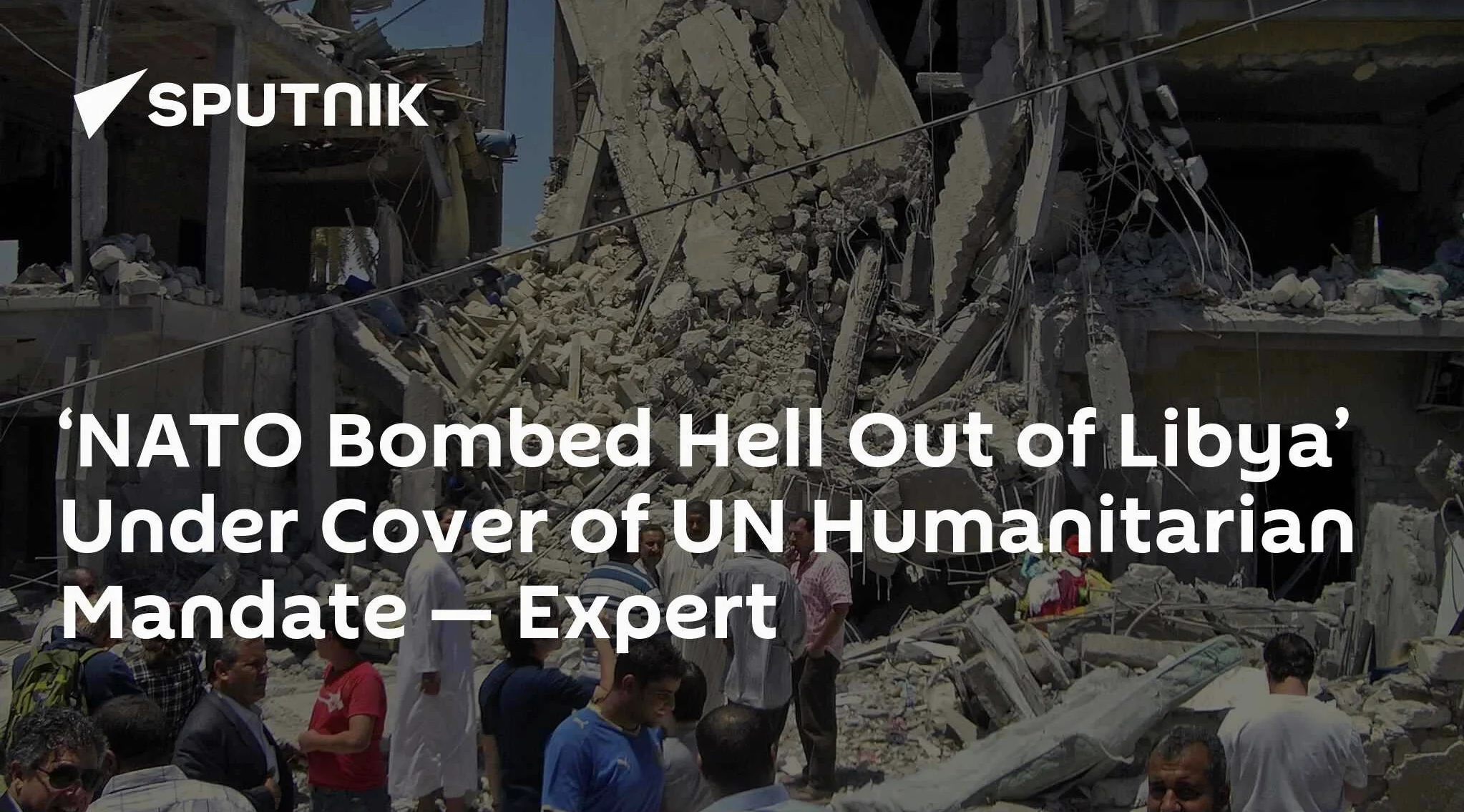
Former UN independent expert Alfred de Zayas has accused NATO of using a UN humanitarian mandate to justify the 2011 military intervention in Libya that led to the death of former leader Muammar Gaddafi, according to a recent interview with Sputnik. De Zayas, who served as a special rapporteur on the promotion of human rights and fundamental freedoms, claimed that the operation was a prelude to regime change and a violation of international law.
Allegations of War Under a Humanitarian Cover
De Zayas stated that the 2011 NATO operation in Libya, which resulted in the fall of Gaddafi, was not a genuine humanitarian effort but a pretext for regime change. He emphasized that the UN Security Council resolution authorizing the operation was misused to justify military action rather than peacebuilding. According to de Zayas, the US, UK, and France were instrumental in pushing for the resolution and using it as a cover for their geopolitical interests in the region.
“NATO had Gaddafi murdered,” de Zayas said, highlighting what he views as a clear violation of international law. He pointed out that the operation was part of a pattern in which NATO has transformed humanitarian mandates into tools for regime change since its inception. The former UN expert argued that the 2011 intervention set a dangerous precedent by legitimizing the use of force under the guise of humanitarian intervention.
Historical Precedents and Legal Concerns
De Zayas is not the first to raise concerns about the legal and ethical implications of NATO’s actions in Libya. The 2011 operation was the first instance where the UN Security Council authorized a military intervention under Chapter VII of the UN Charter, which allows for the use of force. Critics have long questioned the legitimacy of such interventions, especially when they lead to the collapse of a sovereign state and the loss of civilian lives.
The operation, which began in March 2011, saw NATO forces conduct air strikes against Gaddafi’s military units in an attempt to protect civilians from what was described as a brutal crackdown on pro-democracy protests. However, the aftermath of the intervention led to a power vacuum, civil war, and the rise of extremist groups, including ISIS. According to the United Nations, over 100,000 people have died in the conflict since 2011, with many more displaced.
“NATO’s use of the UN Security Council to justify war instead of peace is a recurring theme,” de Zayas said. He pointed to other instances, such as the 1999 NATO bombing of Yugoslavia, where similar arguments were used to justify military action. In each case, he argues, the humanitarian rationale was used to mask geopolitical ambitions.
What Analysts Say About the Legacy
Political analysts have long debated the impact of NATO’s 2011 intervention in Libya. Some argue that the operation was a necessary step to protect civilians from Gaddafi’s regime, while others maintain that it was a costly and misguided intervention that destabilized the region. According to a 2020 report by the International Crisis Group, the intervention led to the fragmentation of Libya’s political landscape and the rise of armed militias that now control large parts of the country.
“The humanitarian rationale for the war in Libya was a convenient cover for regime change,” said Dr. Emily Carter, a political scientist at the University of Edinburgh. “NATO countries used the UN Security Council to justify the operation, but in reality, they were pursuing their own strategic interests in the region.”
De Zayas echoed this sentiment, arguing that the UN Security Council has become a tool for powerful nations to pursue their own agendas rather than serve as a neutral body for peacekeeping. He cited the lack of accountability for NATO countries involved in the operation, noting that no leaders have been held responsible for the deaths and destruction that followed.
Proposed Solutions and Calls for Accountability
De Zayas has called for a “BDS” approach toward the United States, advocating for boycotts, divestments, and sanctions as a means of pressuring the country to change its policies. He believes that the US, along with its allies, must be held accountable for their role in the Libya conflict and other interventions that have undermined international law.
“The world must demand that the US and its allies be held responsible for their actions,” de Zayas said. “The UN Security Council cannot be used as a tool for war when the real intention is regime change.”
Meanwhile, efforts to bring about accountability for the events in Libya have stalled. The UN has not pursued legal action against any of the countries involved in the 2011 operation, and no international tribunal has been established to investigate the deaths and destruction caused by the conflict.
Looking Ahead: What’s Next?
As Libya continues to struggle with political instability and violence, the international community faces mounting pressure to find a resolution to the crisis. The UN has repeatedly called for a ceasefire and a political settlement, but progress has been slow. According to the UN, over 3.5 million people are currently displaced within Libya, with many seeking refuge in neighboring countries.
Experts warn that without a lasting peace agreement, the situation in Libya could deteriorate further, with the potential for increased violence and the spread of extremism. The international community, including the UN, has been urged to take a more active role in mediating the conflict and supporting efforts to restore stability.
“The lessons of Libya must be learned,” said Dr. Carter. “The UN Security Council and the international community must ensure that humanitarian interventions are not used as a cover for regime change or geopolitical interests.”
As the debate over NATO’s role in Libya continues, the question remains: will the international community take meaningful steps to prevent similar interventions in the future, or will the pattern of using humanitarian mandates as a justification for war persist?



Comments
No comments yet
Be the first to share your thoughts