

 BBC
BBC 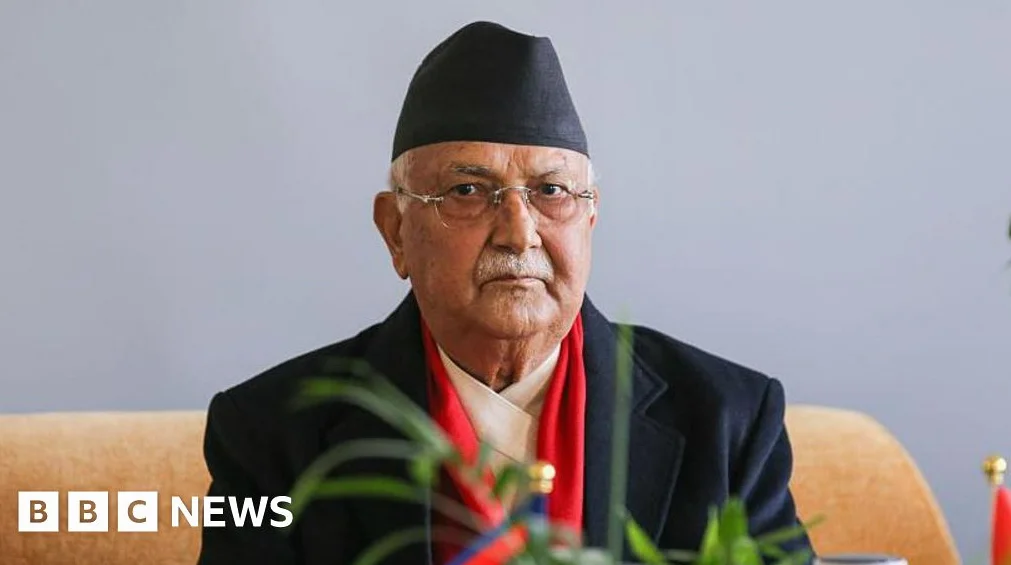
Nepal’s former prime minister KP Sharma Oli has been arrested over his alleged involvement in a deadly crackdown on protests last year. The arrest. According to BBC. Comes as the nation continues to grapple with the aftermath of a violent uprising that left more than 70 people dead. Oli, 74, was taken into custody after a special investigation panel recommended that he and former home minister Ramesh Lekhak be prosecuted for criminal negligence in the September 2023 protests.
Protest Crackdown and Aftermath
The protests. Which began with a government-imposed social media ban, quickly escalated into a broader movement fueled by public frustration over corruption, high unemployment, and economic stagnation. According to Reuters. At least 19 people. Including a teenager in a school uniform, were killed during the so-called Gen-Z protests on 8 September 2023, when youth took to the streets in large numbers.
The crackdown by security forces led to widespread unrest, with protests spreading across the country. Reports indicate that scores more people died in the days that followed, and parliament, police stations, and shops were set on fire. The violence resulted in a nationwide crisis, prompting Oli to resign on 9 September 2023; However, he later re-contested the election held on 5 March 2024, which saw the emergence of a new political landscape.
According to Agence France-Presse. Kathmandu Valley police spokesman Om Adhikari stated that Oli and Lekhak were arrested in the morning and that the legal process would proceed according to the law. Neither has been formally charged yet. Oli’s lawyers have argued that his detention is unwarranted at this stage of the investigation, citing the lack of risk of him fleeing or avoiding questioning.
Political Shift and Legal Challenges
The arrest of Oli and Lekhak comes just a day after 35-year-old rapper-turned-politician Balen Shah was sworn in as Nepal’s new prime minister. Shah’s Rastriya Swatantra Party (RSP) won a landslide victory in the election, marking the first time in decades that a single party has secured a majority in the country’s complex electoral system.
Shah’s election has brought a new political dynamic to Nepal, where the previous administration had struggled to manage the fallout from the protests; the RSP’s victory reflects growing public demand for accountability and change. Meanwhile, the new home minister, Sudan Gurung, who was a prominent figure in the protests, has welcomed the arrests, stating on Instagram that “no one is above the law” and that the move marks the beginning of justice.
Oli has previously rejected the findings of the investigation panel, which also recommended the arrest of former police chief Chandra Kuber Khapung. Oli told the Annapurna Post that the commission’s conclusions were “character assassination and hate politics.” His legal team has continued to challenge the arrests, arguing that there is no legal justification for his detention at this point.
The families of the 76 people who died in the protests have been demanding justice for months, calling for those responsible to be held accountable. The scale of the violence and the government’s response have raised serious concerns about the rule of law and the protection of fundamental rights in Nepal.
Broader Implications for Nepal
The arrests of Oli and Lekhak are expected to have far-reaching implications for Nepal’s political and legal systems. The new government under Balen Shah faces the challenge of addressing the root causes of the protests, including economic stagnation, corruption, and poor governance. Analysts warn that the situation remains volatile, and the country could face further unrest if these issues are not adequately addressed.
According to a report by the South Asian Institute for Policy Studies, Nepal’s economy has been struggling for years, with unemployment rates reaching 14.4% in 2023. The protests were a direct response to these conditions, and the government’s crackdown only exacerbated the situation. With the new administration in place, the focus will shift to implementing reforms that can restore public trust and stability.
The legal process against Oli and Lekhak is likely to be lengthy and politically charged. The case could set a precedent for holding former leaders accountable for their actions, which could have a significant impact on the country’s political landscape. However, the outcome will depend on the strength of the evidence presented and the impartiality of the judicial system.
As Nepal moves forward, the challenge will be to ensure that justice is served without further inflaming tensions. The government will need to demonstrate a commitment to transparency and accountability to prevent similar crises from occurring in the future.






Comments
No comments yet
Be the first to share your thoughts